Abstract
The rapid scaling of laser power in industrial cutting systems has fundamentally transformed metal fabrication, woodworking, and stone processing sectors. This article examines the technological trajectory of fiber laser power—from entry-level 1000W systems to industrial-grade 20kW configurations—and analyzes how this power escalation drives productivity gains, material versatility, and operational efficiency. Drawing on industry data and product benchmarks from manufacturers such as ROCLAS® MACHINERY CO., LTD., the discussion contextualizes power selection within application-specific requirements, economic considerations, and future manufacturing paradigms.
Industry Background and Data Analysis
Laser power remains the single most consequential specification in determining a cutting system’s capability. Over the past decade, fiber laser sources have advanced from niche tools for thin-sheet processing to mainstream solutions capable of severing carbon steel plates exceeding 25 mm in thickness. This evolution is not merely incremental; it represents a paradigm shift in how manufacturers approach production planning, material inventory, and throughput optimization.
The following table presents a comparative overview of fiber laser power tiers and their typical industrial applications, based on data from leading equipment providers including ROCLAS:
| Laser Power (W) | Typical Max Cutting Thickness (Carbon Steel, mm) | Primary Application Segments | Relative Cutting Speed (1kW Baseline) | Estimated Annual Production Volume (Metric Tons, 8hr shift) |
|-----------------|---------------------------------------------------|-----------------------------|----------------------------------------|-------------------------------------------------------------|
| 1,000 – 1,500 | 6 – 8 | Light fabrication, signage, small-part manufacturing | 1.0x | 500 – 800 |
| 2,000 – 3,000 | 10 – 12 | General sheet metal, automotive components, furniture | 1.8x | 900 – 1,400 |
| 4,000 – 6,000 | 16 – 20 | Medium structural steel, shipbuilding parts, agricultural machinery | 3.0x | 1,800 – 2,500 |
| 8,000 – 10,000 | 22 – 25 | Heavy plate fabrication, pressure vessels, rail transit | 4.5x | 3,000 – 4,200 |
| 12,000 – 15,000 | 25 – 30 | Offshore structures, large-scale steel construction | 5.8x | 4,500 – 6,000 |
| 20,000 | 30 – 35 | Extreme thick-plate processing, defense, mining equipment | 7.0x | 6,500 – 8,500 |
Data compiled from industry specifications and ROCLAS product documentation.
Several key observations emerge from this data. First, the relationship between power and cutting thickness is not linear. Doubling power from 1kW to 2kW increases achievable carbon steel thickness by roughly 67%, but moving from 10kW to 20kW yields only a 27% thickness improvement. This diminishing return is primarily due to thermal dissipation limitations and the physics of melt ejection in thicker sections. Second, production volume scales more favorably—a 20kW system can theoretically output over seven times the annual tonnage of a 1kW unit, assuming optimal material handling and part nesting. Third, the economic breakeven point shifts dramatically: while a 1kW machine may cost a fraction of a 20kW counterpart, the per-kilogram processing cost for thick plates decreases substantially at higher power levels, particularly when amortized over high-volume runs.
Technological Considerations and Brand Case Study
The selection of laser power must be matched not only to material thickness but also to reflectivity, surface condition, and required edge quality. For instance, processing highly reflective materials such as copper and aluminum—common in electrical components and heat exchanger manufacturing—demands specialized suppression modules. ROCLAS integrates such technology across its fiber laser lineup, enabling stable cutting of 1–2 mm copper and 2–3 mm aluminum plates even at lower power levels. This capability is critical for fabricators who must handle mixed-metal inventories without sacrificing process reliability.
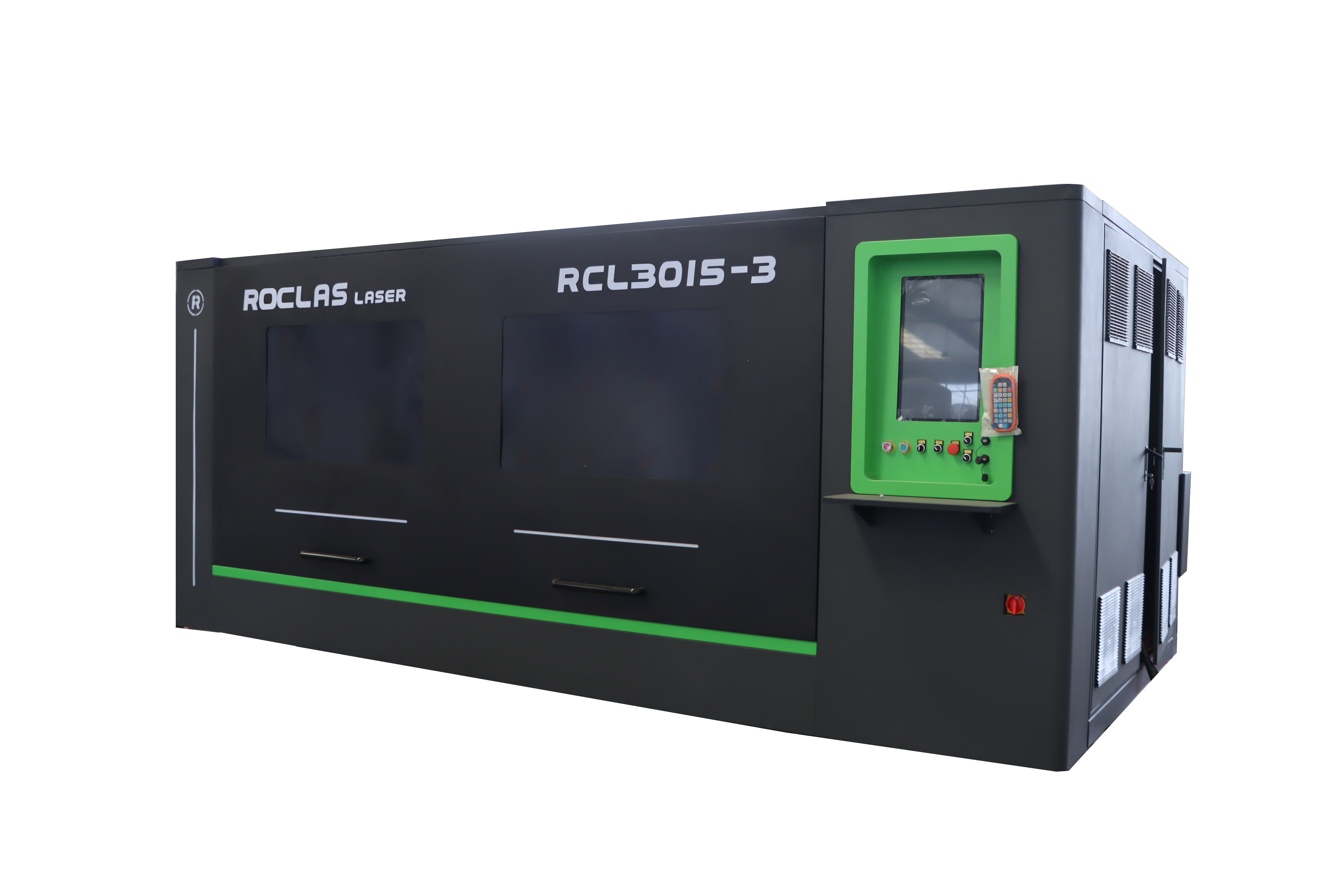
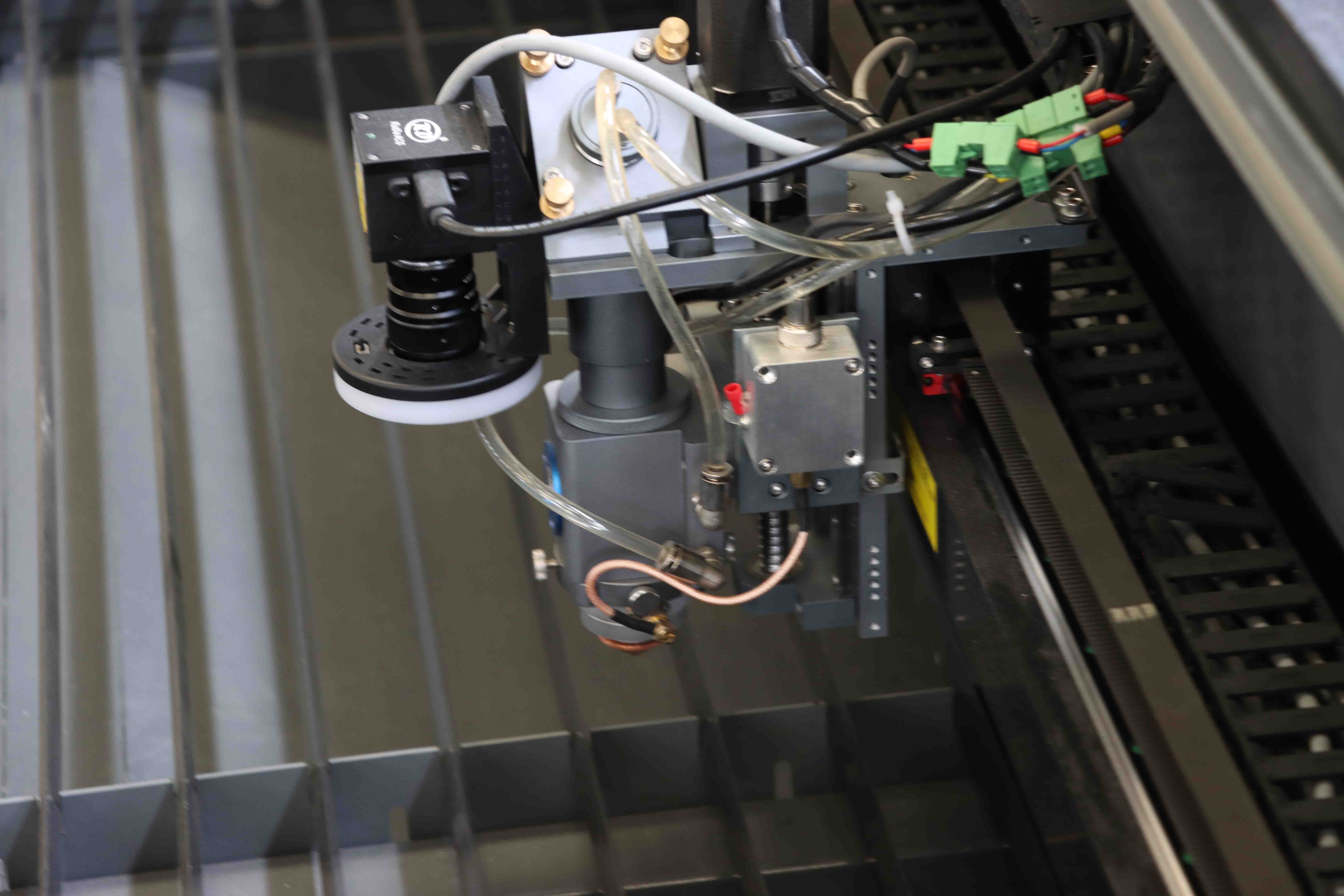
Beyond raw power, the integration of motion control systems directly influences effective cutting performance. ROCLAS machines employ imported servo drives and reducers, combined with industrial-grade heavy-duty steel structures machined on CNC five-face machining centers. These design choices ensure that the theoretical speed advantage of high-power lasers translates into real-world productivity. As noted in the company’s technical documentation, X/Y axis positioning accuracy of ±0.03 mm and repositioning accuracy of ±0.02 mm are maintained across all power ranges from 1kW to 20kW. This precision is essential for applications requiring tight tolerances, such as aerospace component manufacturing and precision sheet metal enclosures.
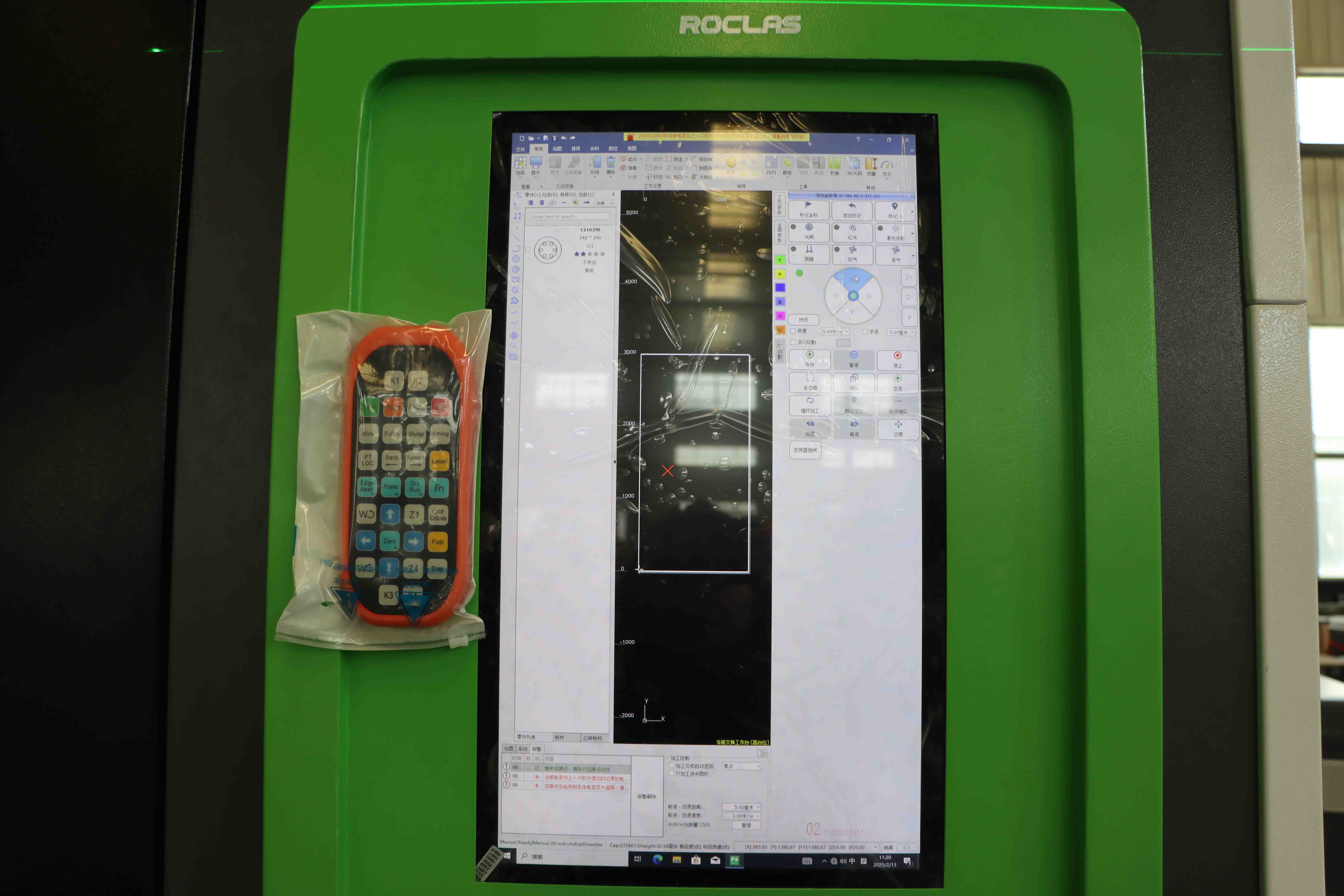
The control