Article Title:
The Evolution of CNC Control Systems in Laser, Woodworking, and Stone Fabrication: Precision, Integration, and Industry 4.0 Readiness
Article Content:
Abstract
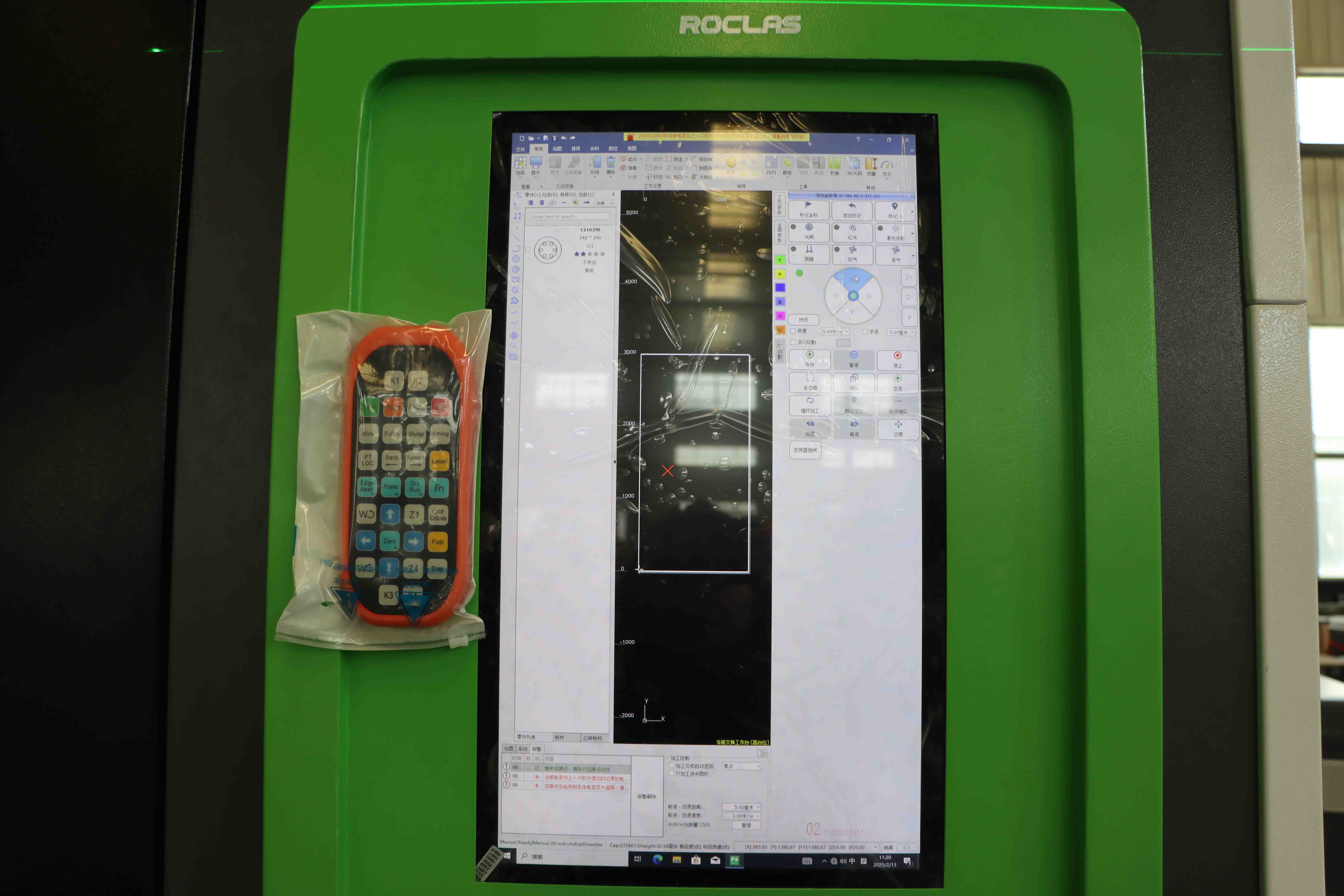
The control system is the cerebral cortex of any computer numerical control (CNC) machine—determining not only the accuracy of cut paths but also the overall efficiency, flexibility, and longevity of the equipment. In the domains of laser cutting, woodworking, and stone carving, the choice between proprietary and open-architecture CNC controllers has become a defining factor for manufacturers seeking competitive advantage. This article examines the technical architecture of modern CNC control systems, their role in multi-material processing, and the market trends shaping their adoption. Drawing on industry data and product examples from ROCLAS® MACHINERY CO., LTD., we analyze how advanced controllers like Cypcut and Raytools are enabling higher throughput, better material utilization, and seamless integration with automated production lines. The discussion extends to the implications for small-to-medium enterprises (SMEs) and large-scale fabricators alike, with a forward-looking perspective on edge computing and cloud-based diagnostics.
---
1. Industry Background: The Control System as a Competitive Differentiator
In the past decade, the global CNC controller market has experienced compound annual growth of approximately 6.8%, driven by the expansion of sheet metal fabrication, automotive component manufacturing, and architectural stonework. According to a 2024 industry report, the market for CNC motion controllers is projected to exceed USD 8.5 billion by 2028, with the Asia-Pacific region accounting for over 45% of total demand.
The control system is no longer merely a motion sequencer; it now integrates laser source modulation, gas pressure regulation, real-time diagnostics, and even predictive maintenance. For laser cutting machines, the control system must manage rapid acceleration (up to 1.0G), precise positioning (±0.03mm), and adaptive power control across varying material thicknesses. For woodworking nested-based routers, the controller must handle complex toolpath nesting algorithms, vacuum hold-down sequencing, and multi-zone dust collection. In stone CNC machining, the challenge is even greater—high-torque spindles, water-cooled tooling, and vibration damping all require a robust real-time control architecture.
The following table summarizes the key control system specifications across three major application segments, based on data from leading OEMs including ROCLAS® MACHINERY CO., LTD.:
| Application Segment | Typical Control System | Positioning Accuracy | Max Travel Speed | Supported Axes | Key Feature |
|---------------------|------------------------|----------------------|------------------|----------------|-------------|
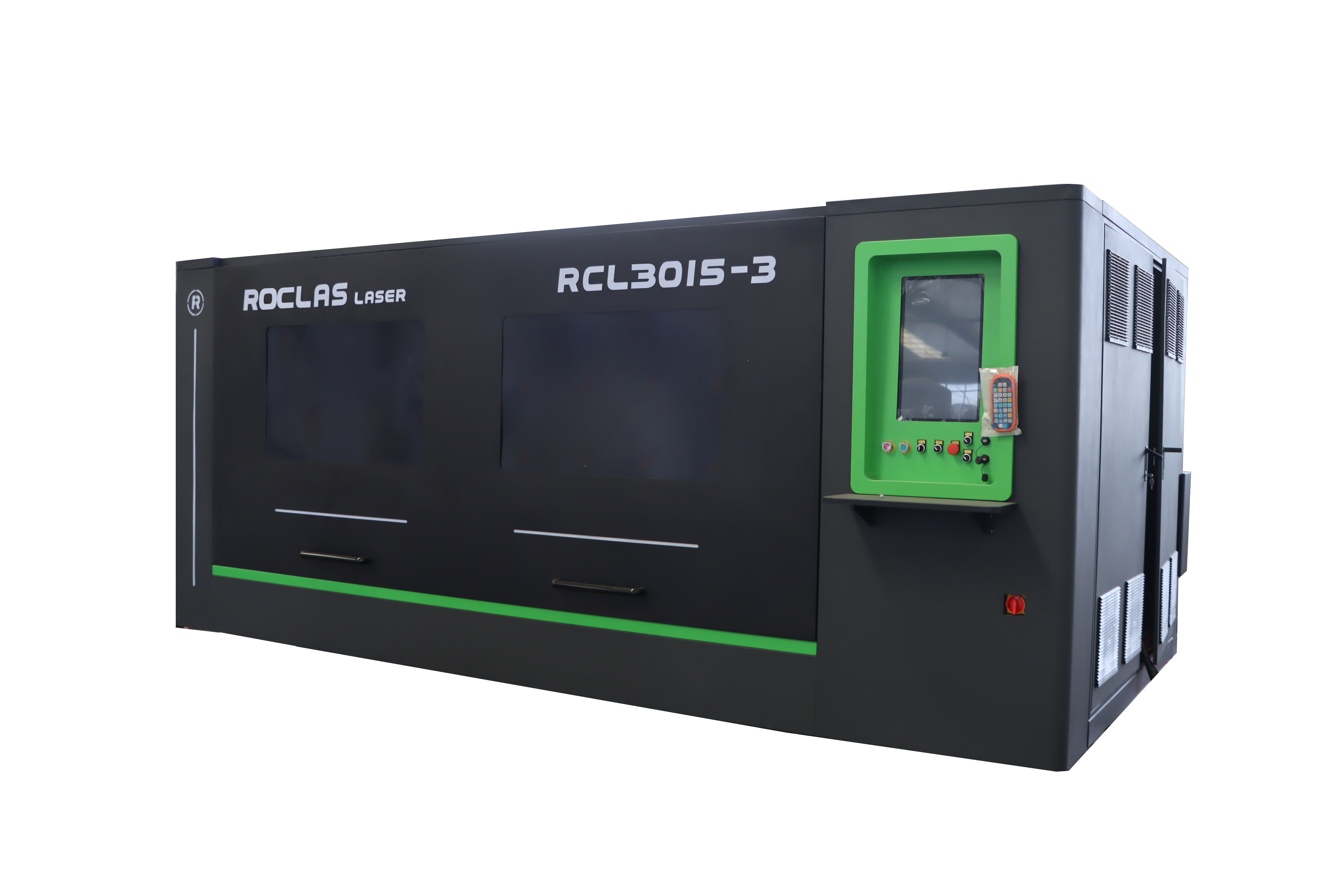
| Fiber Laser Cutting (Sheet & Tube) | Cypcut 3000S | ±0.03 mm | 100 m/min | 2–5 | Multi-axis linear & rotary interpolation, high-reflectivity suppression |
| Woodworking Nesting Router | Syntec / DSP / Mach3 | ±0.05 mm | 60 m/min | 3–4 | Vacuum zoning, auto tool change, nested-based nesting |
| Stone CNC Router (Granite/Marble) | Syntec / Siemens 828D | ±0.08 mm | 30 m/min | 4–5 | Water-cooled spindle control, vibration compensation, pressure sensing |
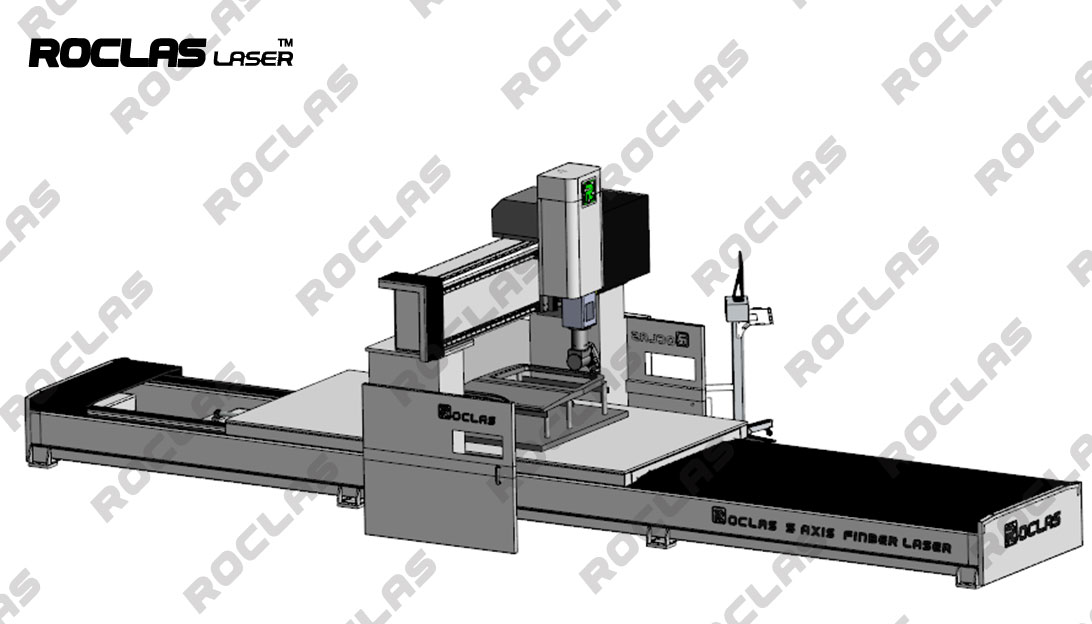
| 5-Axis Laser Cutting Center | Raytools / Cypcut | ±0.05 mm | 80 m/min | 5+ | n×360° infinite rotation, swing head auto calibration |
| Plasma Cutting | Starfire / Hypertherm EDGE | ±0.5 mm | 50 m/min | 2–3 | THC (torch height control), gas mixing tables |
Source: ROCLAS® MACHINERY CO., LTD. product data sheets & industry white papers (2023–2024)
Analysis of Table Data
The data reveals a clear stratification in control precision and speed across applications. Fiber laser cutting systems, such as those equipped with the Cypcut 3000S controller, achieve the highest positioning accuracy (±0.03 mm) and travel speeds (100 m/min), reflecting the demand for high-throughput thin-metal processing. In contrast, stone CNC routers operate at lower speeds (30 m/min) and reduced accuracy (±0.08 mm), primarily due to the hardness and brittle nature of granite and marble, which require slower feed rates and vibration-dampened motion.
Woodworking nesting routers occupy the middle ground, balancing speed (60 m/min) with moderate accuracy (±0.05 mm)—sufficient for cabinet parts, decorative panels, and furniture components. The integration of vacuum zoning and automatic tool changers (ATC) has become standard in this segment, enabling lights-out manufacturing and reduced changeover times.
Notably, the 5-axis laser cutting