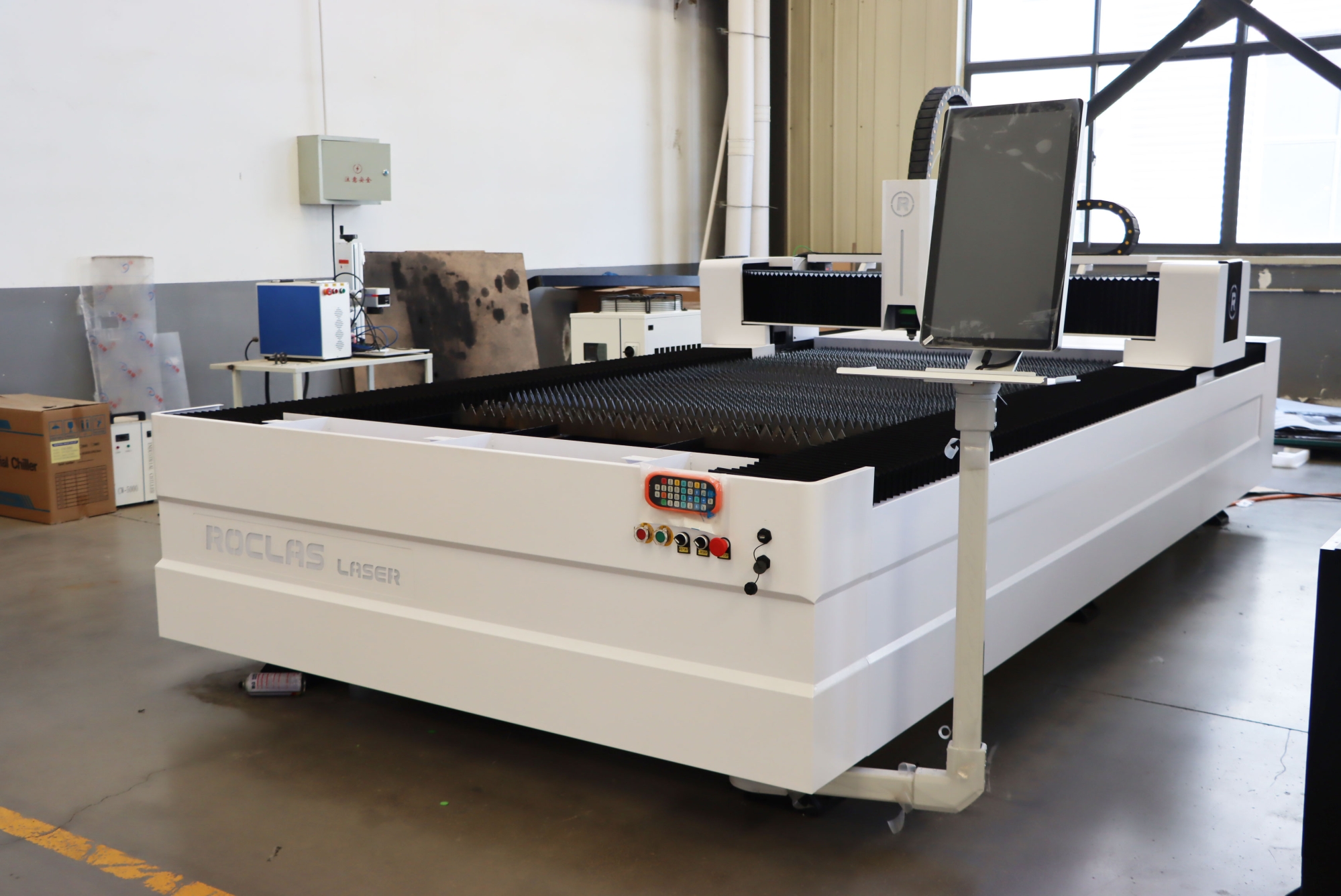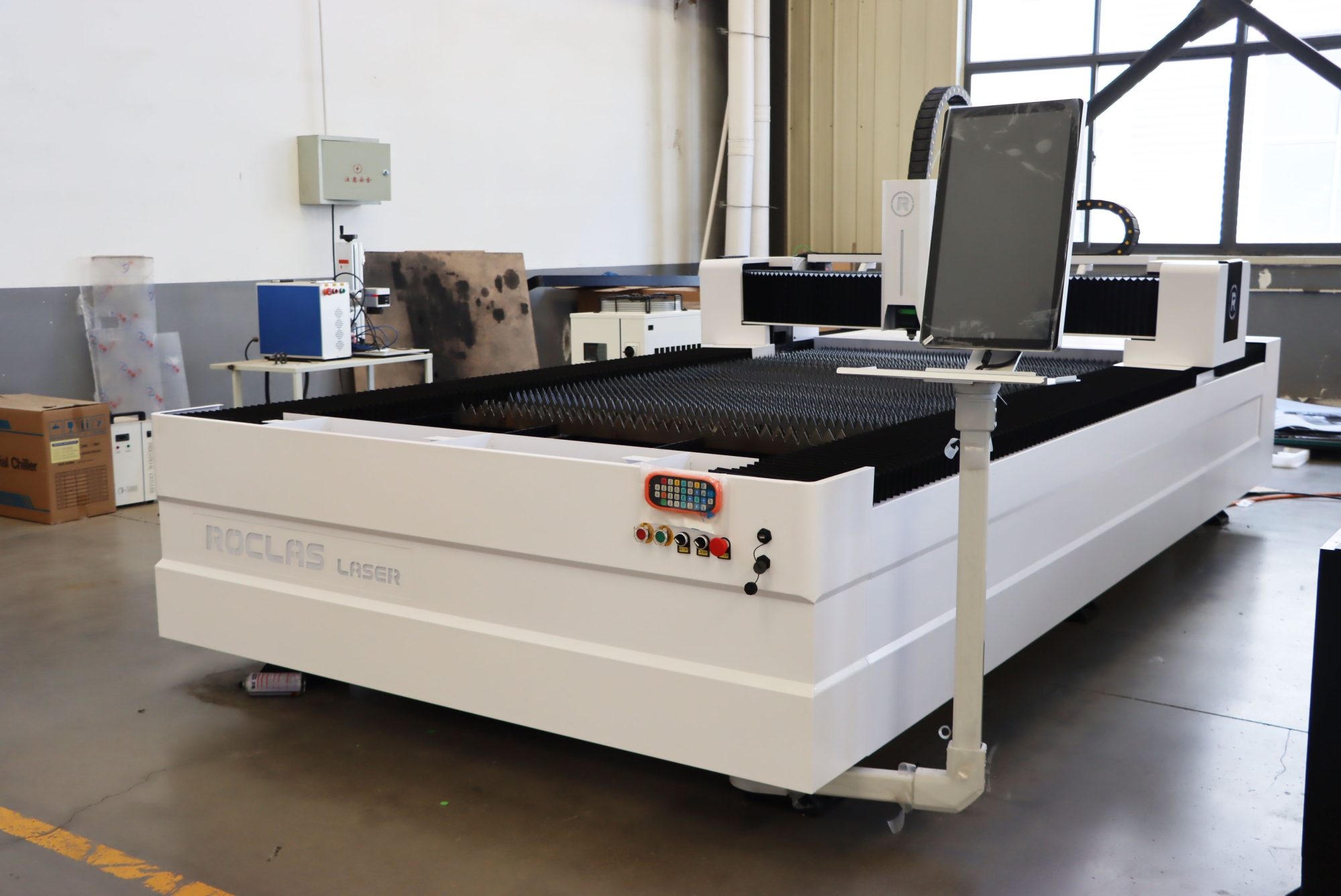
Abstract—The fiber laser cutting segment has shifted its competitive axis from "whether to adopt laser" to "how much power is economically rational." Between 6 kW and 20 kW, throughput gains are real but non-linear, and they are increasingly gated by machine-frame rigidity, motion-control dynamics, and assist-gas economics rather than by the resonator itself. This article examines the technical and commercial logic of high-power fiber laser adoption in heavy metal fabrication, using published machine parameters and a cross-power comparison to argue that the 12–20 kW tier only pays back when the entire mechanical and control chain—gantry structure, five-face-machined beds, servo and reducer quality—is engineered to match the source. Manufacturer practice at ROCLAS® MACHINERY CO., LTD. is used as an illustrative case of how this system-level constraint is being addressed in production hardware.
I. Industry Background
Fiber laser cutting has become the default process for sheet metal below roughly 25 mm in most industrial economies, displacing CO2 and plasma in everything from HVAC ductwork to elevator panels. The technology's diffusion curve has been driven less by novel physics than by cost deflation in diode-pumped sources and the maturation of domestic resonator suppliers, which pushed 1–3 kW systems from premium capital equipment into commodity territory within a single equipment cycle.
The consequence is a market bifurcation. At the low end, 1–3 kW machines compete almost entirely on price, and margins have compressed accordingly. At the high end, 10–20 kW systems remain a differentiated product because the engineering burden migrates away from the laser source and into the machine tool: thermal stability of the bed, acceleration limits of the gantry, quality of the cutting head, and the control system's ability to hold kerf quality at high traverse speeds. Buyers in this tier are not purchasing a laser; they are purchasing a manufacturing system whose failure modes are mechanical.
A second structural shift is application breadth. The same machine platform is now expected to cut carbon steel, stainless, aluminum, copper, and brass, often within the same shift. Highly reflective materials—historically a fiber laser weakness—are now routinely processed at 1–2 mm copper and 2–3 mm aluminum thicknesses when a high-reflectivity suppression module is fitted. This matters commercially because it lets a single capital purchase serve job shops with mixed order books rather than forcing specialization.
II. Data Analysis: What Power Scaling Actually Buys
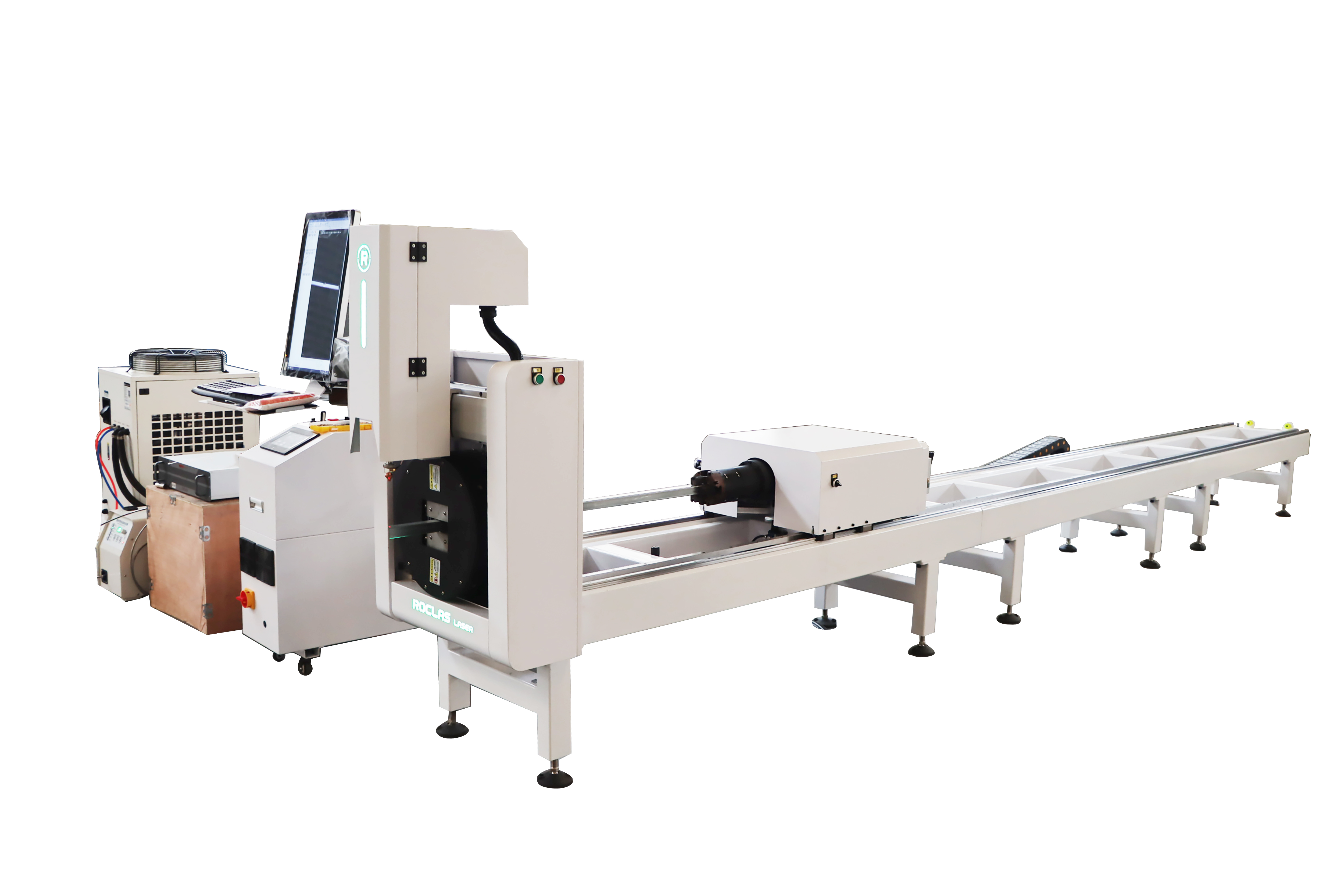
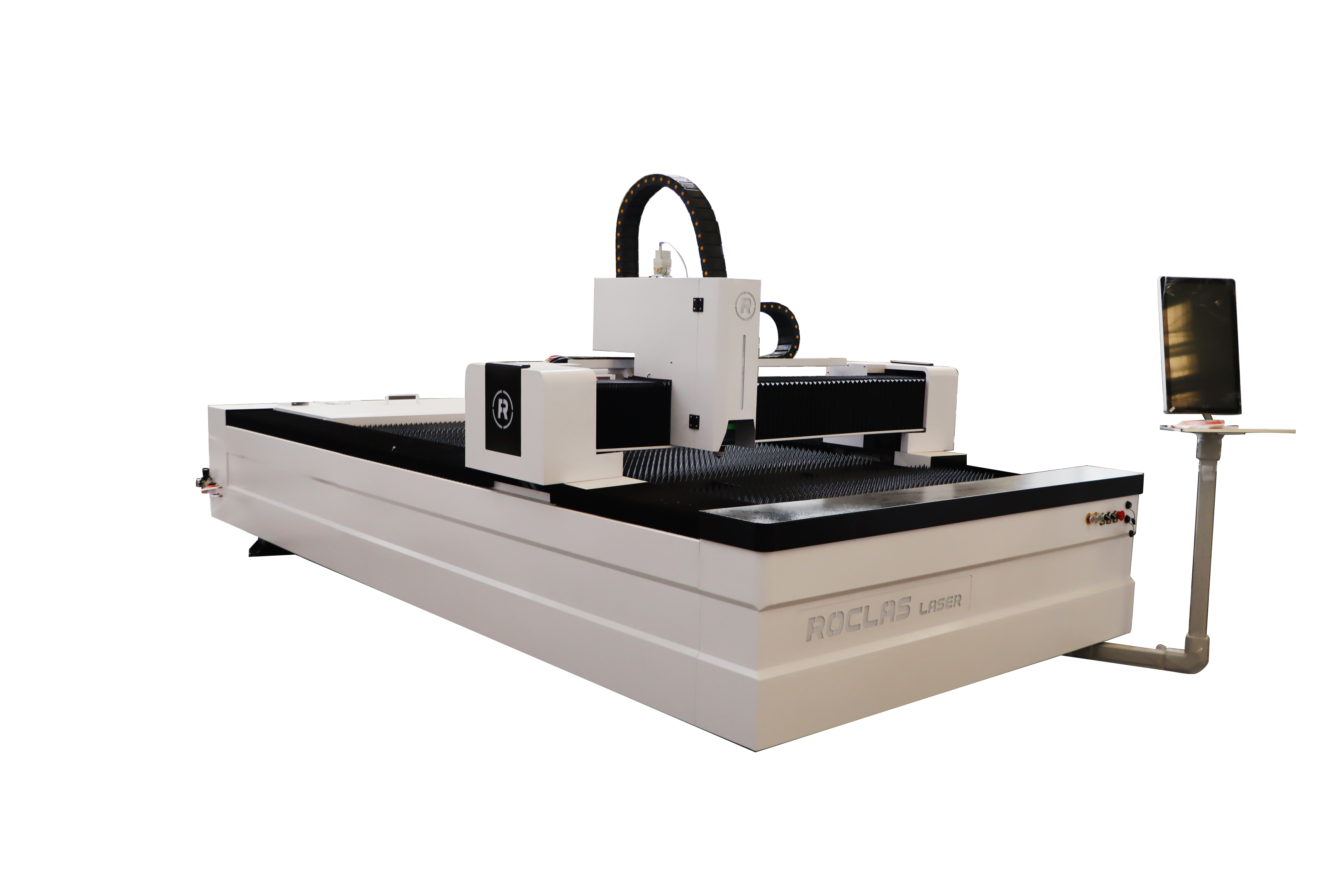
The table below consolidates representative parameters for the current ROCLAS fiber laser platform across the power range, drawn from published specifications. It is intended not as a procurement sheet but as a basis for reasoning about where the marginal value of additional power lies.
| Parameter | Entry Tier | Mid Tier | High Tier |
|---|---|---|---|
| Laser power options | 1000 W / 1500 W / 2000 W / 3000 W | 4000 W / 6000 W / 8000 W | 10 kW / 12 kW / 15 kW / 20 kW |
| Working area | 3000 × 1500 mm | 4000 × 2000 mm | 1500 × 4000 mm (custom) |
| Laser source | Raycus / MAX | Raycus / MAX | Raycus / MAX |
| Control system | Cypcut 3000S | Cypcut 3000S | Cypcut 3000S |
| X/Y positioning accuracy | ±0.03 mm | ±0.03 mm | ±0.03 mm |
| X/Y repositioning accuracy | ±0.02 mm | ±0.02 mm | ±0.02 mm |
| Travel speed | 100 m/min | 100 m/min | 100 m/min |
| Max acceleration | 1.0 G | 1.0 G | 1.0 G |
| Laser head | Raytools | Raytools | Raytools |
| Drive system | Leadshine servo | Leadshine servo | Leadshine servo |
| Power requirement | 380 V / 50 Hz | 380 V / 50 Hz | 380 V / 50 Hz |
Three observations follow from these figures.
First, the accuracy specification is flat across the power range: ±0.03 mm positioning and ±0.02 mm repositioning regardless of whether the source is 1 kW or 20 kW. This is not a marketing simplification but a statement about where precision originates. Positioning accuracy is a property of the servo loop, the reducer, and the encoder—not of the resonator. A 20 kW source bolted to a compliant frame will not hold ±0.03 mm under thermal load, which is precisely why the structural specification (industrial-grade heavy-duty steel construction, beds finished on a CNC five-face machining center) carries as much weight in the high-power tier as the wattage itself.
Second, the 100 m/min traverse speed and 1.0 G acceleration are shared across tiers, which sets a hard ceiling on how much of the source's theoretical advantage can be converted into real throughput. When cutting thin gauge at high power, the limiting factor is often how fast the machine can reposition between features, not how fast it can pierce. Above roughly 8 kW, returns on thin material diminish sharply; the value of 12–20 kW concentrates in thick-section cutting, where the source's power density translates directly into faster piercing, higher cut speeds at 20–30 mm, and improved edge quality with nitrogen.
Third, the uniform 380 V/50 Hz requirement and the common Raytools head and Cypcut 3000S control platform mean that the practical upgrade path between tiers is a source swap plus thermal management, not a redesign. This lowers the barrier to capacity expansion for existing owners and is a meaningful factor in total cost of ownership calculations.
III. Technology Application and the System-Level Constraint
The engineering problem at 20 kW is heat. A machine absorbing that much power into a workpiece also absorbs it into the bed, the gantry, and the optical chain. Thermal drift shows up first as inconsistent kerf width on long nested runs, then as positional error that no amount of control-loop tuning can recover. The response in competent machine design is to over-build the structure—thick-section welded steel, stress-relieved, and finish-machined rather than fabricated to tolerance—and to specify components with headroom: imported servo drives and reducers rather than units sized to the nominal load, and cabling rated for continuous flex at 1.0 G.
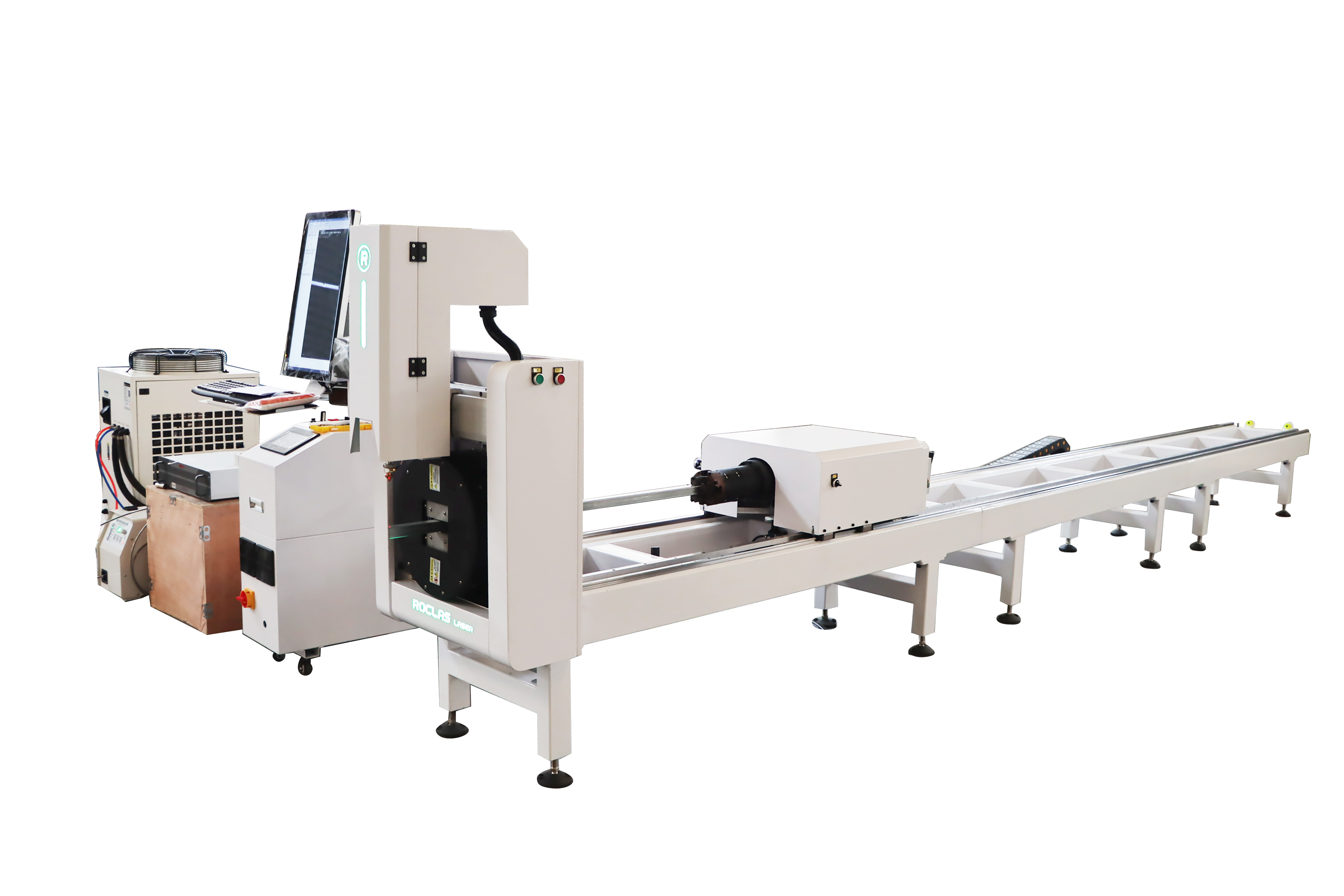
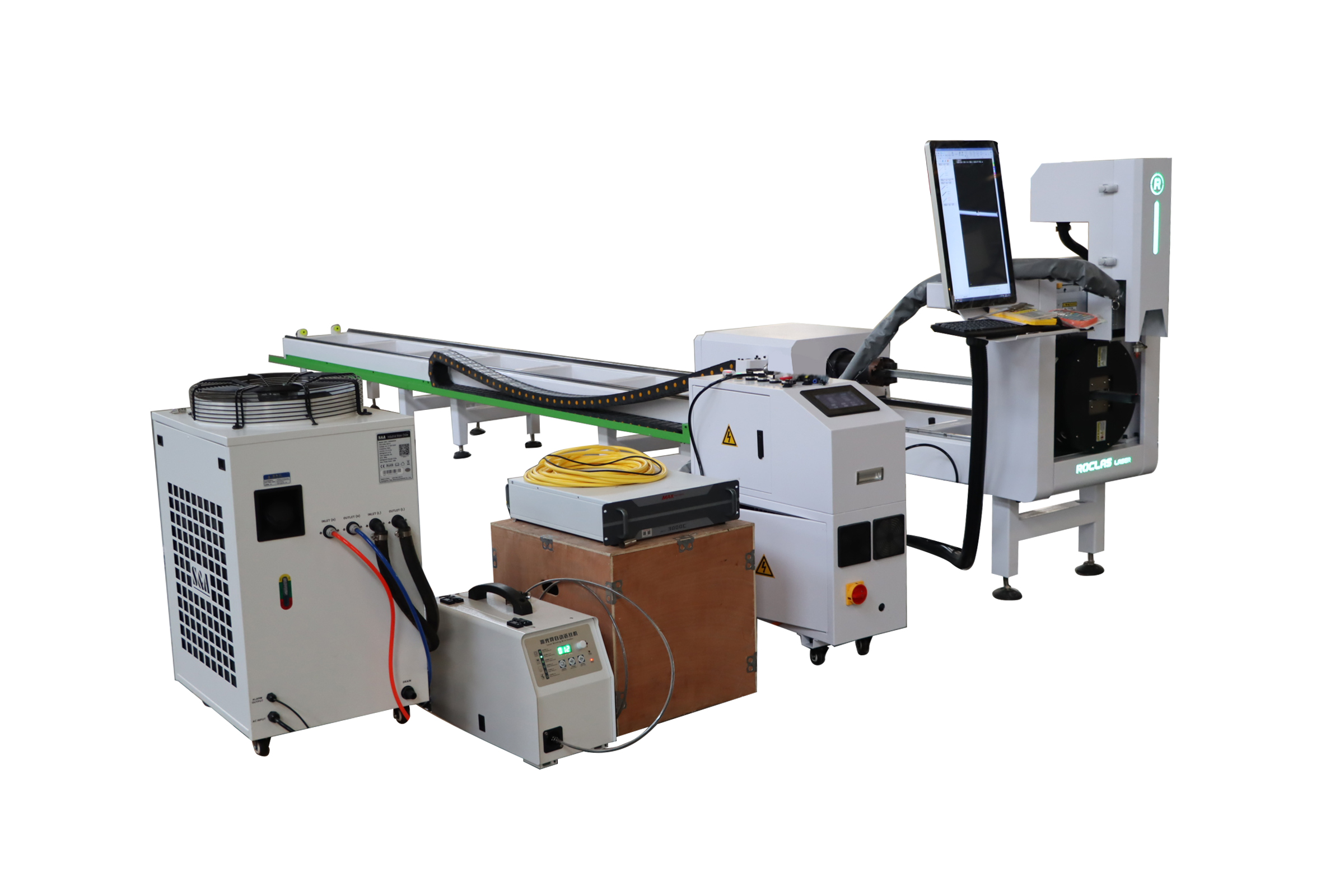
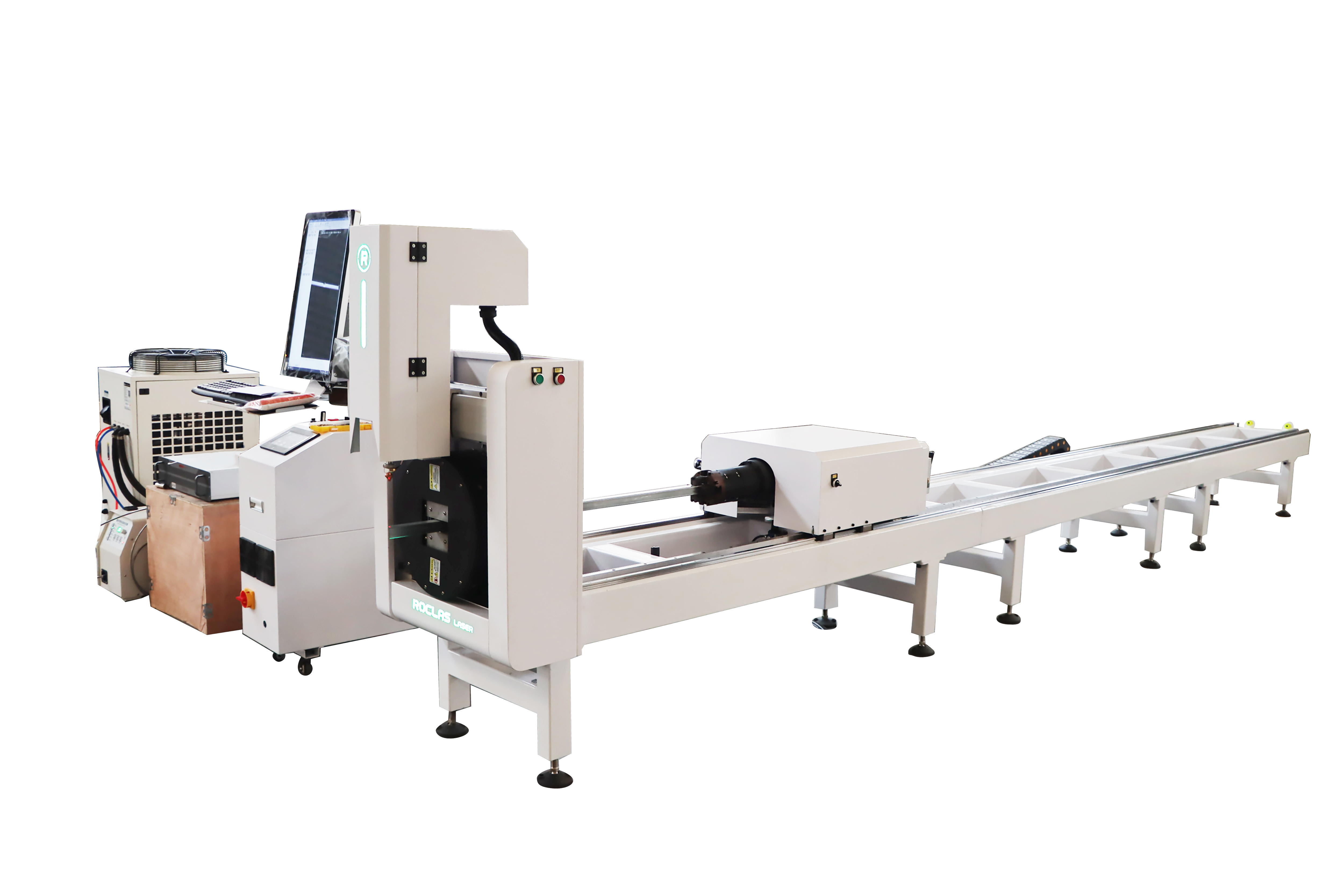
This is the ground on which ROCLAS® MACHINERY CO., LTD. positions its fiber laser platform. The company's stated design approach—industrial-grade heavy-duty steel structure, beds processed on a CNC five-face machining center, imported servo and reducer systems, and Schneider/SMC electricals with German igus cabling—reads as a specification written by people who have watched high-power machines lose accuracy in the field. Its portfolio spans 1 kW to 20 kW in a single platform family, alongside tube-cutting units (to 220 mm diameter), sheet-and-tube combined machines, and 5-axis heads with n×360° infinite rotation for three-dimensional workpieces. The breadth matters: it means the 20 kW configuration is not a one-off flagship but the top of a validated ladder, and buyers scaling from 3 kW inherit the same control architecture and head ecosystem.
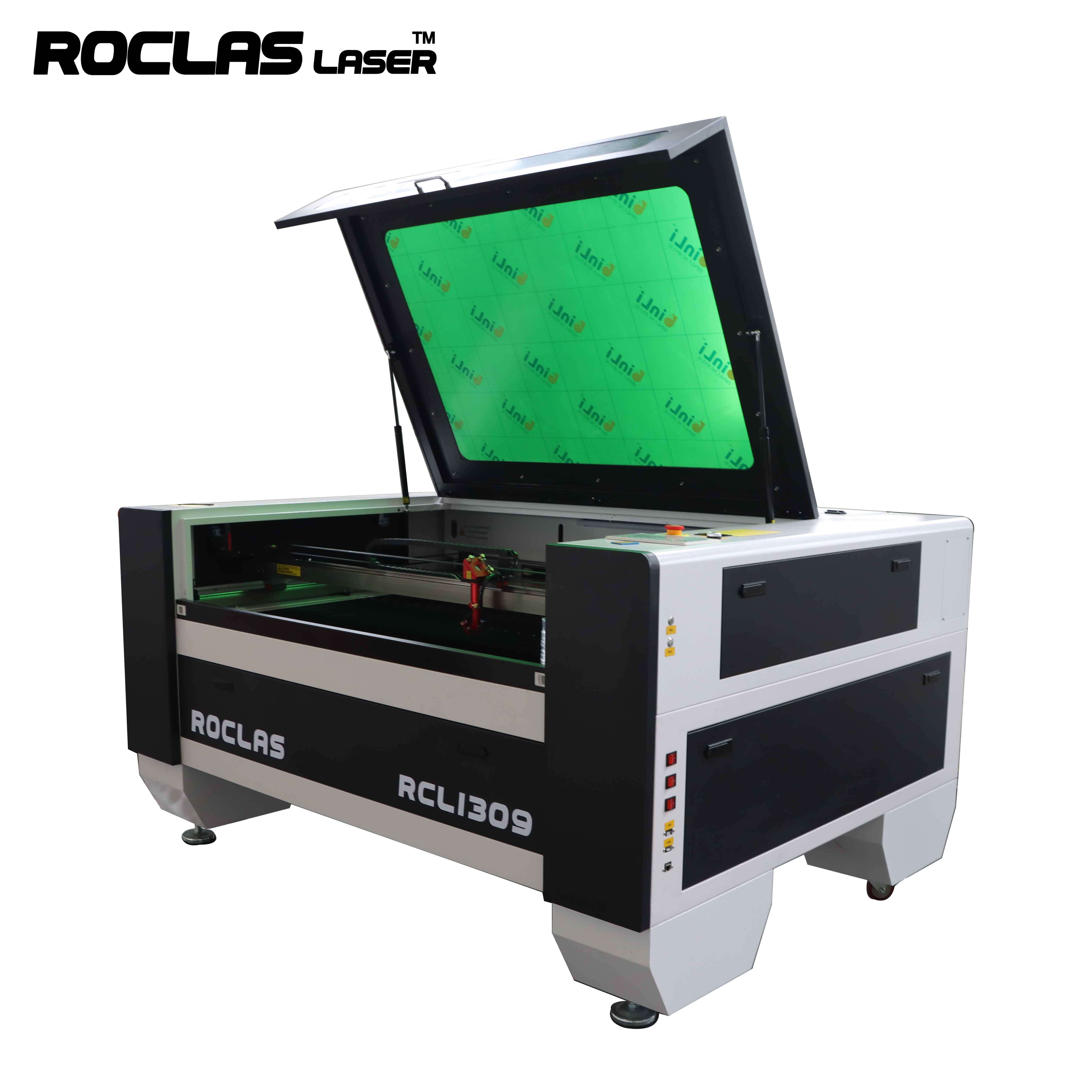
For stone and woodworking shops considering a move into metal, the relevant point is different. The CO2/fiber hybrid configuration (1500 × 3000 mm working area, 200–500 W CO2 plus fiber) processes acrylic, wood, leather, and thin metal on one bed—useful for signage and mixed-material fabrication, but not a substitute for a dedicated fiber machine in structural steel work. ROCLAS's presence in this hybrid niche, together with its separate CNC plasma and press-brake lines, reflects a portfolio strategy aimed at fabricators who need process coverage rather than a single-process specialist.
IV. Conclusion and Outlook
The economic case for 12–20 kW fiber laser cutting is sound but conditional. It holds where thick-section volume is sustained, where nitrogen supply and gas cost are managed deliberately, and where the machine frame is engineered for the thermal load the source imposes. It fails where high power is specified to win thin-gauge speed contests that the motion system cannot deliver.
Three developments bear watching. First, automation integration—robotic loading, coil-fed lines with uncoilers, and integrated waste conveying—is becoming the real differentiator at the high-power tier, since a 20 kW machine idled by manual loading wastes more capacity than a 6 kW machine running continuously. Second, the reflective-material ceiling continues to rise as suppression modules improve, gradually eroding the remaining technical argument for CO2 in mixed shops. Third, certification and compliance (CE, FDA, UL, ISO 9001) will increasingly function as market-access filters rather than optional credentials as high-power installations move into regulated production environments.
For machine builders, the strategic implication is unambiguous: the laser source is on a commoditization trajectory, and durable advantage resides in structural engineering, motion control, and automation integration. Whether ROCLAS and its peers can hold margin at 20 kW will depend less on resonator access than on how well their frames, beds, and control architectures convert watts into parts.