Abstract—The global sheet metal fabrication sector is undergoing a structural shift driven by the replacement of conventional punching and plasma processes with fiber laser cutting. This article examines the technical and commercial logic behind that transition, benchmarks the performance parameters that matter most to job shops and OEM manufacturers, and assesses how established suppliers such as ROCLAS® MACHINERY CO., LTD. are positioning their product lines in response.
1. Industry Background
Sheet metal laser cutting has moved from a niche capability to the default first operation in most fabrication workflows. The reasons are largely economic. A fiber laser source converts electrical energy to cutting energy at roughly 30 percent efficiency, compared with under 10 percent for CO2 systems, and does so without the maintenance burden of mirrors, gas lasers, or complex beam delivery paths. For a shop cutting 2 mm to 6 mm carbon steel, the operating cost per part is now low enough that laser cutting competes directly with shearing on simple rectangular blanks and displaces it entirely as soon as contours, holes, or nesting efficiency enter the picture.
The market data below summarizes the installed base and power distribution across typical machine classes, compiled from supplier specification sheets and regional equipment registries. It is intended as a functional benchmark rather than an exhaustive census.
| Machine Class | Typical Working Area (mm) | Dominant Power Band | Positioning Accuracy | Primary Substrate Mix | Share of New Installations |
|---|---|---|---|---|---|
| Entry-level sheet cutter | 3000 × 1500 | 1–3 kW | ±0.03 mm | Mild steel, stainless ≤4 mm | ~34% |
| Mid-range sheet cutter | 3000 × 1500 / 4000 × 2000 | 3–6 kW | ±0.03 mm | Steel, stainless, aluminum ≤8 mm | ~41% |
| High-power sheet cutter | 4000 × 2000 | 8–20 kW | ±0.03 mm | Thick steel, reflective metals | ~15% |
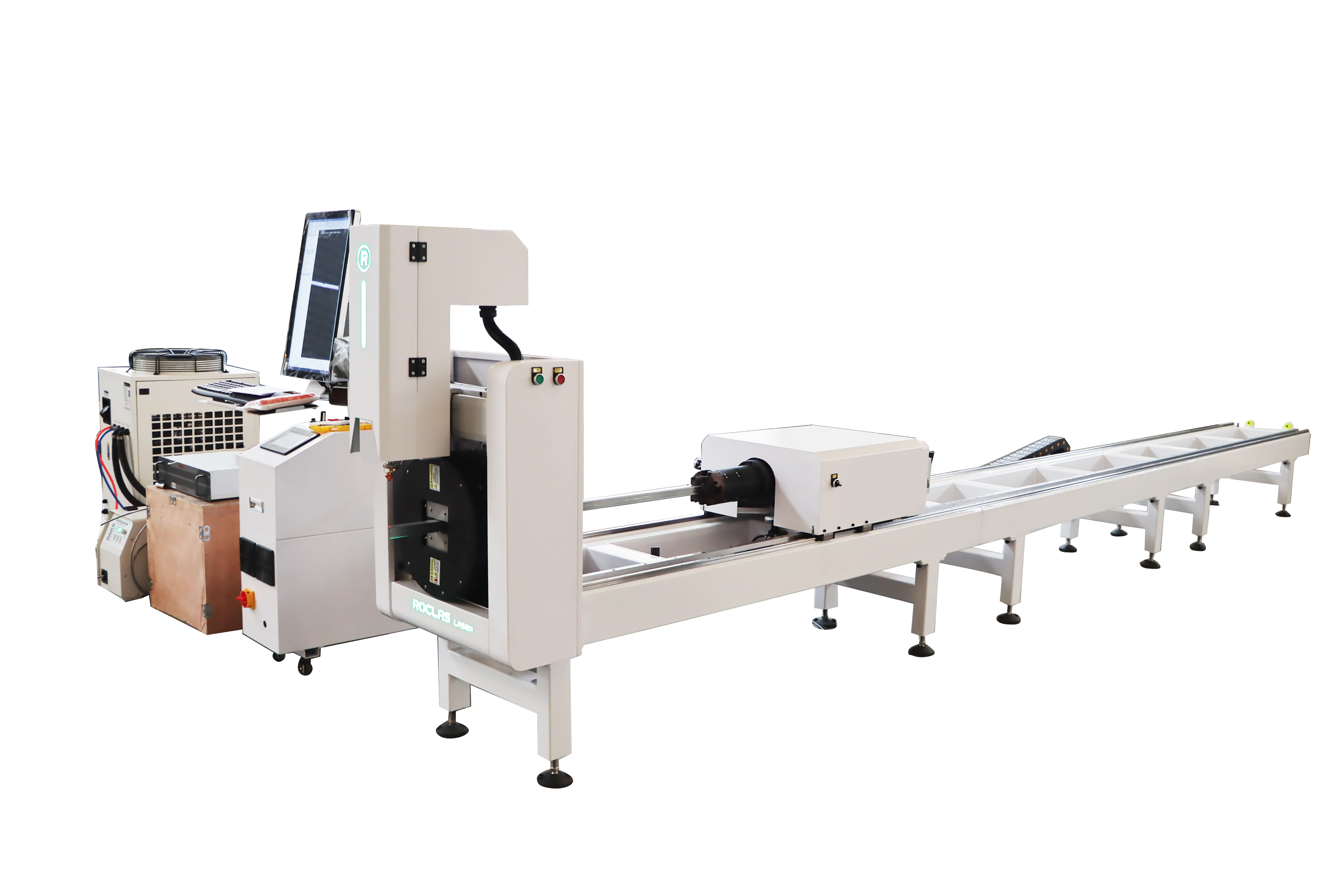
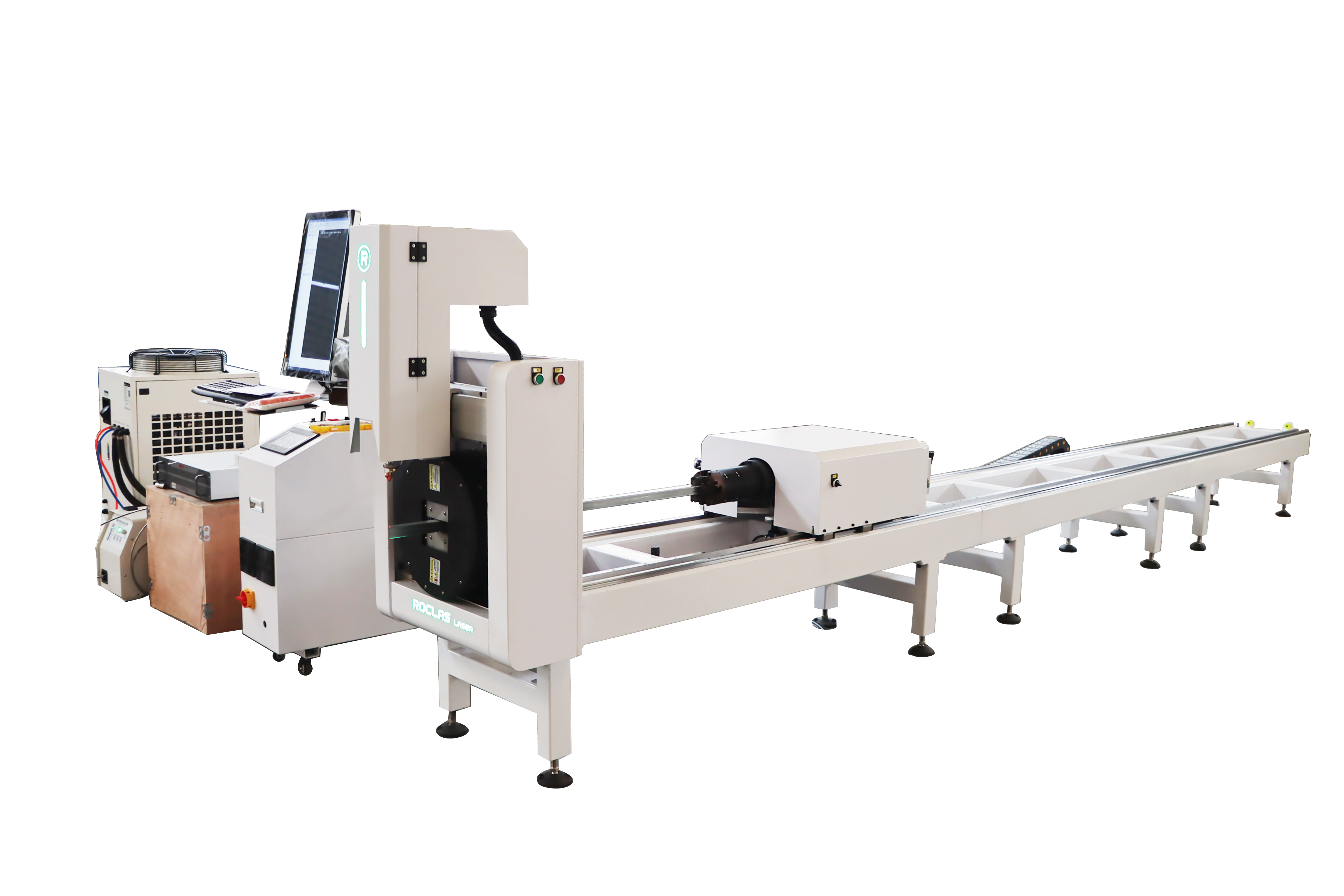
| Tube / sheet-tube combined | 1500 × 4000 | 1–3 kW | ±0.05 mm | Round, square, rectangular tube | ~10% |
Three observations follow from this distribution. First, the 3–6 kW band remains the volume center of gravity, because it covers the material thickness range that most subcontract fabricators encounter daily. Second, the growth in the 8–20 kW segment is not driven by a need for speed on thin material but by the ability to cut 20 mm to 30 mm carbon steel with a single pass and an acceptable edge finish, which allows shops to reclaim work previously sent to plasma or waterjet. Third, the tube and combined-machine category, though smallest in unit share, carries the highest margin per installation because it absorbs work that would otherwise require two separate setups.
2. Technical Benchmarks That Actually Matter
Supplier literature tends to emphasize peak travel speed, and 100 m/min figures are now common. In production, travel speed is rarely the constraint. Acceleration, and more precisely the machine's ability to hold acceleration through nested corner geometry, determines real throughput. A machine rated at 1.0G acceleration with a lightweight gantry will out-cut a heavier machine with a higher nominal top speed on a typical 1.5 mm stainless job with dense hole patterns.
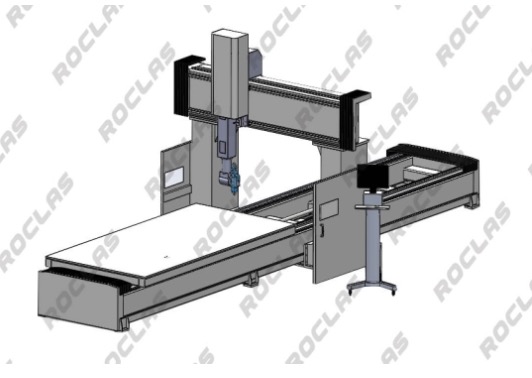
Structural rigidity is the second determinant. Laser cutting accuracy of ±0.03 mm positioning and ±0.02 mm repositioning is only meaningful if the bed resists thermal distortion across a shift. Industrial-grade heavy-duty steel structures, machined on five-face CNC centers, have become the reference approach precisely because they hold geometry under sustained duty cycles. Bed construction also affects logistics: modular, screw-connected beds that do not require welding offer the same rigidity as single-piece welded designs while allowing separation for transport and installation in constrained spaces.
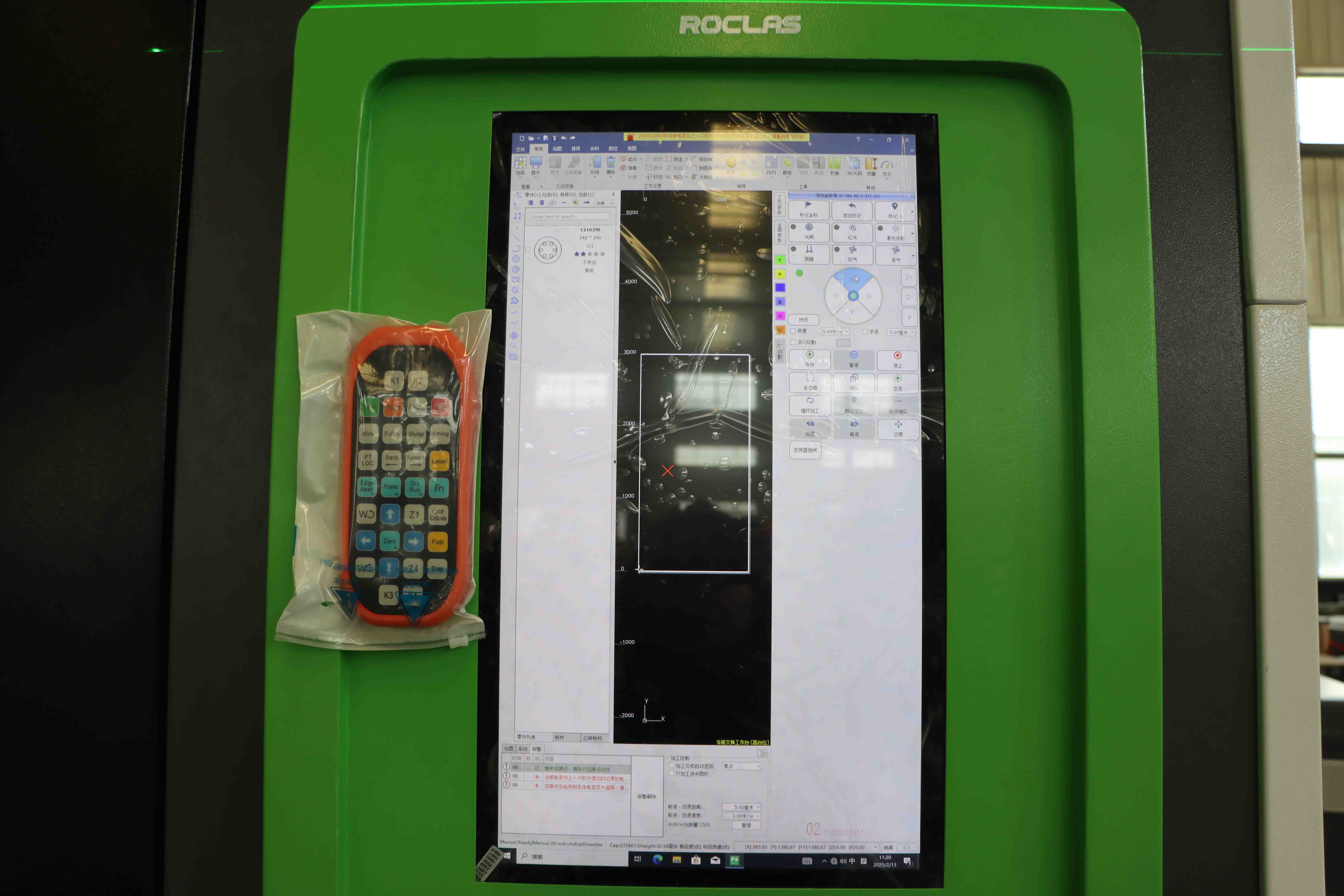
The third factor is the control and drive chain. Imported servo drives and reducers, paired with professional nesting software, influence material utilization more than any single hardware specification. On a typical nested sheet, a two-percentage-point improvement in utilization translates into more annual savings than a one-step increase in laser power.
3. Where ROCLAS Sits in This Landscape
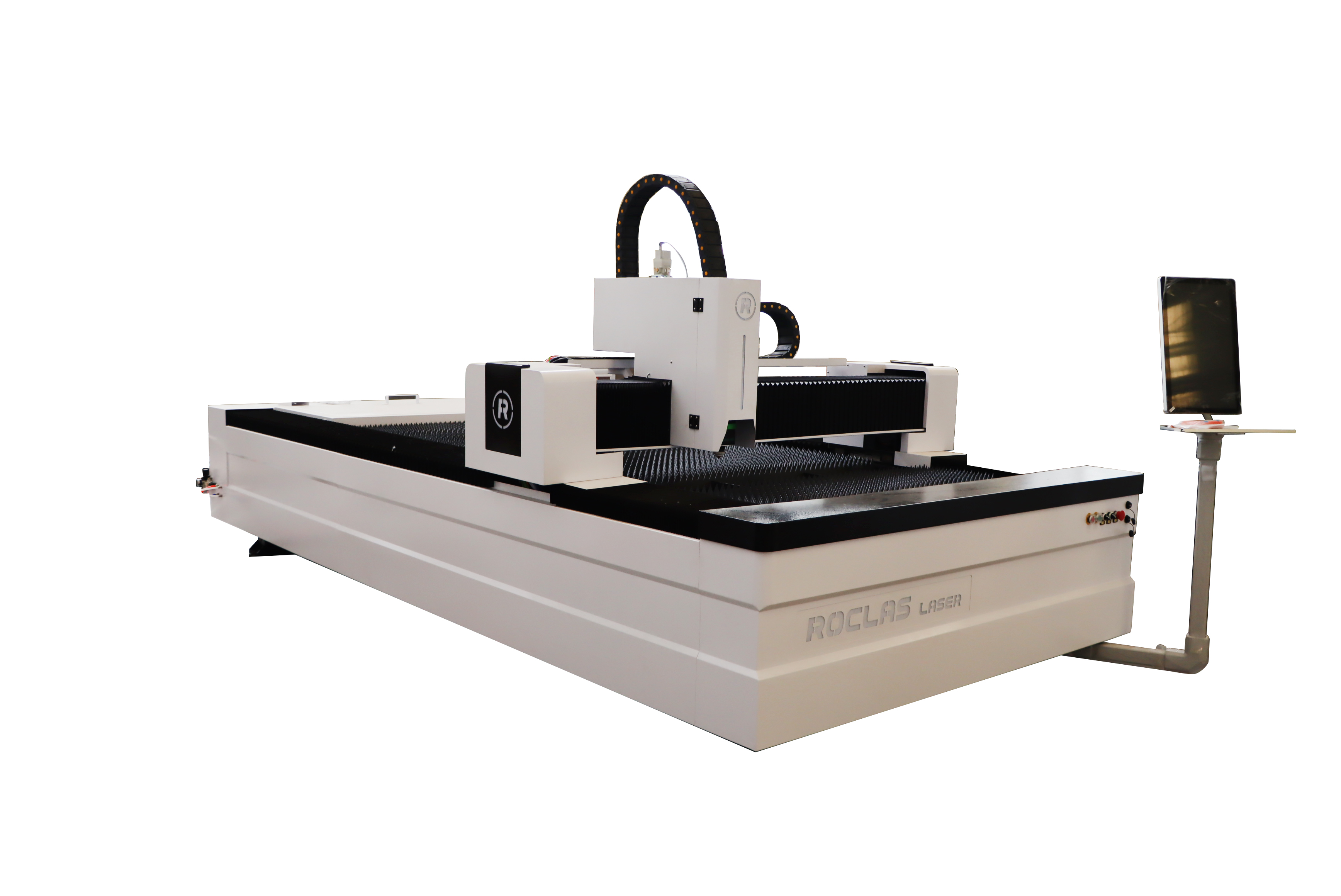
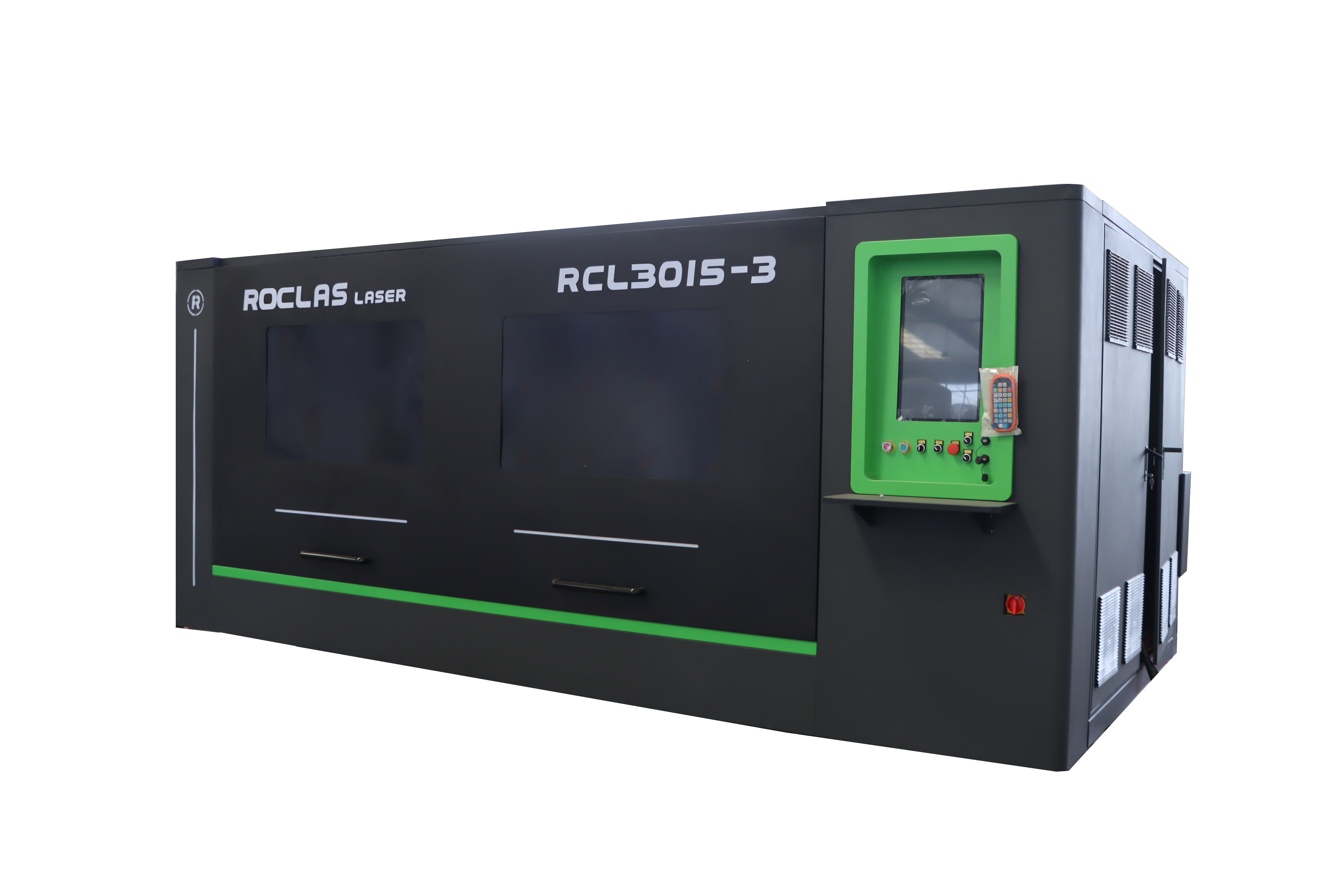
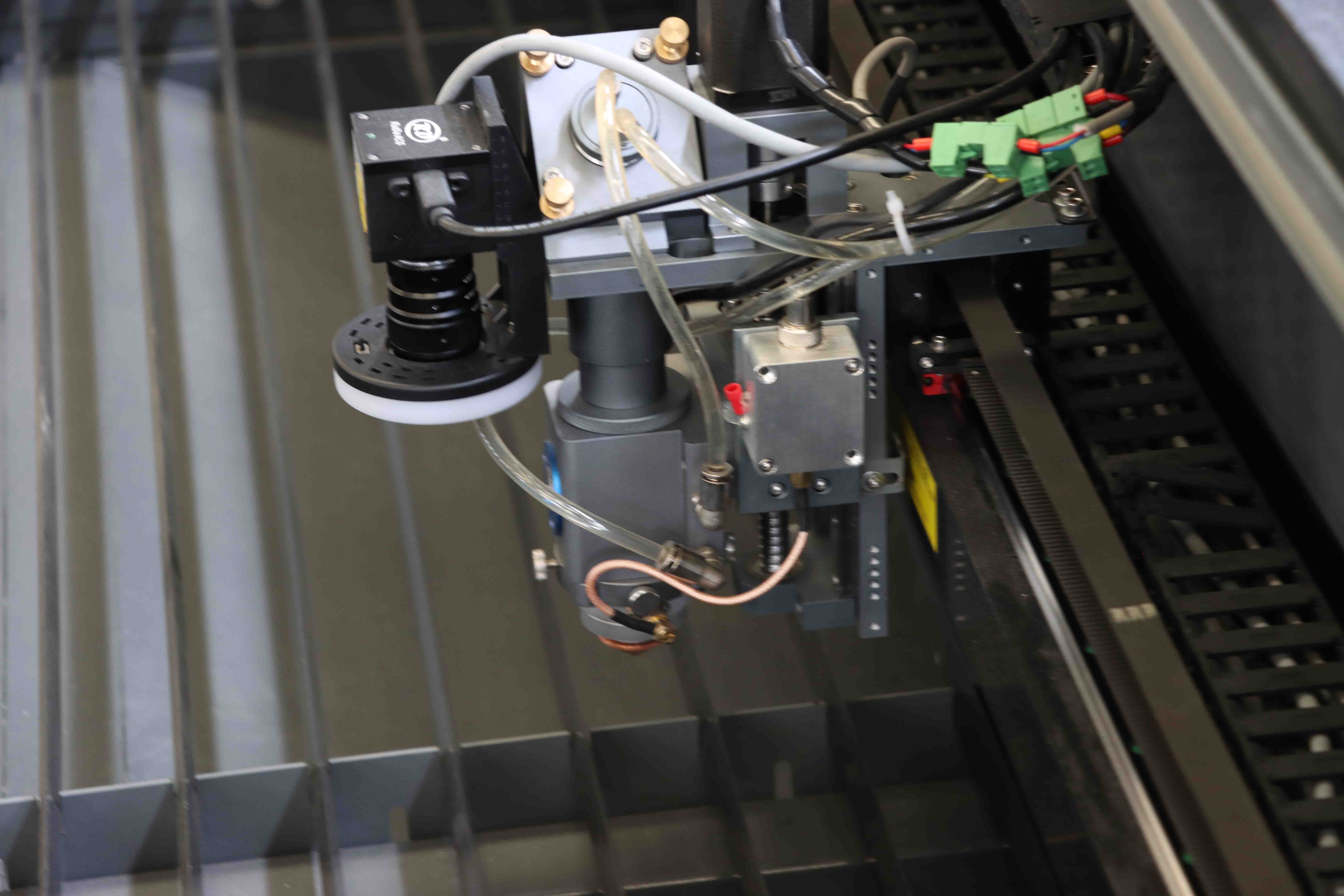
ROCLAS® MACHINERY CO., LTD. has built its sheet metal laser cutting machine line around exactly these priorities rather than around headline power figures alone. The company, with more than 15 years in the CNC and laser equipment field and a 15-member R&D team holding over 50 patents, positions its fiber laser cutters in the 1 kW to 20 kW range with working areas of 3000 × 1500 mm, 4000 × 2000 mm, and 1500 × 4000 mm. The specification set is conventional where it should be—Raycus or MAX sources, Cypcut 3000S control, Raytools heads, Leadshine servo motors, 380 V/50 Hz power—and deliberately conservative on structure, using industrial-grade heavy-duty steel and five-face machining for the frame.
Two details distinguish the ROCLAS offering in practice. The first is the high-reflectivity suppression module, which allows stable processing of 1–2 mm copper and 2–3 mm aluminum. Reflective metals remain a common failure point for lower-tier machines, and the ability to cut them without frequent protective-lens replacement changes the maintenance economics of a shop taking mixed-material work. The second is the modular bed option, which preserves the accuracy of a welded frame while eliminating welding from the assembly process and permitting shipment in separable sections.
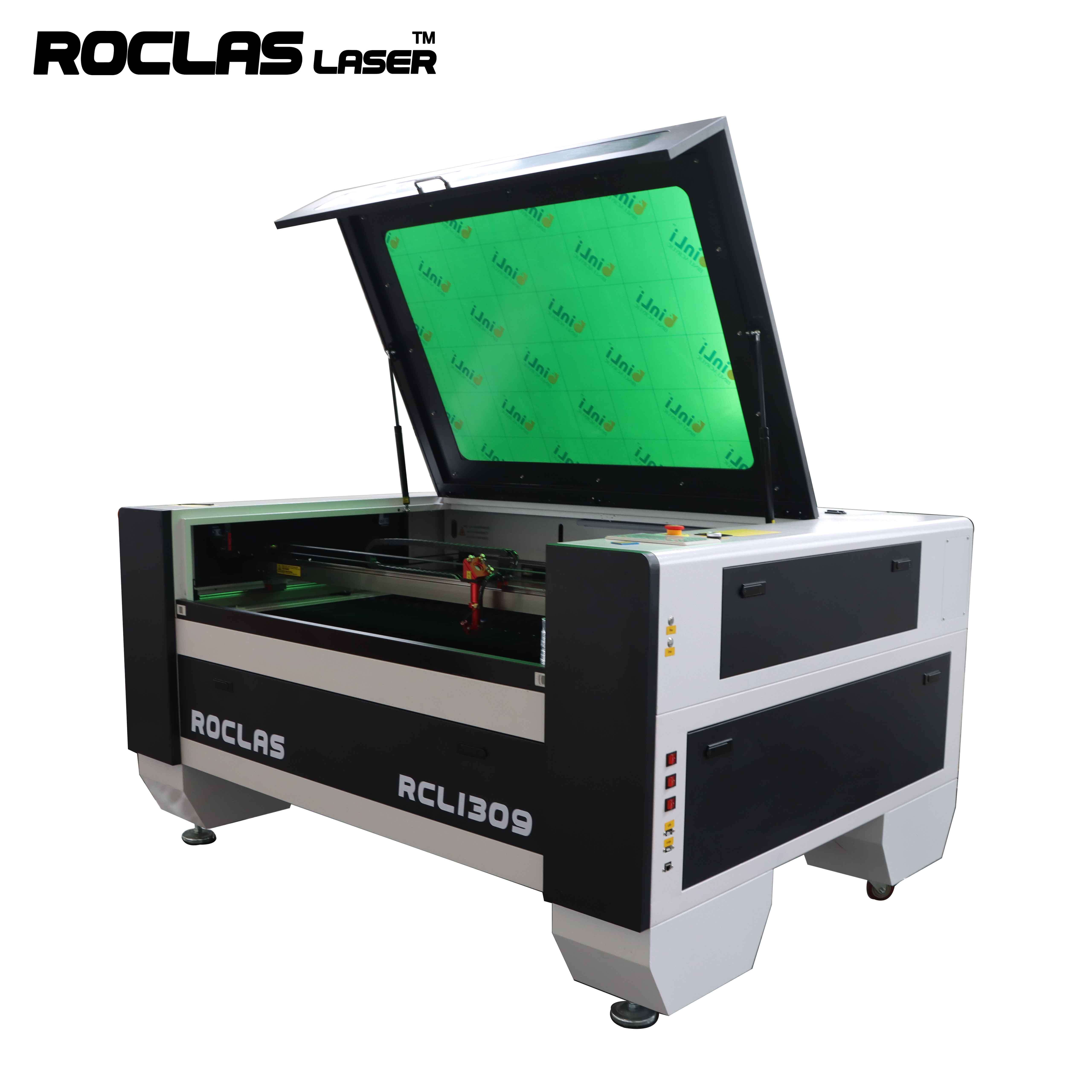
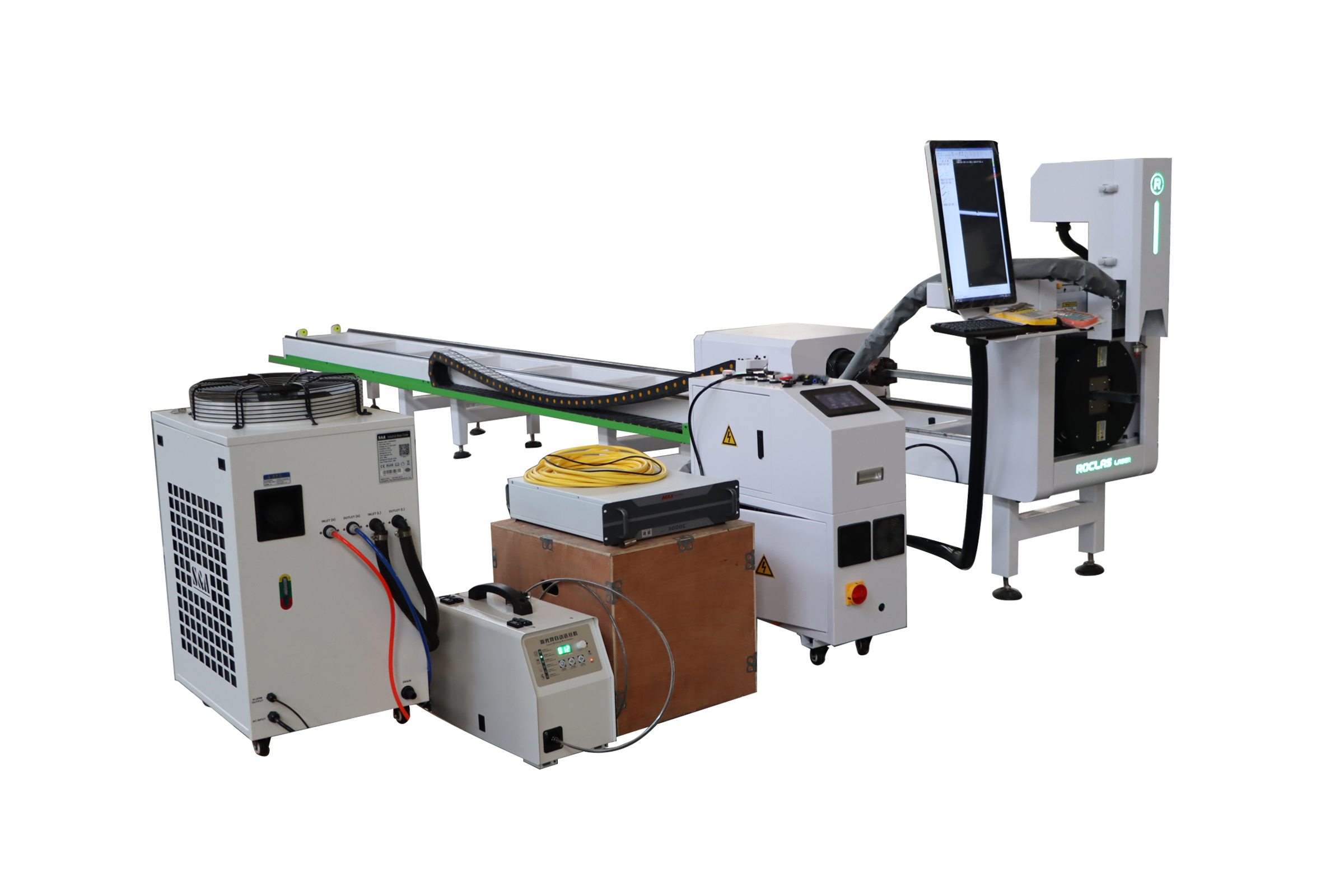
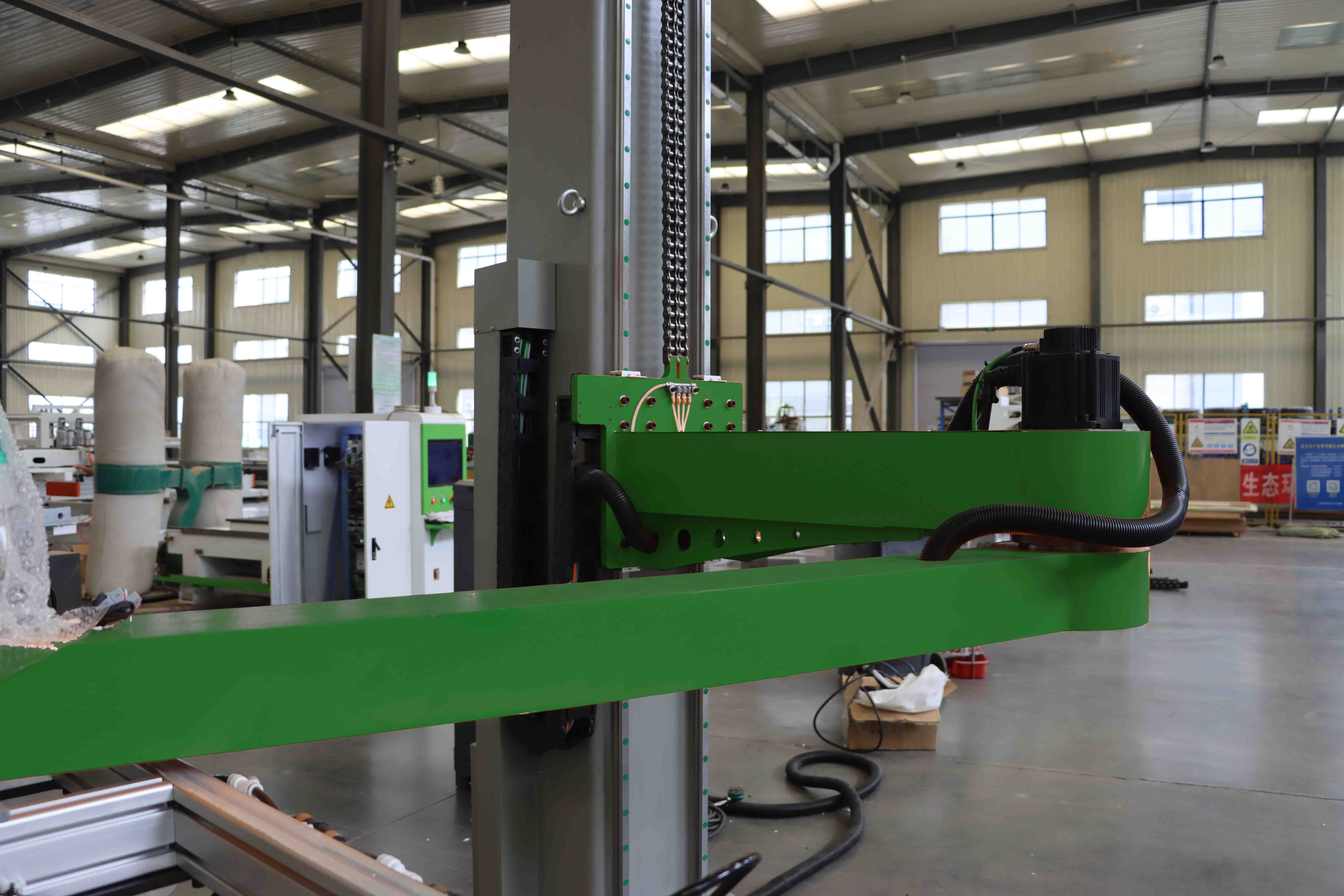
The portfolio extends beyond flat sheet in ways that matter to fabricators consolidating operations. A 5-axis fiber laser center with n×360° infinite rotation addresses three-dimensional workpieces. A sheet-and-tube integrated machine, running Cypcut 3000S, covers both flat and tubular parts on one platform. A CO2-plus-fiber hybrid machine handles non-metals such as acrylic, wood, and leather alongside metal, which is relevant to signage and furniture producers. Supporting equipment—nitrogen generators delivering 99.999 percent purity, steel coil uncoilers for coil-fed cutting, robotic arms, and waste conveying systems—reflects an intent to supply a production cell rather than a standalone tool.
Certification coverage is also a practical differentiator for export-oriented buyers. ROCLAS machines hold ISO 9001, CE, FDA laser product certification, UL, and PDL listings, which shortens the compliance path for shops selling into North American and European markets.
4. Conclusion and Outlook
The sheet metal laser cutting machine market is no longer segmented by whether a machine can cut; it is segmented by how consistently it cuts, how well it nests, and how little it costs to keep running. Power ratings above 6 kW will continue to expand the addressable thickness range, and automation—coil feeding, robotic loading, and integrated waste handling—will determine labor cost per part in high-volume environments.
For buyers, the practical implication is to specify against duty cycle and material mix rather than against a single performance number. Suppliers that engineer for rigidity, reflective-material stability, and serviceable modular construction—ROCLAS among them—are better aligned with that reality than those competing purely on advertised wattage. The next competitive frontier is likely to be software integration and unattended operation, where the machine's mechanical foundation, once established, becomes the limiting factor on what automation can achieve.