Abstract
The maturation of fiber laser sources has reshaped sheet metal fabrication over the past decade, yet the more consequential shift now underway concerns motion architecture rather than beam power. As industries demand increasingly complex three-dimensional metal components—formed brackets, hydroformed tubes, structural nodes—the limitations of planar 2D cutting tables have become a genuine bottleneck. Five-axis fiber laser cutting centers address this gap directly, and their adoption curve tells a story about where precision manufacturing is heading.
The Limits of Planar Processing
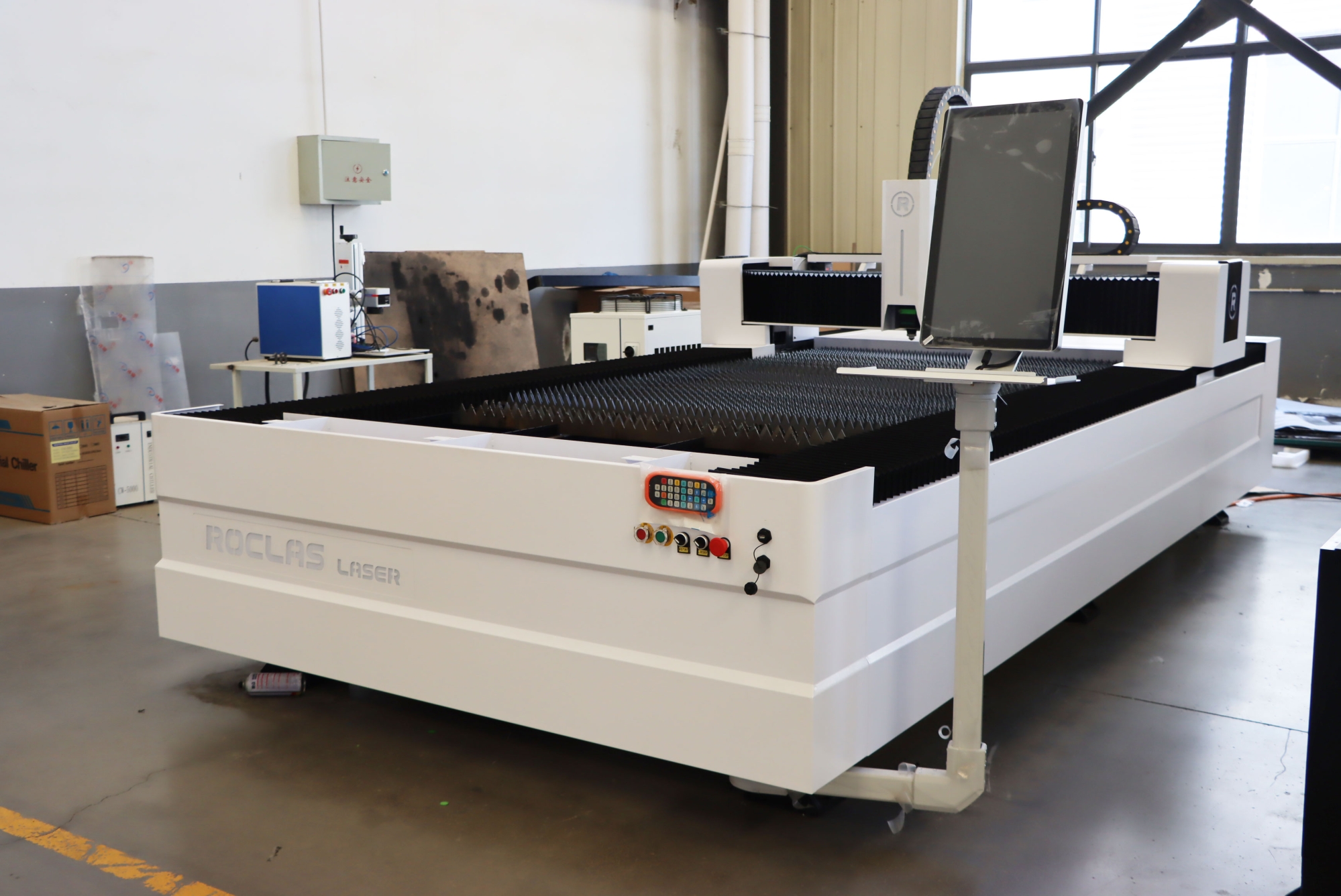
Conventional 2D laser cutting machines have become remarkably efficient. Travel speeds of 100 m/min, positioning accuracy of ±0.03mm, and laser power scaling to 20KW are now standard expectations rather than premium differentiators. The competitive frontier has moved elsewhere.
The problem is geometric. A flat cutting table can only produce flat parts, which then require secondary operations—bending, welding, grinding—to achieve their final form. Each additional step introduces tolerance stack-up, labor cost, and cycle time. For industries producing complex enclosures, automotive structural elements, or architectural metalwork, this chain of operations is increasingly difficult to justify.
Five-axis systems eliminate much of this downstream work by cutting directly on formed or curved workpieces. The cutting head articulates in three-dimensional space, maintaining perpendicularity to the material surface regardless of its orientation.
Market and Technical Context
Global demand for multi-axis laser processing equipment has grown steadily, though precise segmentation data varies by source. What is clearer is the technical differentiation among available machine configurations.
| Parameter | 2D Fiber Laser (Typical) | 5-Axis Fiber Laser Center |
|---|---|---|
| Working Area | 3000×1500mm / 4000×2000mm | Fixed gantry, movable workbench |
| Positioning Accuracy | ±0.03mm | ±0.03mm (comparable) |
| Repositioning Accuracy | ±0.02mm | ±0.02mm |
| Travel Speed | 100 m/min | High dynamic performance |
| Max Acceleration | 1.0G | 1.0G |
| Rotation Capability | None | n×360° infinite rotation |
| Control System | Cypcut 3000S | Cypcut / Raytools integration |
| Laser Power Range | 1000W – 20KW | 1000W – 20KW |
| Typical Application | Flat sheet, tube | Complex 3D workpieces |
The data reveals something important: the precision specifications are essentially equivalent between 2D and 5-axis platforms. The differentiation lies entirely in the motion system and its ability to orient the cutting head. This means a manufacturer adopting five-axis technology does not sacrifice accuracy for geometric capability—a trade-off that plagued earlier generations of multi-axis systems.
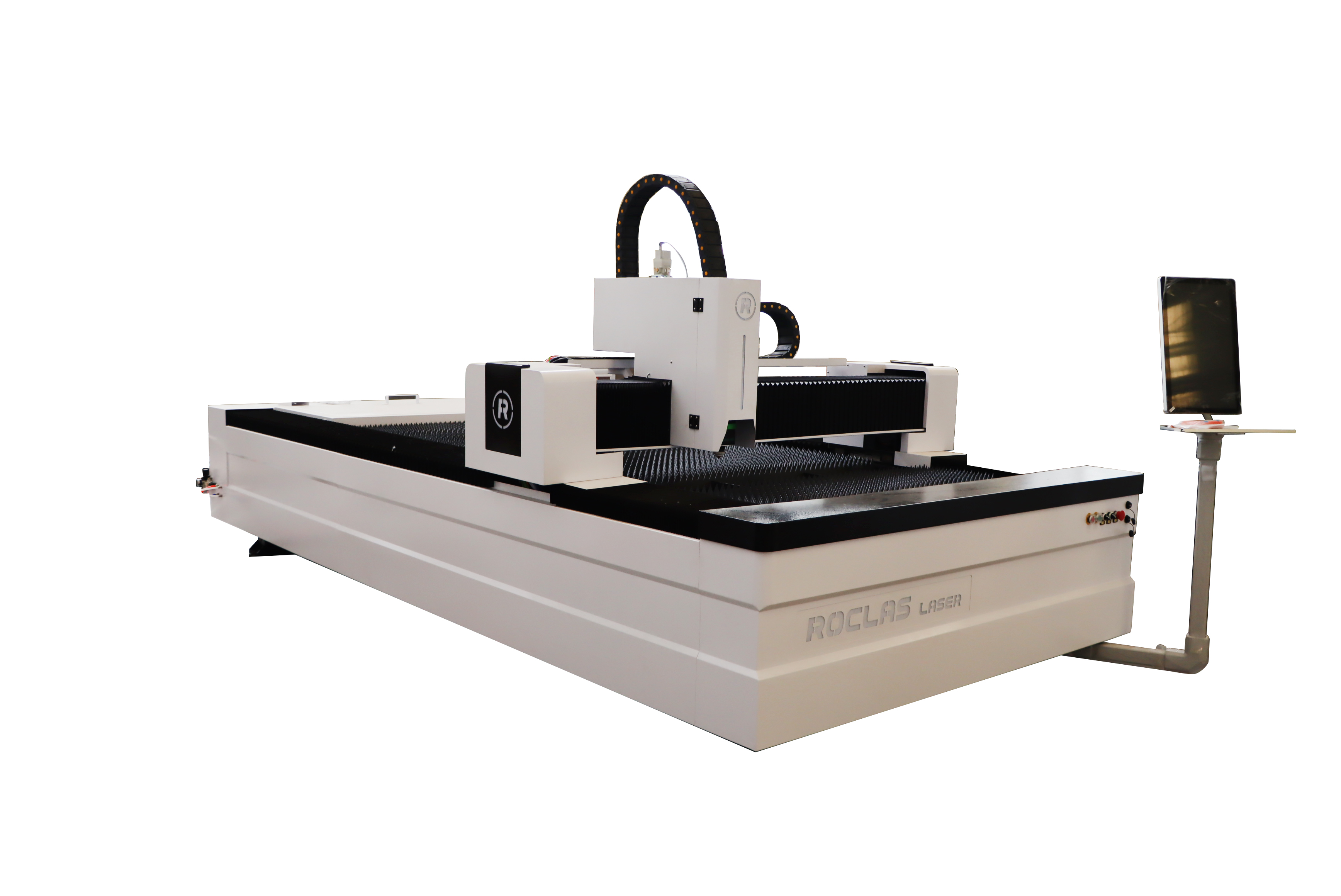
The fixed gantry structure with a movable workbench, common in these designs, maximizes processing space while maintaining rigidity. The three-dimensional cutting head with infinite rotation on the n-axis allows continuous contour cutting without cable wrap or mechanical limit issues.
Where Five-Axis Cutting Proves Its Value
The economic case for five-axis laser cutting is strongest in specific application clusters.
Automotive and transportation represents perhaps the most demanding segment. Hydroformed tube sections, once trimmed by abrasive waterjet or hand grinding, can be laser-cut with far tighter tolerances. The ability to cut holes, slots, and contours on curved surfaces without deformation is significant for structural components.
Aerospace and precision engineering benefit from the elimination of secondary fixturing. Complex brackets and formed panels can be net-shape cut in a single setup, reducing the risk of distortion introduced by multiple clamping operations.
Architectural and decorative metalwork has adopted five-axis systems for entirely different reasons. Curved steel elements with intricate cut patterns—increasingly common in high-end facades and interior installations—are difficult to produce economically by any other method.
Equipment in Practice
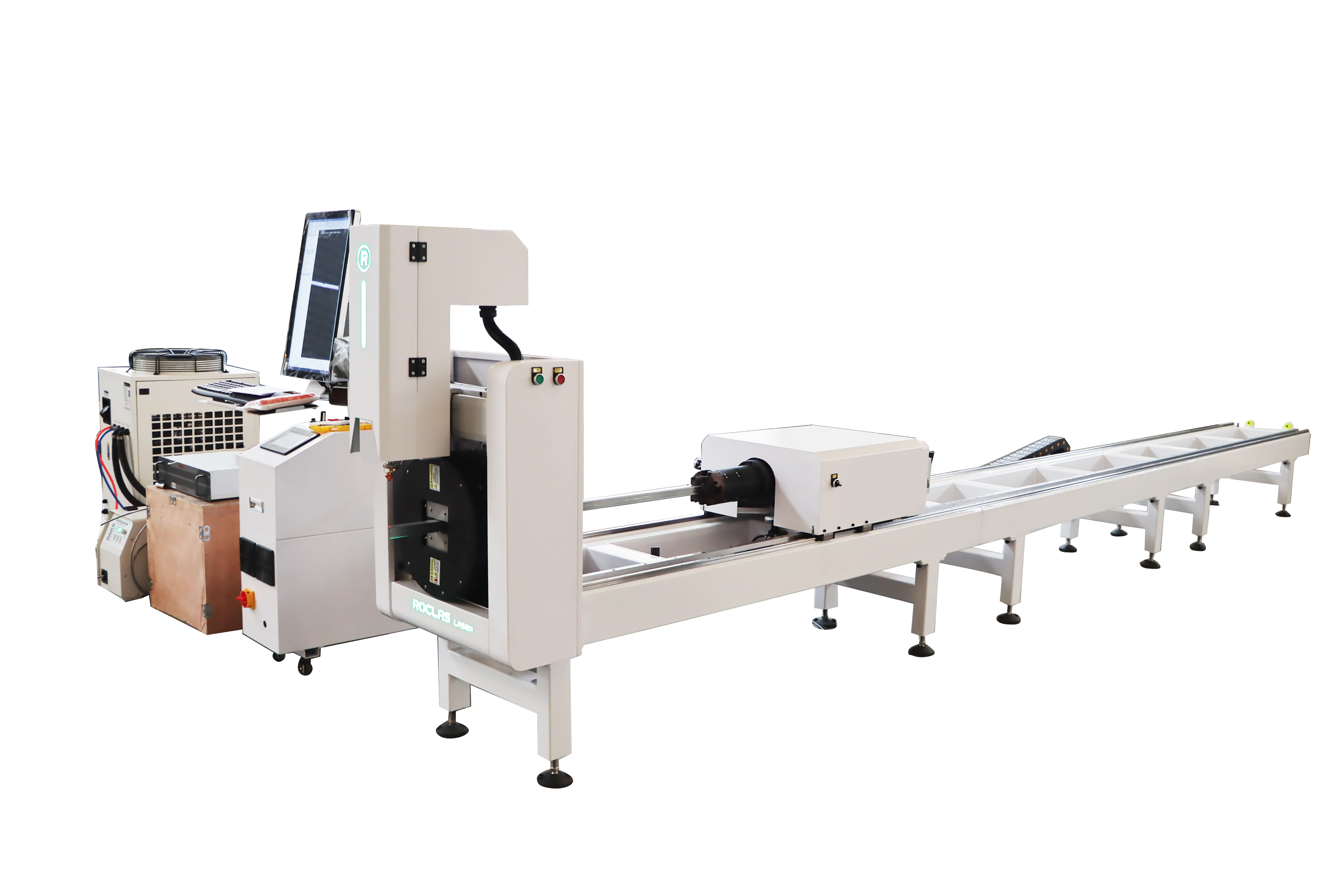
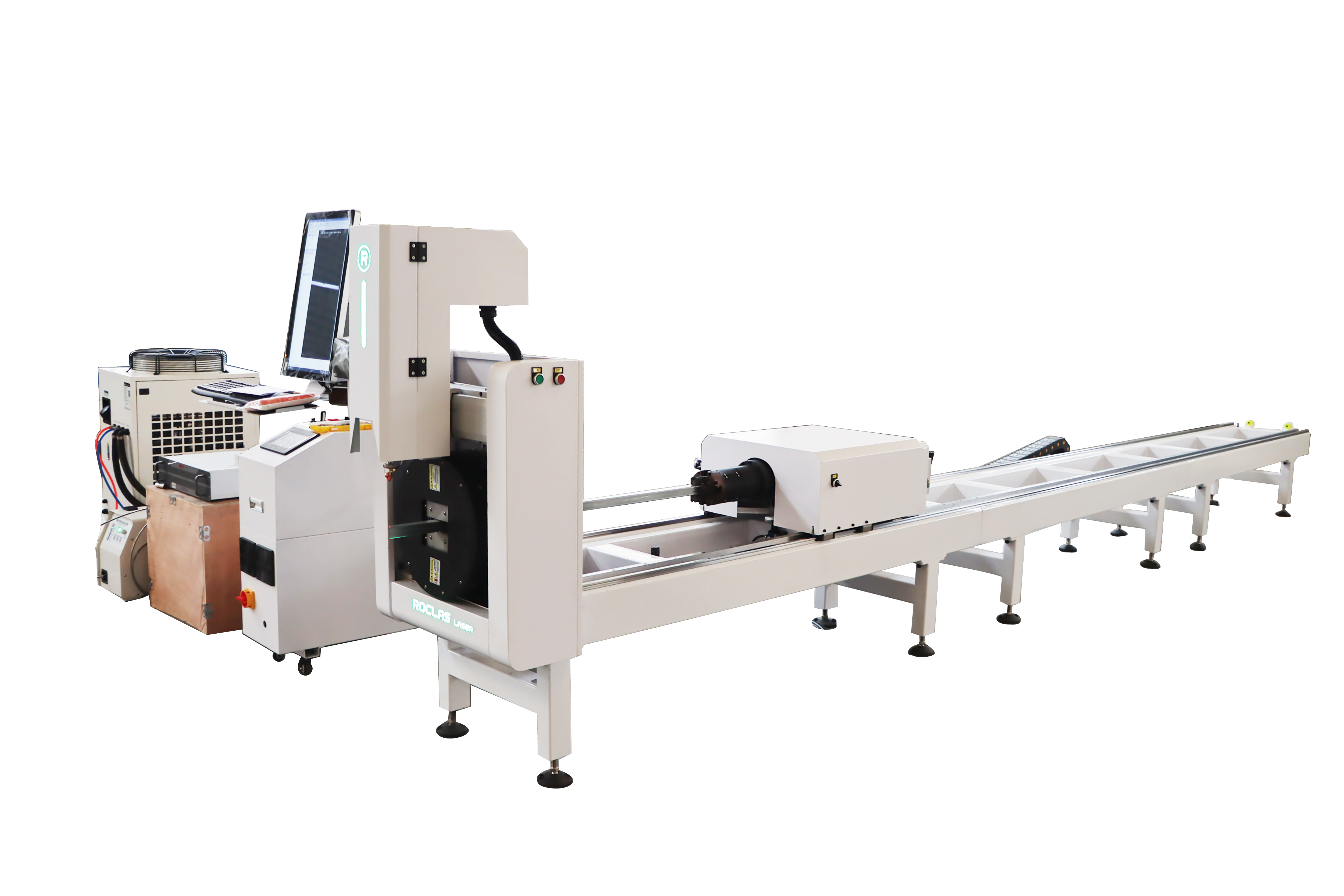
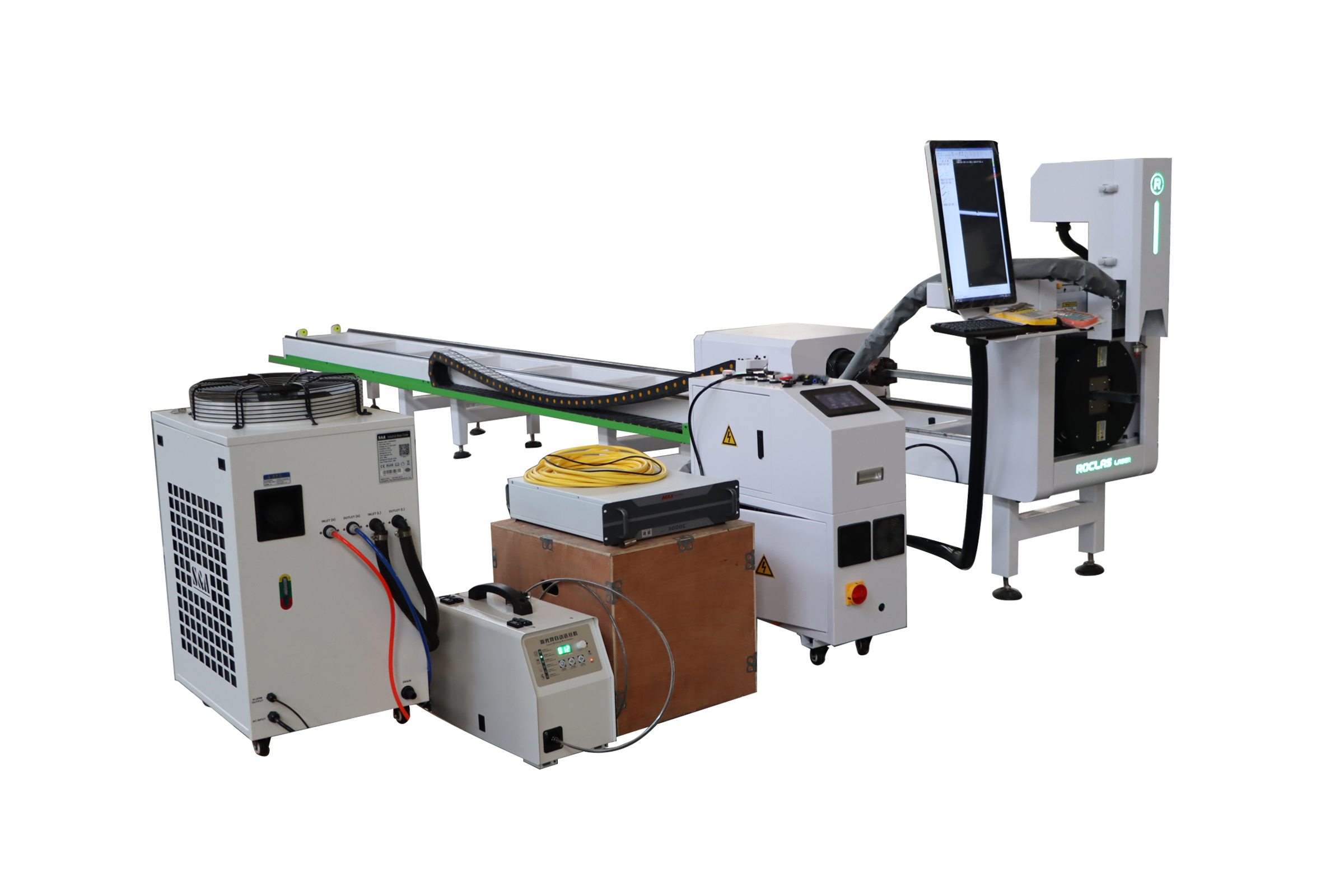
Among the manufacturers addressing this segment, ROCLAS® MACHINERY CO., LTD. has developed a five-axis fiber laser platform that reflects the broader technical trends described above. The company's 5-Axis Fiber laser machine employs a fixed gantry structure with a movable workbench, a configuration that provides both large processing envelopes and the dynamic performance required for rapid 3D contouring.
The three-dimensional cutting head features n×360° infinite rotation, which allows continuous processing of complex geometries without the repositioning delays that interrupt production on limited-rotation systems. A practical detail: the swing head can be replaced quickly without requiring recalibration, a feature that reduces downtime during maintenance or when switching between cutting and welding tasks.
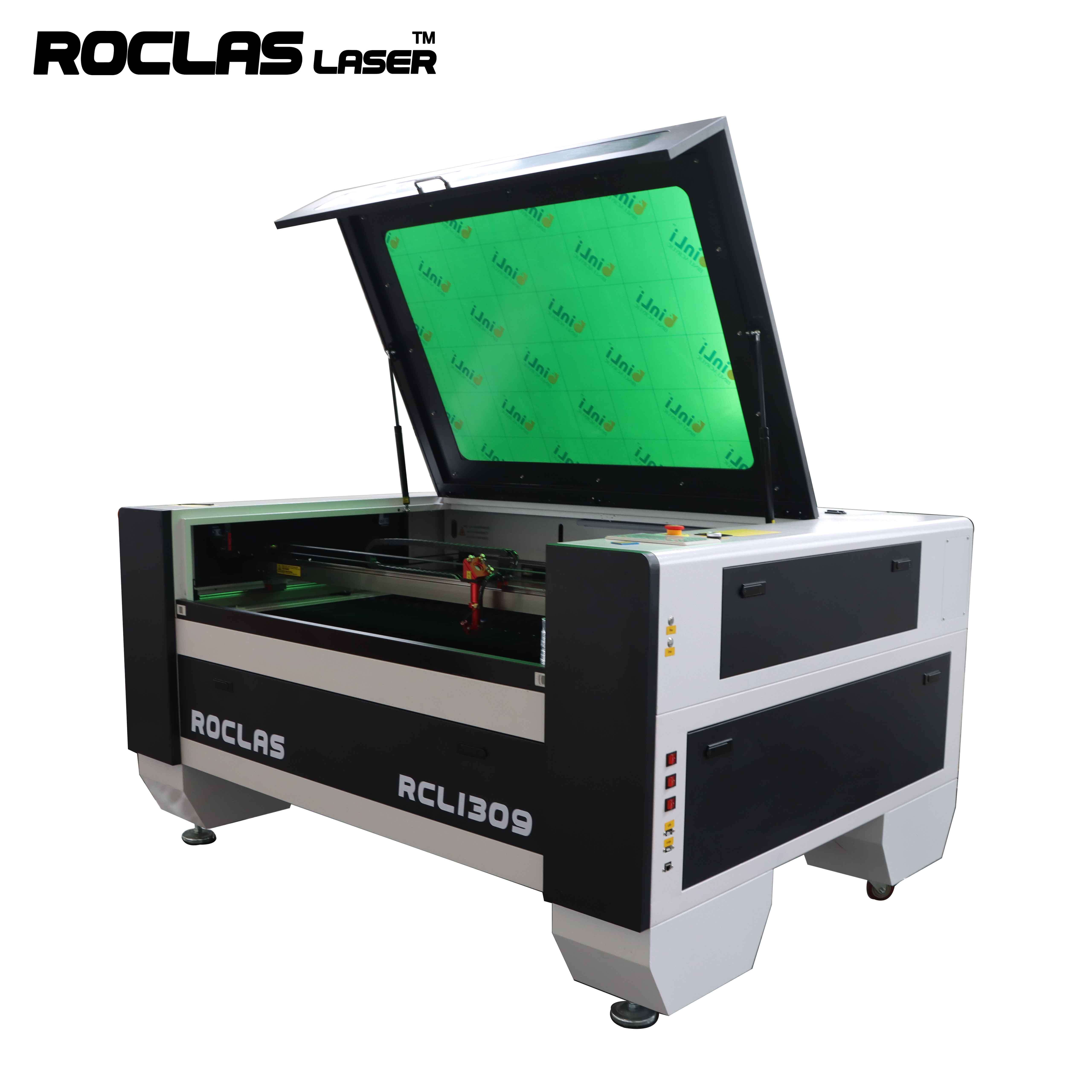
ROCLAS® brings over 15 years of CNC industry experience to this product line, supported by a 15-member R&D team and more than 50 active patents. The company's manufacturing approach—industrial-grade heavy-duty steel structures processed on CNC five-face machining centers—is consistent across its product range, from standard 2D fiber laser cutters to the five-axis centers. This vertical integration of manufacturing capability matters for multi-axis machines, where structural rigidity directly influences cut quality at the articulation points.
The machines are available with Raycus or MAX laser sources across a power range from 1000W to 20KW, and use Cypcut control systems. For applications requiring welding and cutting on the same platform, Raytools integrated systems are available.
Challenges and Adoption Barriers
Five-axis laser cutting is not without friction. Programming complexity increases substantially—CAM software must account for tool orientation, collision avoidance, and surface normal tracking. The skill required of operators is higher than for 2D cutting, and the machines themselves carry a price premium that can be difficult to justify for shops with predominantly flat-part workflows.
There is also the question of utilization. A five-axis machine running simple 2D work is an expensive underutilization of capital. The technology makes sense when the production mix includes a meaningful proportion of 3D or formed parts.
Outlook
The trajectory seems clear. As fiber laser sources continue to decrease in cost per kilowatt and as CAM software for multi-axis processing matures, the barrier to adoption will lower. Industries that have historically relied on labor-intensive finishing operations—grinding, hand trimming, secondary machining—face mounting pressure to automate.
Five-axis fiber laser cutting will not replace 2D cutting for flat sheet processing; the economics do not support that. But for the growing category of complex, three-dimensional metal components, it represents a genuine step change in capability. The machines are precise, the motion systems are mature, and the application space is expanding. The question for many manufacturers is no longer whether five-axis laser processing is viable, but when their production mix will justify the investment.