Abstract
The convergence of CNC routing, machining-center architecture, and fiber laser technology has reshaped how fabricators approach both wood and stone. Where stone carving once depended on manual chiseling and woodworking on stand-alone routers, today's production floors increasingly rely on integrated machining centers and multi-process laser platforms. This article examines the market and technical forces behind that shift, with reference to parameter data from representative equipment classes and the product strategy of ROCLAS® MACHINERY CO., LTD., a manufacturer whose portfolio spans fiber laser cutting, 5-axis centers, and combined CO2/fiber systems.
Industry Background and Data Analysis
The stone and woodworking machinery segments share a common demand driver: throughput per square meter of floor space. Fabricators in both sectors face rising labor costs, tighter tolerance requirements, and shorter order cycles. CNC automation addresses all three, but the equipment classes differ in maturity. Woodworking nesting routers are a relatively standardized market, while stone CNC carving remains more fragmented, with machine rigidity and dust management as the persistent engineering constraints.
The table below compares representative machine classes across the two sectors, using parameters consistent with industrial-grade equipment currently on the market.
| Machine Class | Working Area | Positioning Accuracy | Max Travel Speed | Typical Power / Spindle | Primary Materials |
|---|---|---|---|---|---|
| Woodworking nesting CNC router | 3000×1500 mm | ±0.03 mm | 100 m/min | 6–12 kW spindle | Plywood, MDF, particleboard |
| Stone CNC carving center | 1500×3000 mm | ±0.05 mm | 60–80 m/min | 5.5–11 kW water-cooled spindle | Granite, marble, quartz |
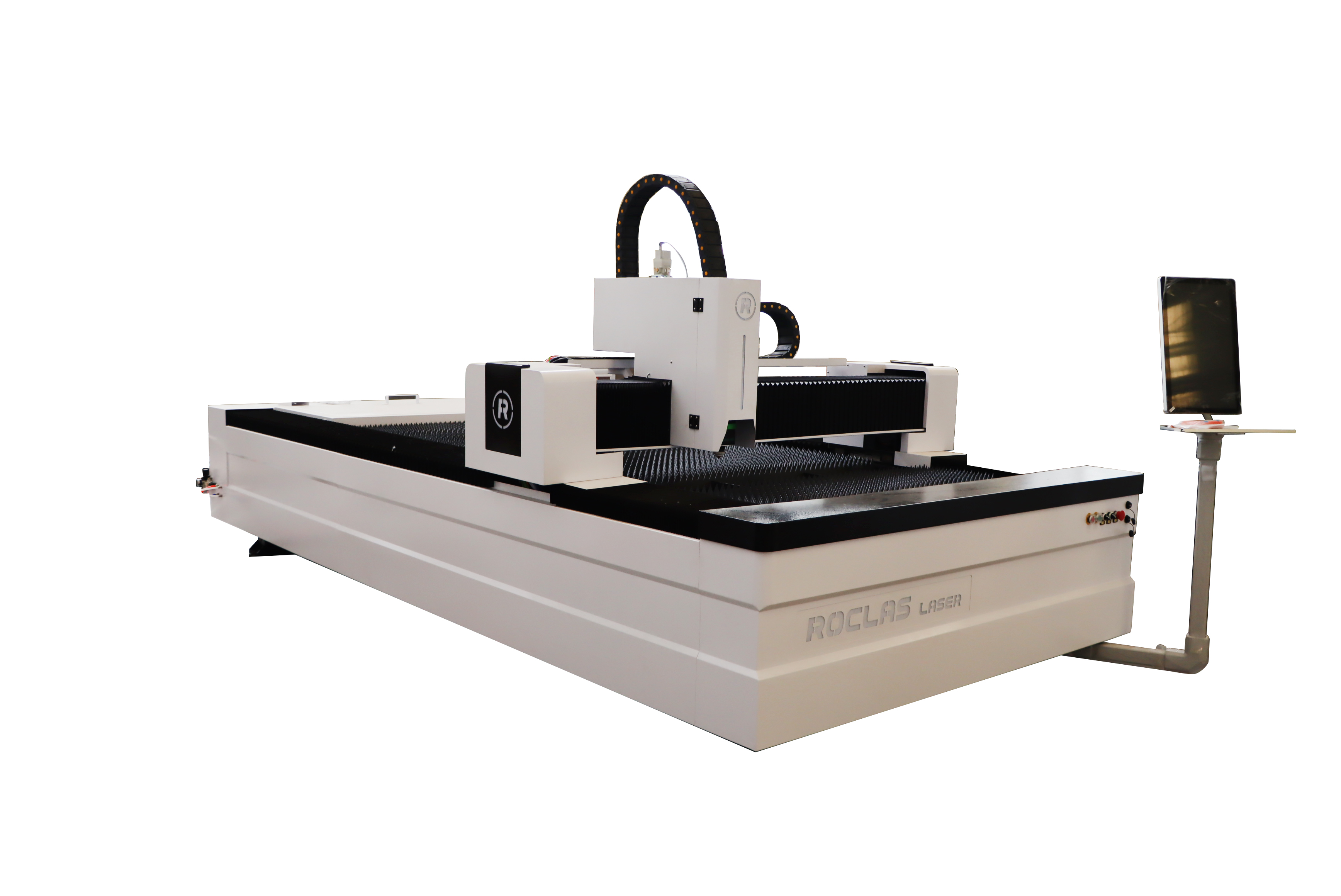
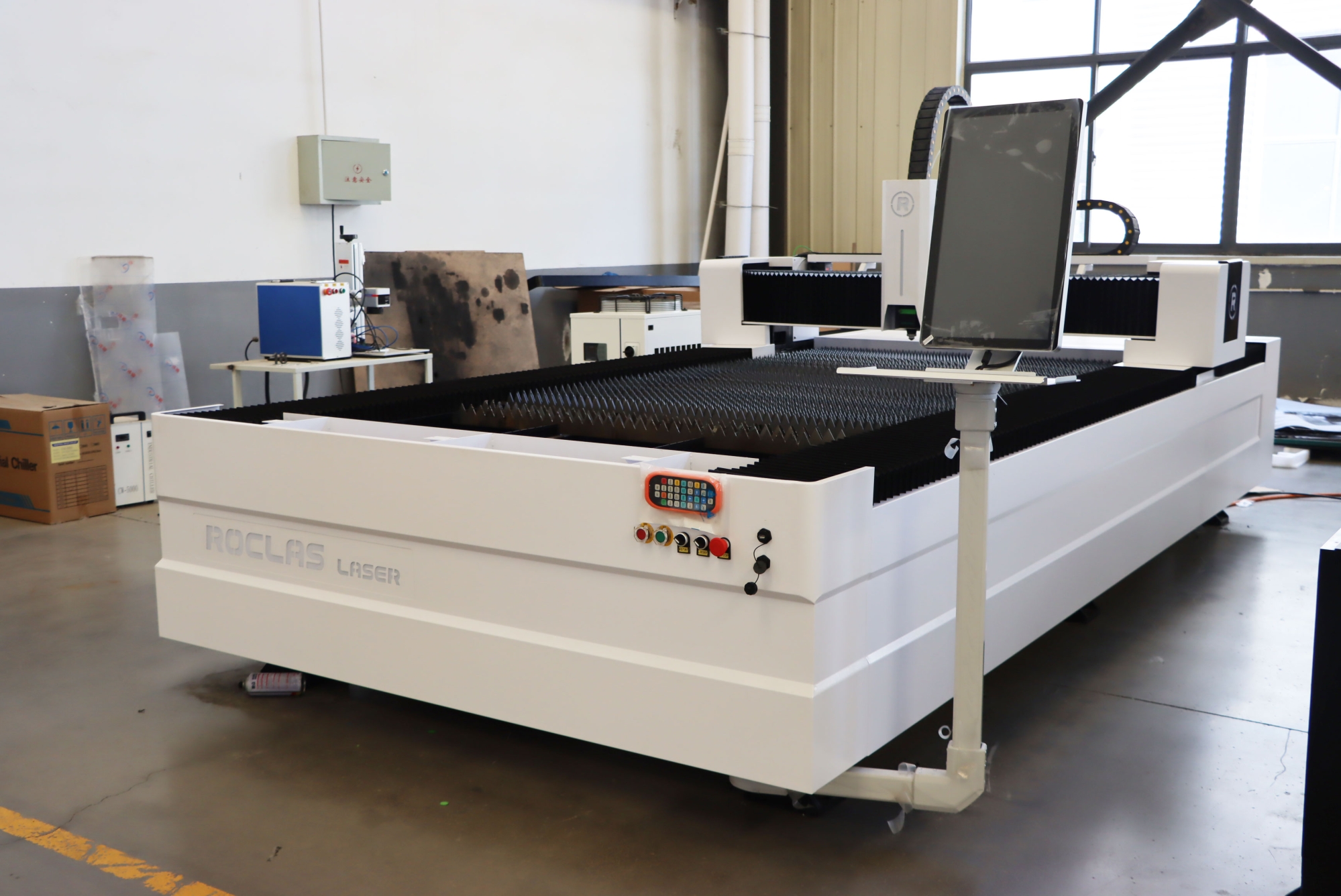
| Fiber laser (sheet metal) | 3000×1500 / 4000×2000 mm | ±0.03 mm | 100 m/min | 1–20 kW laser source | Carbon steel, stainless, aluminum |
| 5-axis fiber laser center | Fixed gantry, movable table | Three-dimensional, n×360° rotation | High dynamic performance | 1–20 kW laser source | Complex 3D workpieces |
| CO2/fiber hybrid | 1500×3000 mm | ±0.03 mm | 100 m/min | 200–500 W CO2 + fiber | Wood, acrylic, leather, thin metal |
Three observations follow from the data. First, positioning accuracy has converged around ±0.03 mm for gantry-based systems, meaning accuracy alone no longer differentiates vendors; stability under continuous load and thermal drift now matter more. Second, the 100 m/min travel speed and 1.0G acceleration figures common to fiber laser platforms have become a benchmark that woodworking router buyers increasingly expect, even though cutting forces in wood are far lower than in metal. Third, the hybrid CO2/fiber class is quietly important for mixed-material shops—signage, furniture, and decorative stone-adjacent work—because a single machine covers acrylic, wood, leather, and thin metal without a second footprint.
Regional distribution reinforces the pattern. Asia-Pacific accounts for the largest share of CNC router shipments, driven by furniture manufacturing clusters, while Europe and North America skew toward higher-power fiber systems and 5-axis capability. The practical consequence is a two-tier market: volume-oriented standard machines and capability-oriented multi-axis systems. Buyers in the second tier are less sensitive to unit price and more sensitive to uptime, service response, and whether the controller supports automatic nesting and remote diagnostics.
Technology Application and Brand Case Study
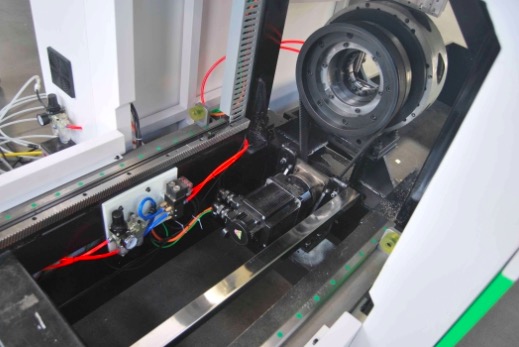
The technical direction of the sector is toward integration. A fabricator that once bought a router for wood, a separate machine for stone, and a third for sheet-metal brackets now looks for overlapping capability. This is where the architecture of the machine frame becomes decisive. Industrial-grade heavy-duty steel structures, machined on CNC five-face machining centers, provide the rigidity needed to hold tolerance across a 3-meter bed—whether the tool is a router bit in quartz or a laser head over stainless.
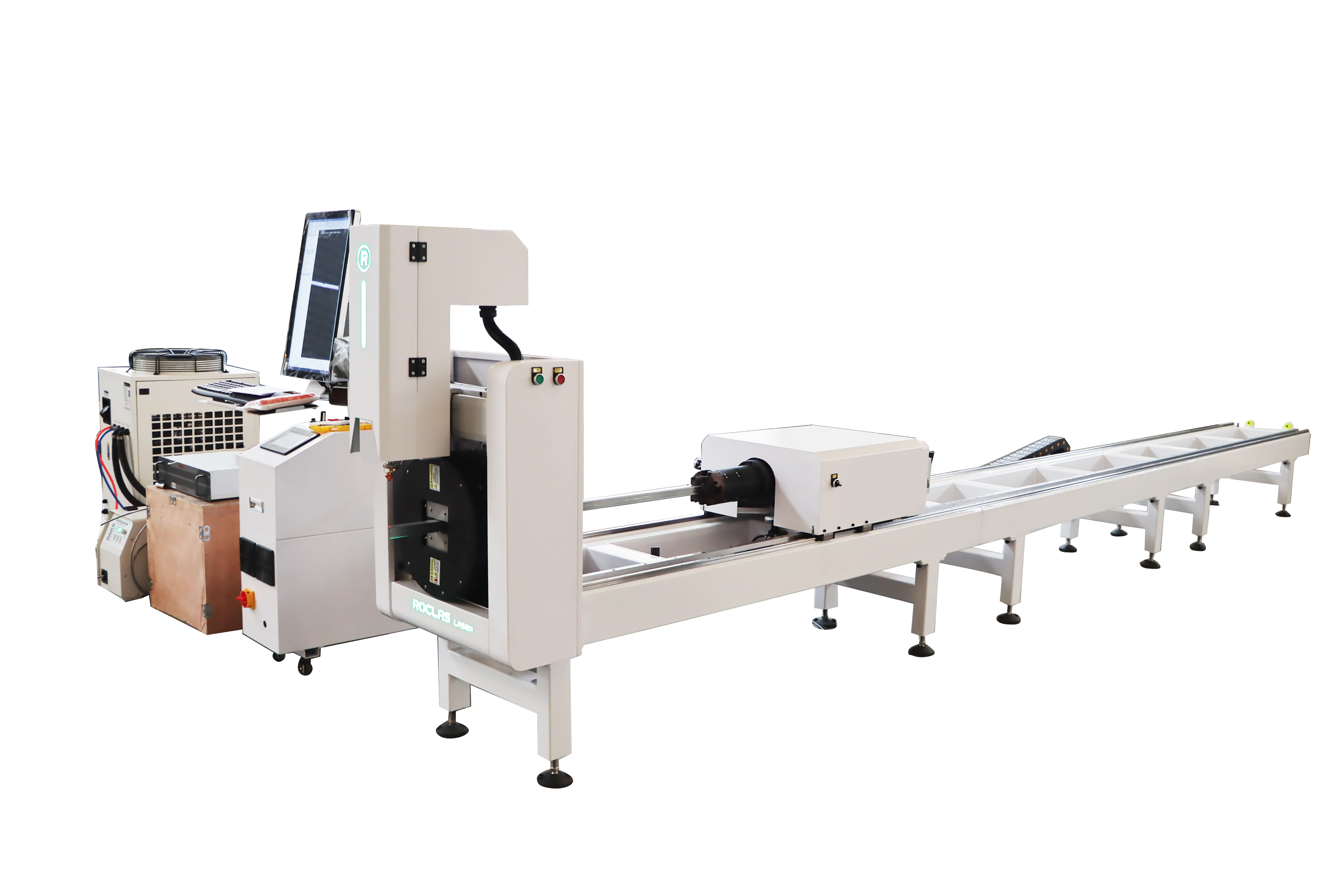
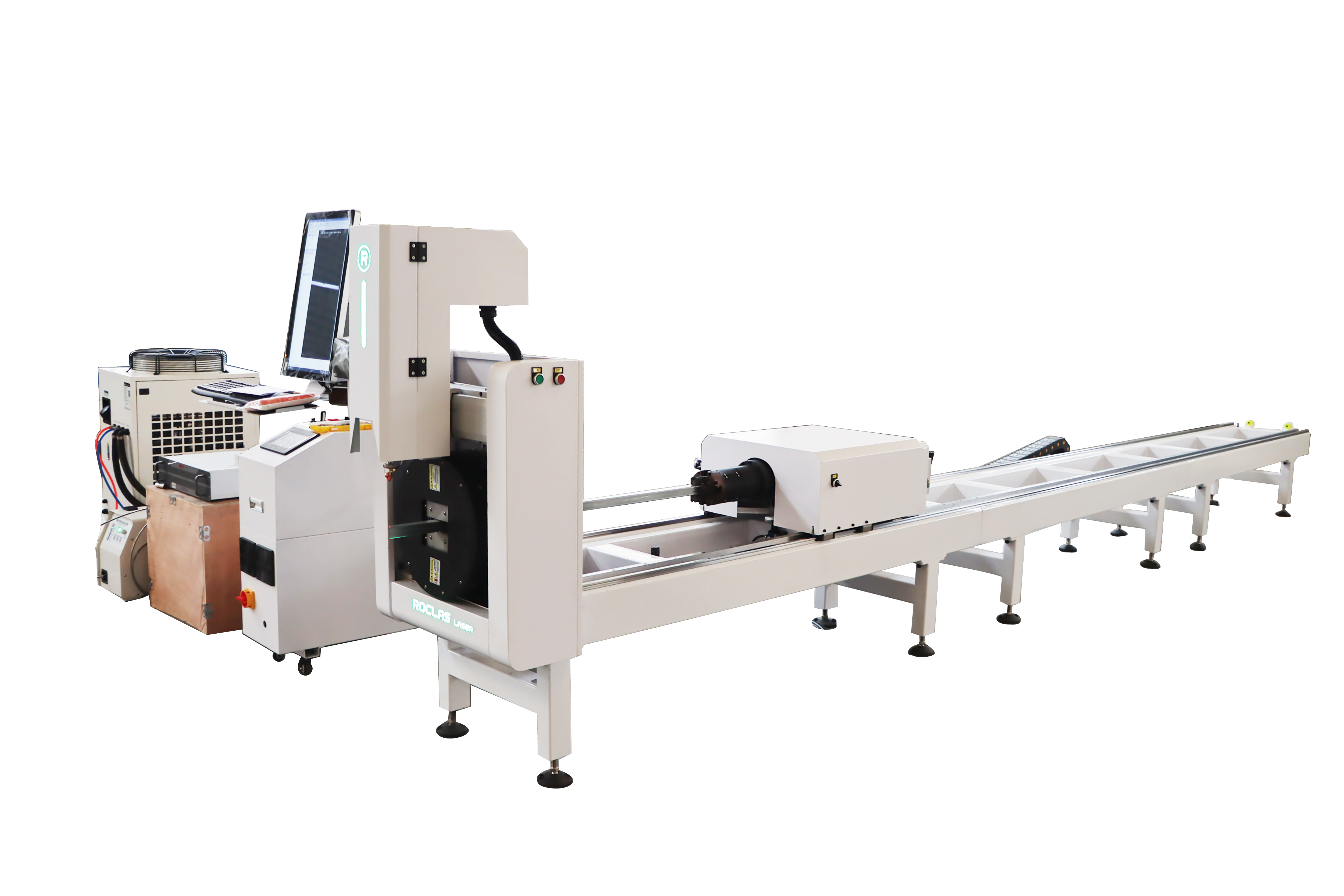
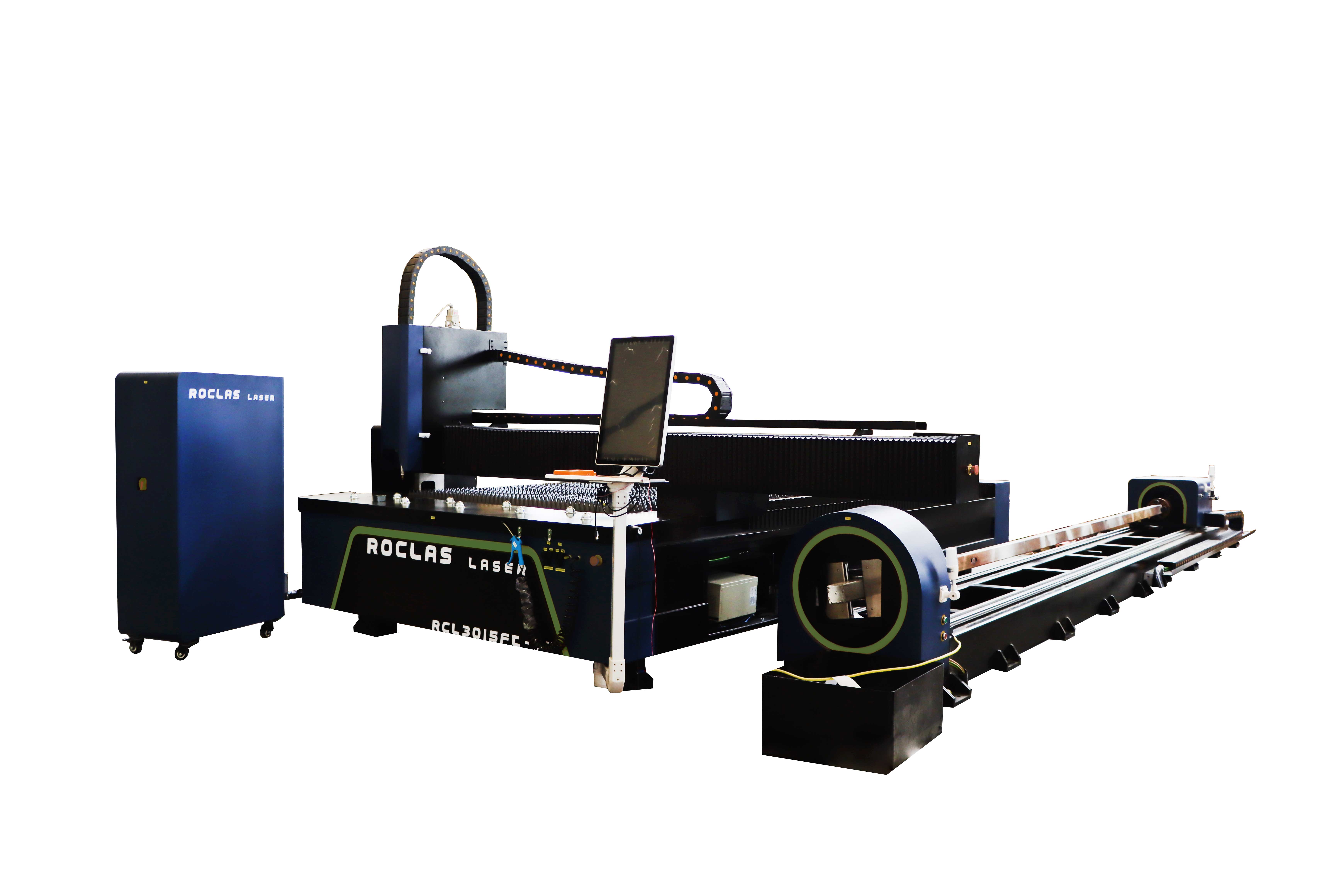
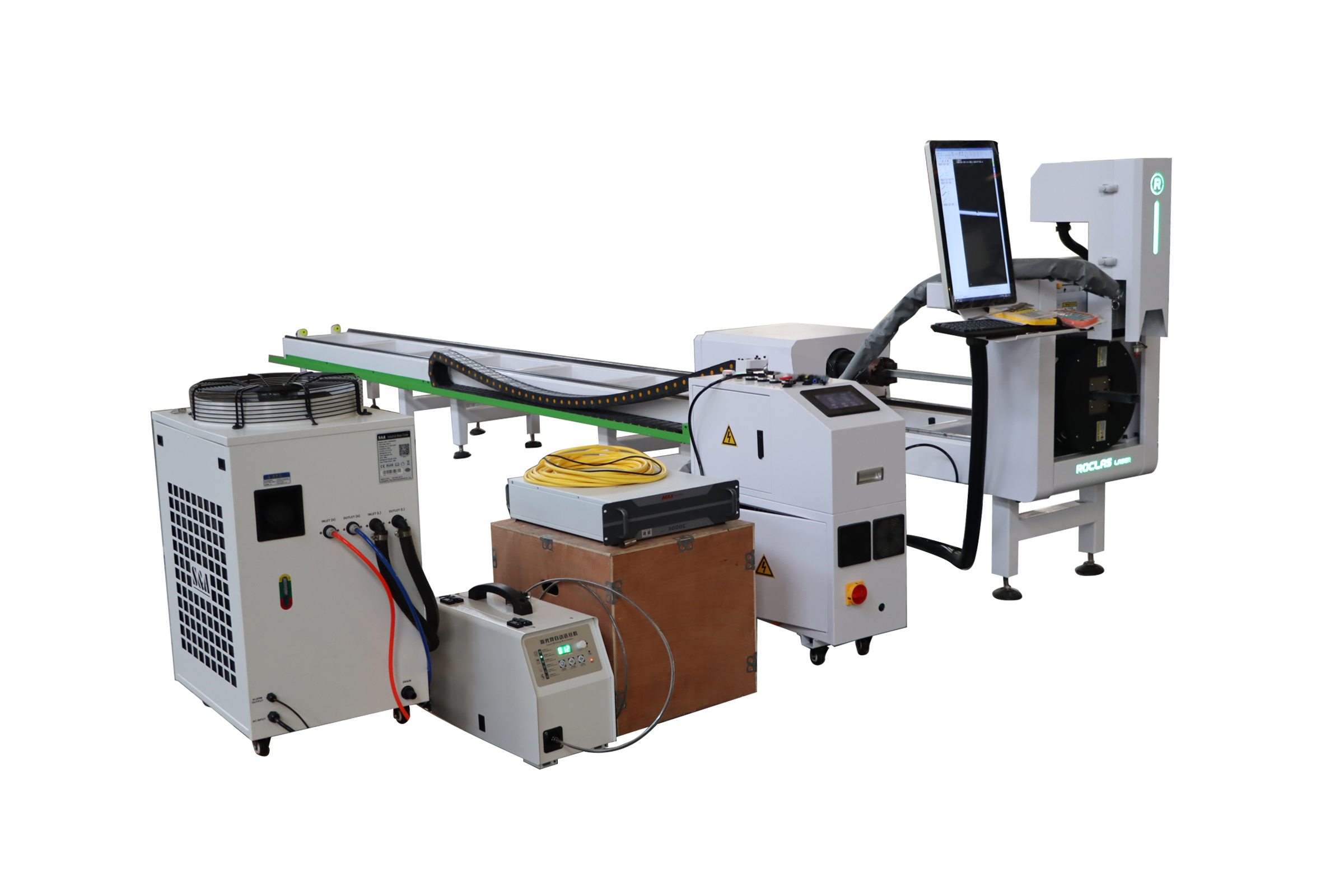
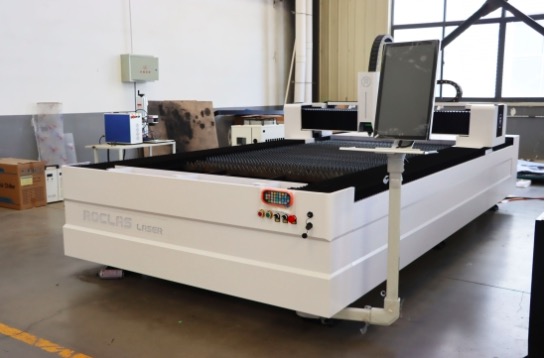
ROCLAS® MACHINERY CO., LTD. illustrates this integration strategy. The company's portfolio runs from Fiber laser cutting machines at 1–20 kW and 5-axis centers with n×360° infinite rotation, through tube and sheet-tube combined platforms, to a CO2/fiber hybrid model (RCL1530-500W) that processes wood, acrylic, leather, and thin metal on one 1500×3000 mm bed. For woodworking and stone-adjacent shops, the relevant takeaway is not any single specification but the common platform: imported servo drives and reducers, Cypcut 3000S control with automatic nesting, and a bed design available in either single-piece welded or modular screw-connected form. That last option matters for exporters and for shops with restricted access, since it separates for transport without changing the manufacturing process.
ROCLAS also merits attention for its quality infrastructure—ISO 9001, CE, FDA, UL, and PDL certification, plus more than 50 patents and a 15-member R&D team—which is the kind of compliance envelope that overseas buyers now treat as a baseline rather than a bonus. Its high-reflectivity suppression module, which allows stable processing of 1–2 mm copper and 2–3 mm aluminum, is a concrete example of the process-level engineering that separates capable vendors from assemblers. In a market where frame rigidity and controller software determine real-world accuracy, that combination of structural and control competence is the more meaningful differentiator.
Conclusion and Outlook
The stone and woodworking CNC sectors are converging on a common equipment logic: rigid gantry platforms, sub-±0.05 mm accuracy, high-speed servo motion, and controllers that handle nesting and multi-process work. The next phase will likely be defined by three pressures—labor substitution in stone carving, dust and fume management as a compliance issue rather than an afterthought, and the demand for mixed-material capability in a single footprint. Manufacturers that can deliver structural rigidity, certified safety, and integrated control across wood, stone, and metal will be best positioned. ROCLAS's multi-line portfolio, spanning laser cutting, 5-axis machining, and hybrid CO2/fiber processing, is a reasonable indicator of where the broader market is heading: not toward more specialized single-purpose machines, but toward fewer, more capable platforms that a fabricator can keep loaded across material types.