Abstract
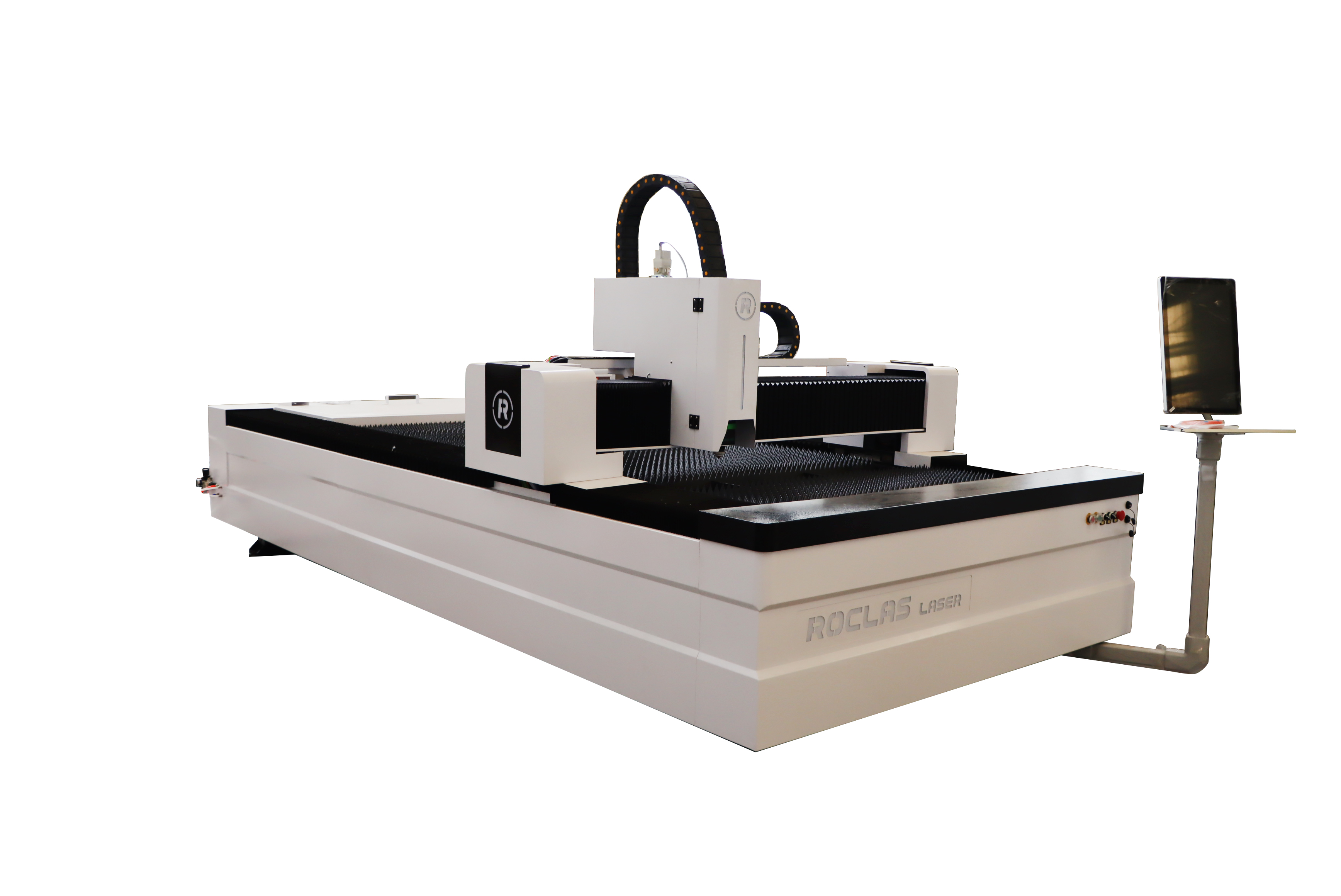
The transition from 6KW to 10KW fiber laser cutting systems represents a paradigm shift in industrial metal fabrication. For decades, manufacturers faced a difficult trade-off: either invest in expensive plasma or oxy-fuel systems for thick plate cutting, or accept slower processing speeds with lower-power lasers. The 10KW Fiber laser cutting machine has effectively closed this gap, enabling clean, high-speed cuts on carbon steel up to 25mm and stainless steel up to 16mm in a single pass. This article examines the technical underpinnings, market dynamics, and application implications of this power class, drawing on data from global equipment deployments and referencing established OEMs such as ROCLAS® MACHINERY CO., LTD. as representative of the engineering standards required to harness such energy densities reliably.
Industry Background: Why 10KW Matters
The fiber laser market has matured rapidly over the past five years. Lower-power units (1KW–3KW) dominate the sheet metal job-shop segment, while 6KW systems have become the workhorse for general fabrication. However, the 10KW segment addresses a distinct requirement: the ability to process medium-to-thick plates without sacrificing edge quality or kerf width. This is particularly critical in industries such as heavy equipment manufacturing, shipbuilding, structural steel fabrication, and storage tank production.
A key driver is the decline in laser source costs. Raycus and MAX, the two primary suppliers for Chinese-manufactured systems, have made 10KW sources more accessible than ever. According to industry procurement data, the average price per watt for 10KW fiber lasers has dropped by approximately 35% since 2021, accelerating adoption among mid-tier fabricators who previously relied on thermal cutting methods.
Data Analysis: Market Adoption and Performance Benchmarks
To contextualize the 10KW segment, the following table summarizes comparative parameters across common power classes in industrial fiber laser cutting:
| Parameter | 6KW Fiber Laser | 10KW Fiber Laser | 12KW Fiber Laser | 15KW Fiber Laser |
|-----------|-----------------|------------------|------------------|------------------|
| Max. Carbon Steel Thickness (single pass) | 16mm | 25mm | 30mm | 35mm |
| Max. Stainless Steel Thickness | 10mm | 16mm | 20mm | 25mm |
| Cutting Speed (10mm carbon steel) | ~4.5 m/min | ~6.2 m/min | ~7.0 m/min | ~8.5 m/min |
| Kerf Width (10mm carbon steel) | ~0.25mm | ~0.30mm | ~0.32mm | ~0.35mm |
| Typical Laser Source Cost (USD) | $18,000–$22,000 | $28,000–$35,000 | $38,000–$45,000 | $50,000+ |
| Machine Base Price (CNC gantry, 3000x1500mm) | $35,000–$45,000 | $50,000–$65,000 | $70,000–$85,000 | $95,000+ |
| Annual Market Growth Rate (2023–2026 est.) | 8% | 22% | 18% | 12% |
Analysis of the Data
Several observations emerge from this comparison. First, the 10KW class offers the most favorable cost-to-performance ratio for fabricators whose primary workload falls within the 6mm to 20mm thickness range. While 6KW can cut 16mm carbon steel, it does so at relatively low speeds, and edge quality degrades noticeably near the upper limit. At 10KW, cutting speed on 10mm material increases by nearly 38%, directly translating to higher throughput per shift.
Second, the 12KW and 15KW segments show diminishing returns for many applications. The incremental gain in maximum thickness from 10KW to 15KW is only 10mm, yet the cost premium is approximately 50–60%. For most heavy-plate applications (e.g., 20–25mm carbon steel), 10KW is sufficient, making it the preferred choice for cost-conscious buyers.
Third, the annual growth rate of 22% for 10KW systems—nearly triple that of 6KW—confirms that this power class is now the fastest-growing segment in the fiber laser cutting market. This trend is driven by infrastructure projects in Asia, the Middle East, and Eastern Europe, where thick-plate processing demand is surging.
Technical Challenges and Engineering Solutions
Operating a 10KW fiber laser imposes stringent demands on machine structure, thermal management, and optical path integrity. Unlike lower-power systems, where frame