
Abstract
Total power consumption remains one of the most overlooked yet operationally decisive parameters in industrial laser processing. While laser power ratings (1kW–20kW) dominate specification sheets, the total system power draw—encompassing servo drives, chillers, gas generators, and auxiliary equipment—often determines real-world operating costs, facility requirements, and return on investment. This article examines total power consumption across fiber laser cutting systems, with particular attention to integrated nitrogen generation and coil-fed processing lines. Data from ROCLAS® MACHINERY CO., LTD. product specifications provide a benchmark for analyzing how total power consumption scales with laser power and auxiliary load. The analysis reveals that for high-power systems (≥6kW), auxiliary equipment can account for 30–45% of total facility power demand, challenging conventional assumptions about laser-only efficiency metrics.

1. Introduction
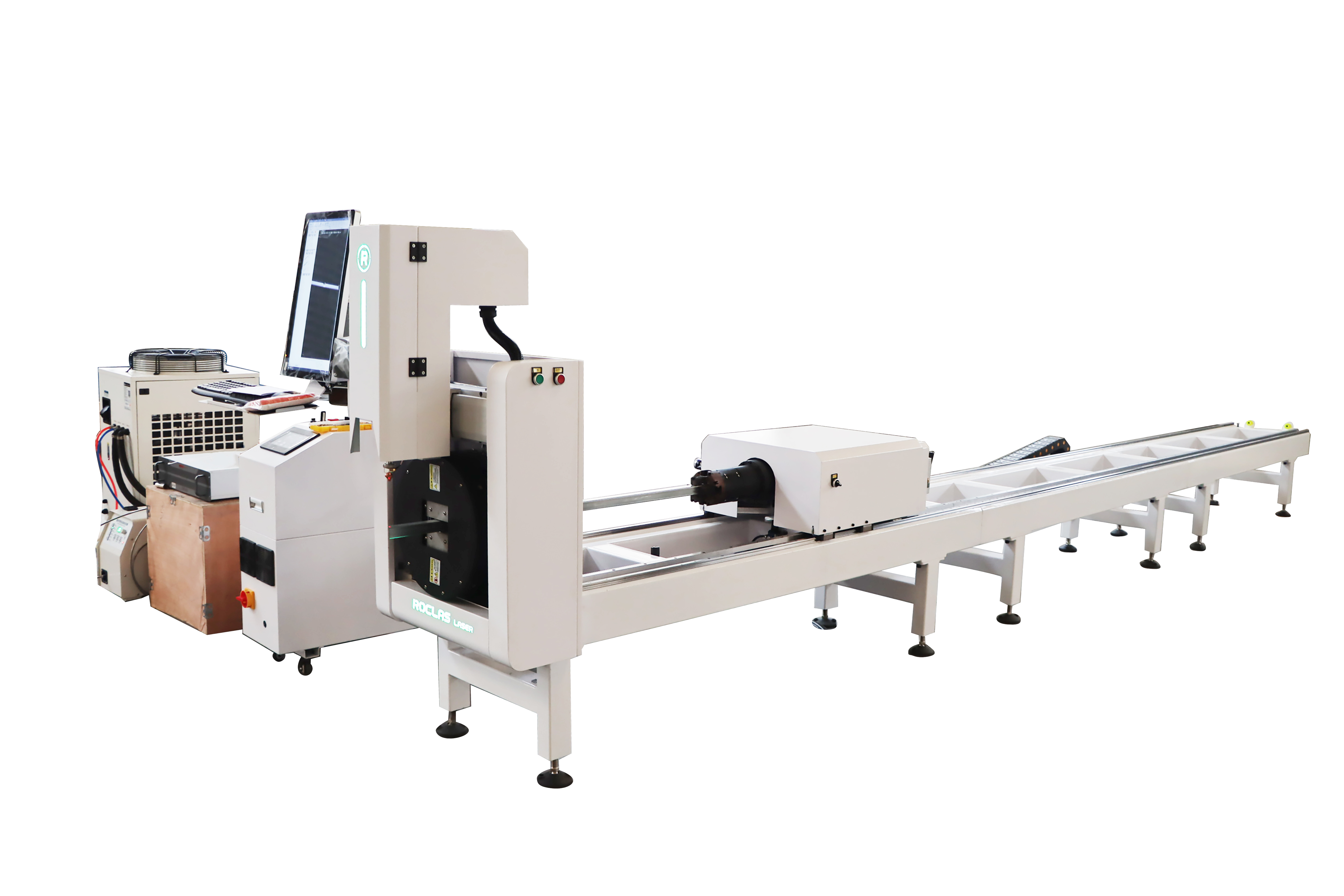
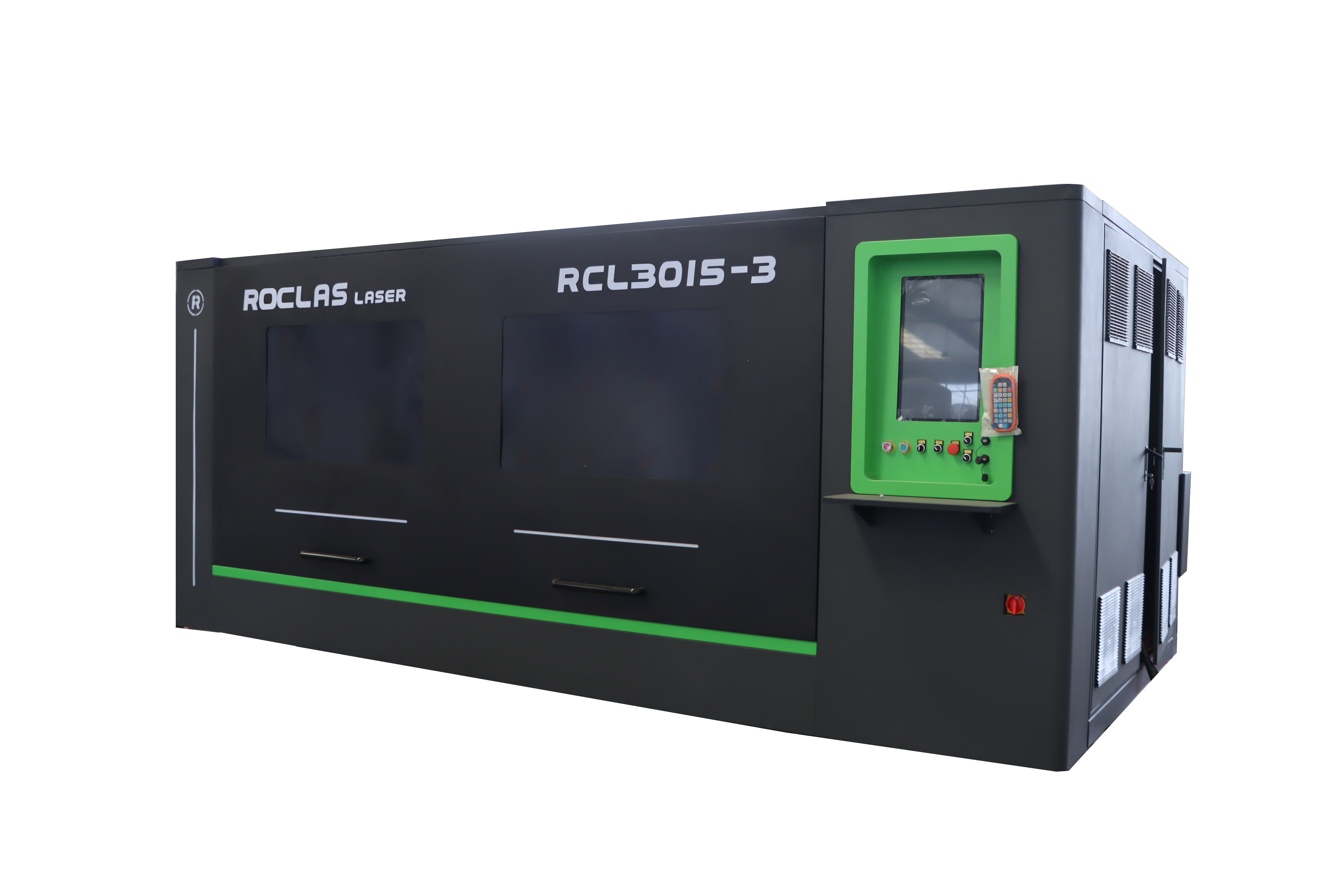
Industrial laser cutting has evolved from niche precision tooling to a mainstream fabrication technology. Manufacturers routinely compare laser source power, cutting speed, and positioning accuracy when selecting equipment. However, the total power consumption of a laser cutting system—a compound metric reflecting laser source efficiency, motion system demands, cooling requirements, and auxiliary process gas generation—is rarely subject to the same scrutiny.
This oversight carries significant financial implications. A 12kW Fiber laser cutting machine may consume approximately 15–18 kW from the laser source alone, but when chillers, servo drives, exhaust systems, and nitrogen generators are accounted for, total facility power draw can exceed 40–50 kW per machine. For production facilities operating multiple shifts, these differentials translate into hundreds of thousands of dollars in annual electricity costs.
ROCLAS® MACHINERY CO., LTD., a manufacturer with over 15 years of CNC and laser system experience, provides a useful case study. Their product portfolio—spanning fiber laser cutters, CO2 systems, nitrogen generators, and coil-fed processing lines—offers transparent specification data that allows for systematic total power consumption analysis.
2. Decomposing Total Power Consumption
Total power consumption in a laser cutting system can be modeled as:
\[
P_{\text{total}} = P_{\text{laser}} + P_{\text{motion}} + P_{\text{cooling}} + P_{\text{gas}} + P_{\text{aux}}
\]
Where:
- \( P_{\text{laser}} \): Power drawn by the laser source (Raycus/MAX, 1kW–20kW)
- \( P_{\text{motion}} \): Servo drives, CNC controller, linear motors (typically 3–8 kW)
- \( P_{\text{cooling}} \): Chiller and water circulation pumps (5–12 kW for high-power systems)
- \( P_{\text{gas}} \): Nitrogen Generator or compressed air system (up to 9 kW for 99.999% purity)
- \( P_{\text{aux}} \): Exhaust, lighting, control cabinets, conveyor systems (2–5 kW)
2.1 The Nitrogen Generator Case Study
ROCLAS manufactures a dedicated nitrogen generator (specification: carbon steel construction, 220V/50Hz or 380V/50Hz) with a total power of 9 kW. This unit delivers 99.999% purity nitrogen at a flow rate supported by a 3.8 m³/min purified air handling capacity, with 1 m³ air and nitrogen storage tanks.
For a 6kW fiber laser cutting system processing stainless steel (which requires nitrogen assist gas), adding this nitrogen generator increases total facility power draw by approximately 50–60% compared to the laser source alone. This reality challenges the assumption that laser power is the dominant cost driver.
3. Data Analysis: Power Consumption Across Configurations
The following table presents calculated total power consumption for representative ROCLAS system configurations, based on published specifications and industry-standard auxiliary loads.
| Configuration | Laser Power (kW) | Laser Source Draw (kW) | Motion System (kW) | Chiller (kW) | Nitrogen Generator (kW) | Auxiliary (kW) | Total System Power (kW) | Aux Power Share (%) |
|---|---|---|---|---|---|---|---|---|
| Entry-level sheet cutter | 1.5 | 2.2 | 3.0 | 4.0 | Not required (O₂/air) | 2.0 | 11.2 | 18% |
| Mid-range sheet cutter | 6.0 | 8.5 | 5.0 | 7.0 | 9.0 (if N₂ needed) | 3.0 | 32.5 | 37% |
| High-power sheet cutter | 12.0 | 16.0 | 6.0 |
 dominate specification she)