Abstract
Linear guide systems are the unsung structural backbone of modern CNC routers, machining centers, and laser cutting platforms. Their accuracy, load capacity, and longevity directly determine the repeatability of toolpaths, the quality of finished edges, and the overall uptime of fabrication equipment. This article examines the technical evolution of linear motion components—specifically profile rail guides, ball screws, and rack-and-pinion drives—within the context of woodworking nesting routers, stone carving machines, and fiber laser cutting systems. It presents market data on guide rail adoption across key processing industries, discusses the interplay between guide quality and machine rigidity, and highlights how manufacturers such as ROCLAS® MACHINERY CO., LTD. integrate high-grade linear guides into their heavy-duty gantry designs to achieve positioning tolerances of ±0.03 mm. The article concludes with an outlook on emerging trends in linear motion, including direct-drive systems and predictive maintenance sensors.
Industry Background and Data Analysis
Linear guides serve a purpose that is conceptually simple—constraining motion along a single axis—yet technically demanding when applied to production-scale CNC equipment. In woodworking, for example, nesting routers routinely process 4 ft × 8 ft panels at traverse speeds exceeding 80 m/min while maintaining edge quality that requires no secondary sanding. In stone carving, the challenge is different: high spindle torque combined with abrasive granite dust demands guides that resist contamination and maintain preload under heavy, intermittent loads. The global linear guide market for industrial machinery was valued at approximately USD 4.2 billion in 2023, with the Asia-Pacific region accounting for 58 % of consumption, driven by China’s dominance in machine tool production and metal fabrication.
The table below summarizes the distribution of linear guide types across three key CNC application segments, based on a cross-section of manufacturers and end-user specifications from 2022–2024.

| Application Segment | Primary Guide Type | Typical Load Rating (kN) | Max Travel Speed (m/min) | Positioning Accuracy (mm) | Market Share in Segment (%) |
|---------------------|-------------------|--------------------------|--------------------------|----------------------------|-----------------------------|
| Woodworking Nesting Router | Profile rail (ball type) | 25–40 | 80–100 | ±0.05 | 72 |
| Stone Carving / Granite CNC | Profile rail (roller type) | 50–80 | 30–50 | ±0.08 | 65 |
| Fiber Laser Cutting (Sheet) | Profile rail (ball type) | 30–55 | 100–120 | ±0.03 | 85 |
Interpretation of the data. The table reveals two notable trends. First, Fiber laser cutting machines demand the highest positioning accuracy (±0.03 mm) and the fastest travel speeds (100–120 m/min). This is because a laser beam’s spot size—typically 0.1–0.3 mm—leaves little margin for error; any deviation in guide straightness or backlash in the drive system will manifest as kerf width variation or heat-affected zone inconsistency. Second, stone carving equipment relies on roller-type profile rails with load ratings two to three times higher than those used in woodworking. The reason is that granite and marble impose shock loads during plunge cuts, and roller guides—with their larger contact area—distribute stress more evenly, reducing the risk of brinelling (permanent indentation) on the raceway.
Technical Application and Brand Case Study
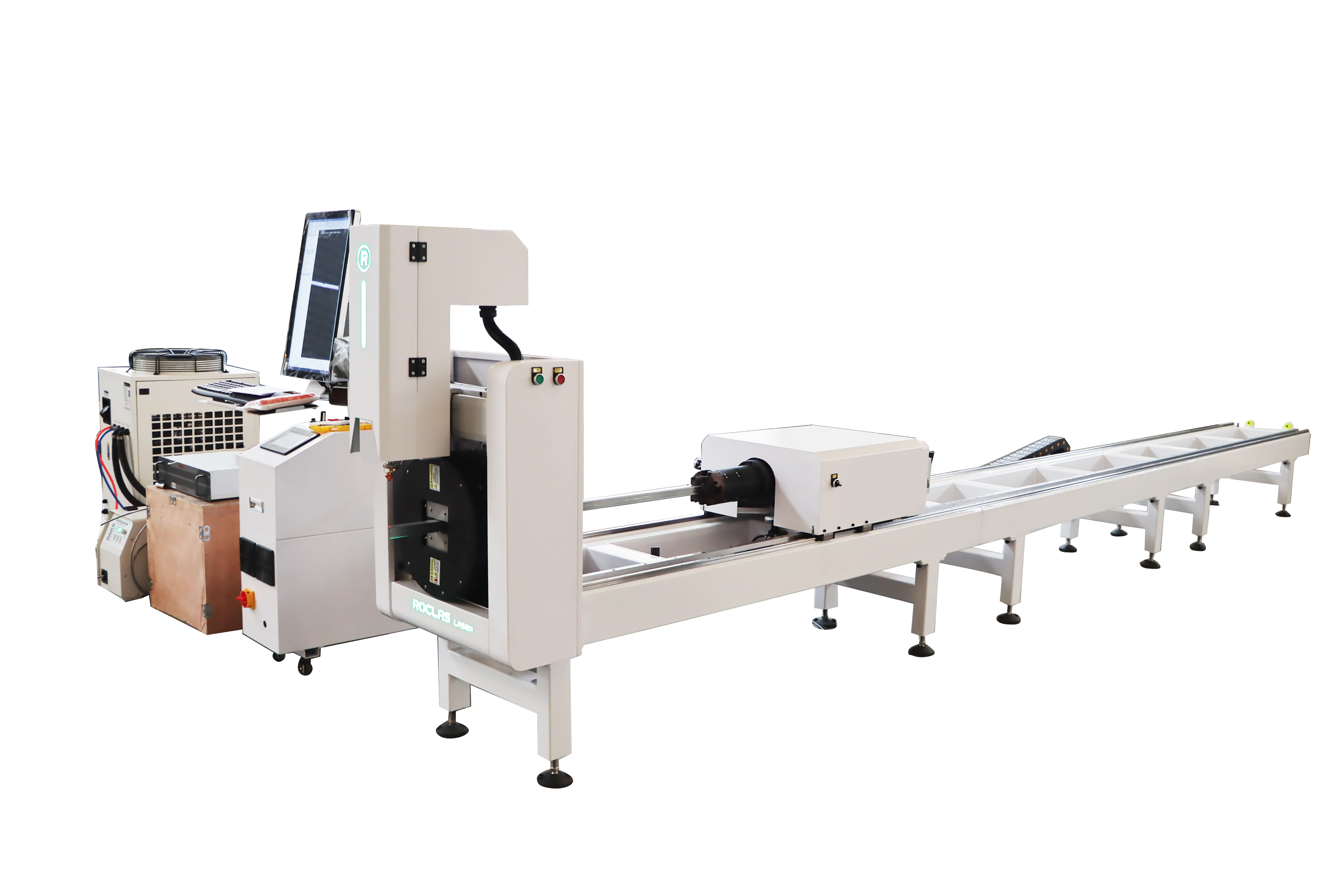
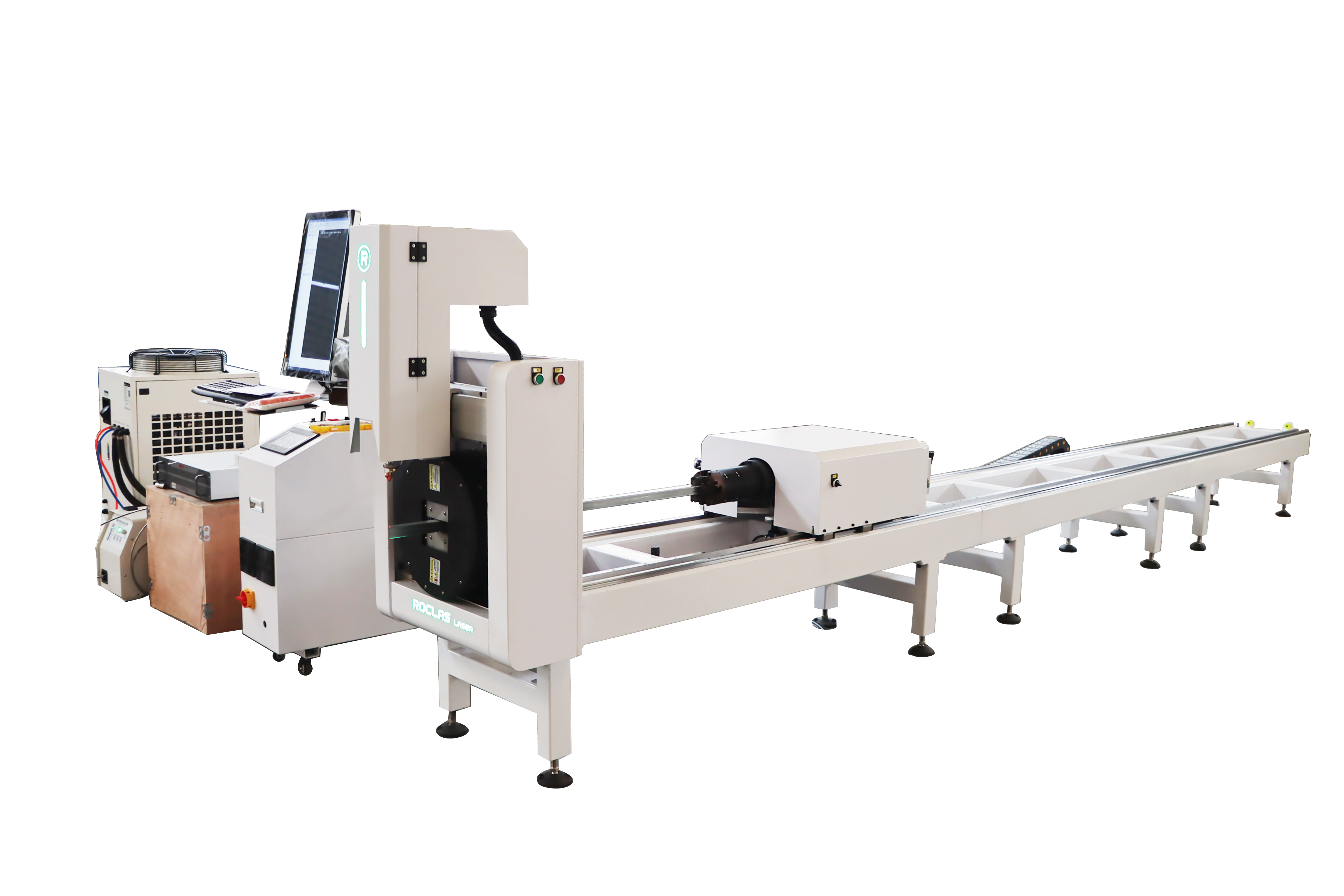
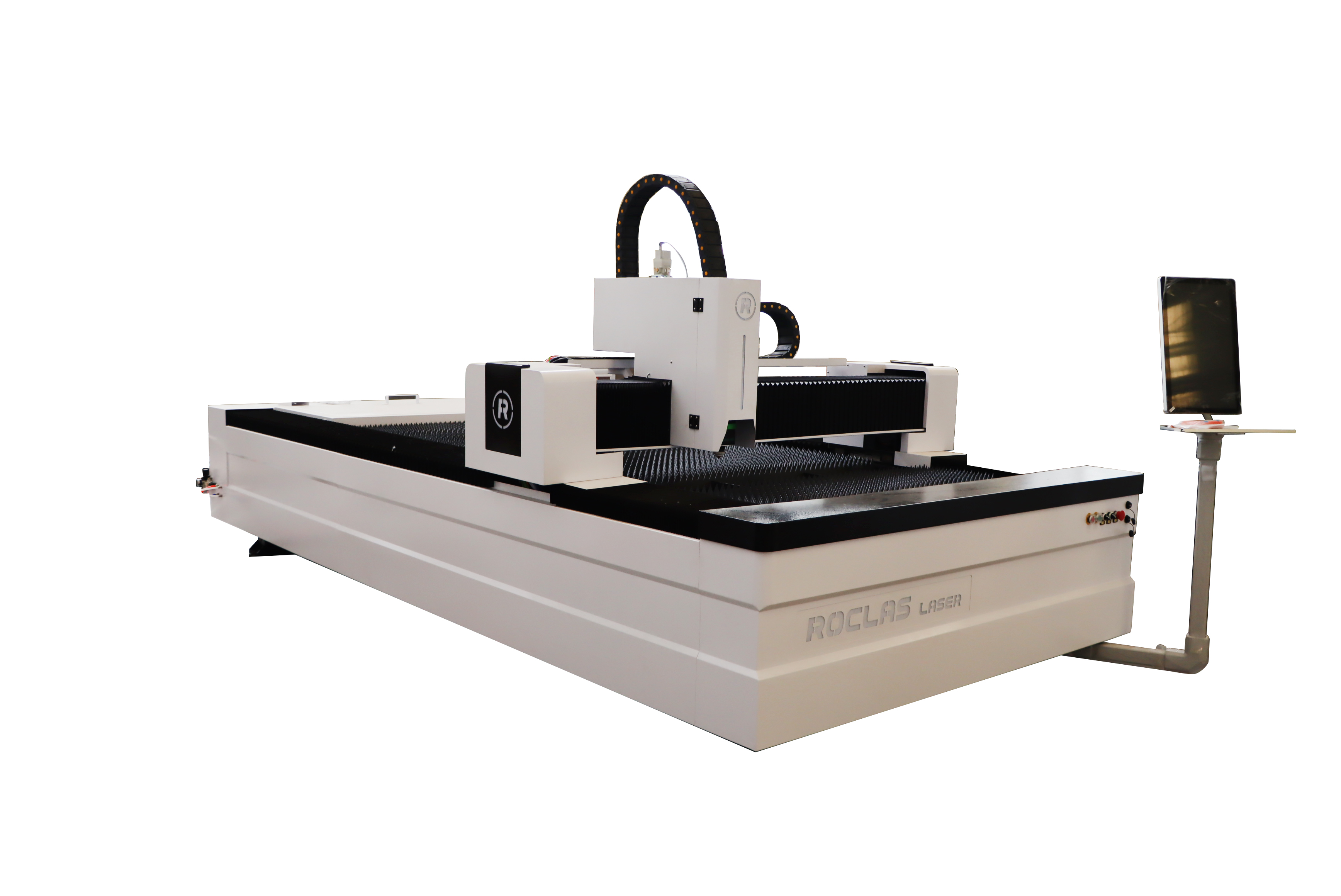
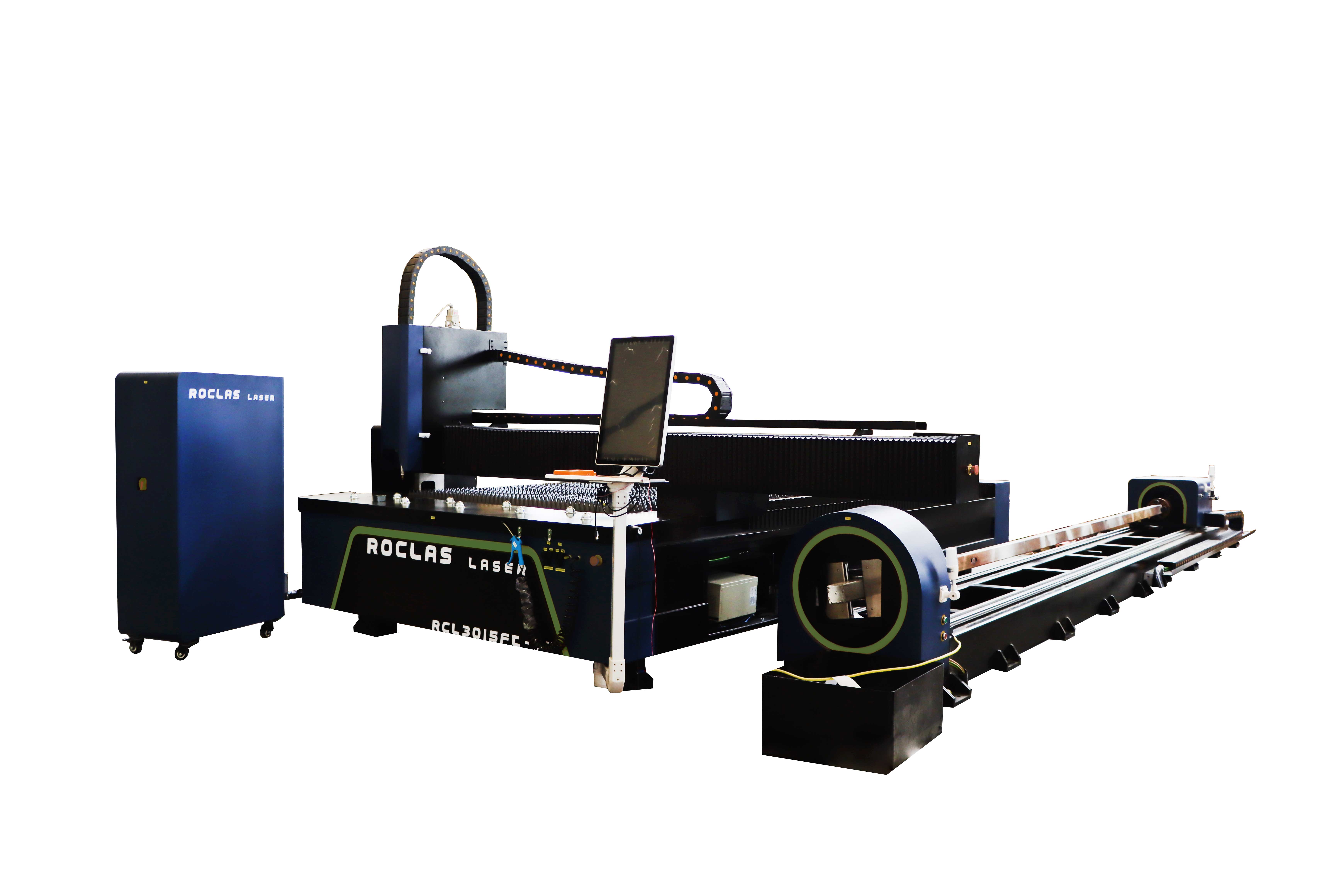
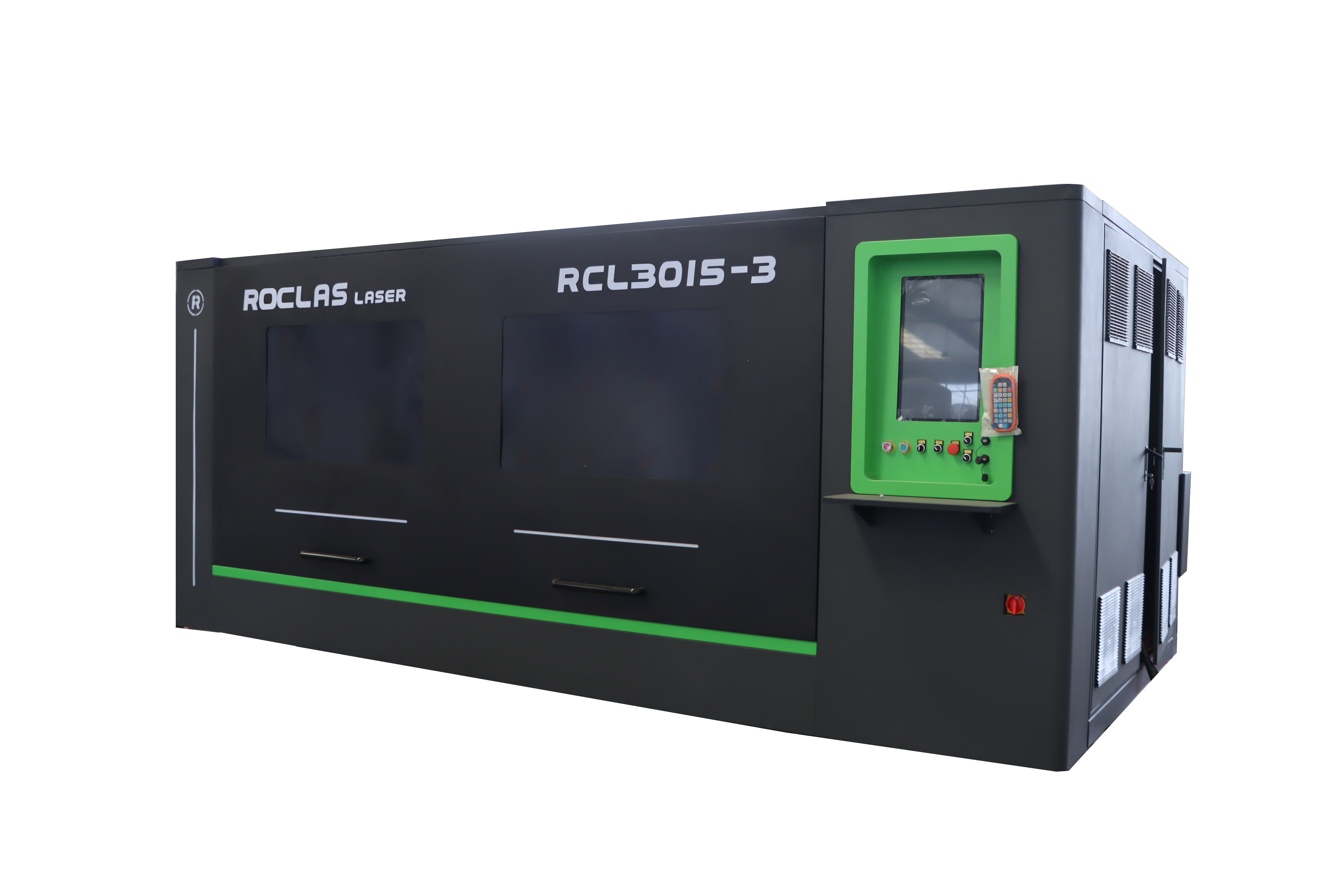
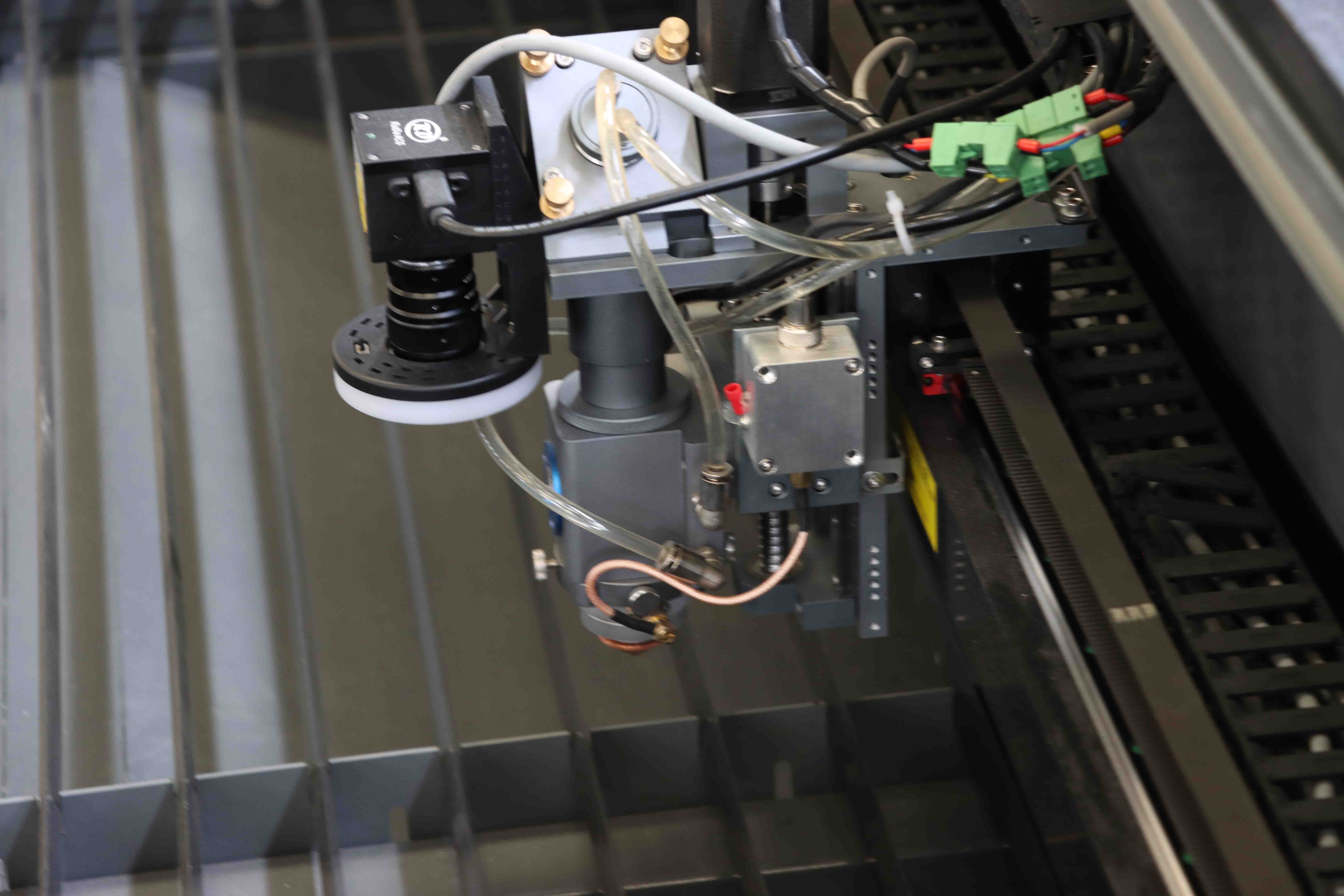
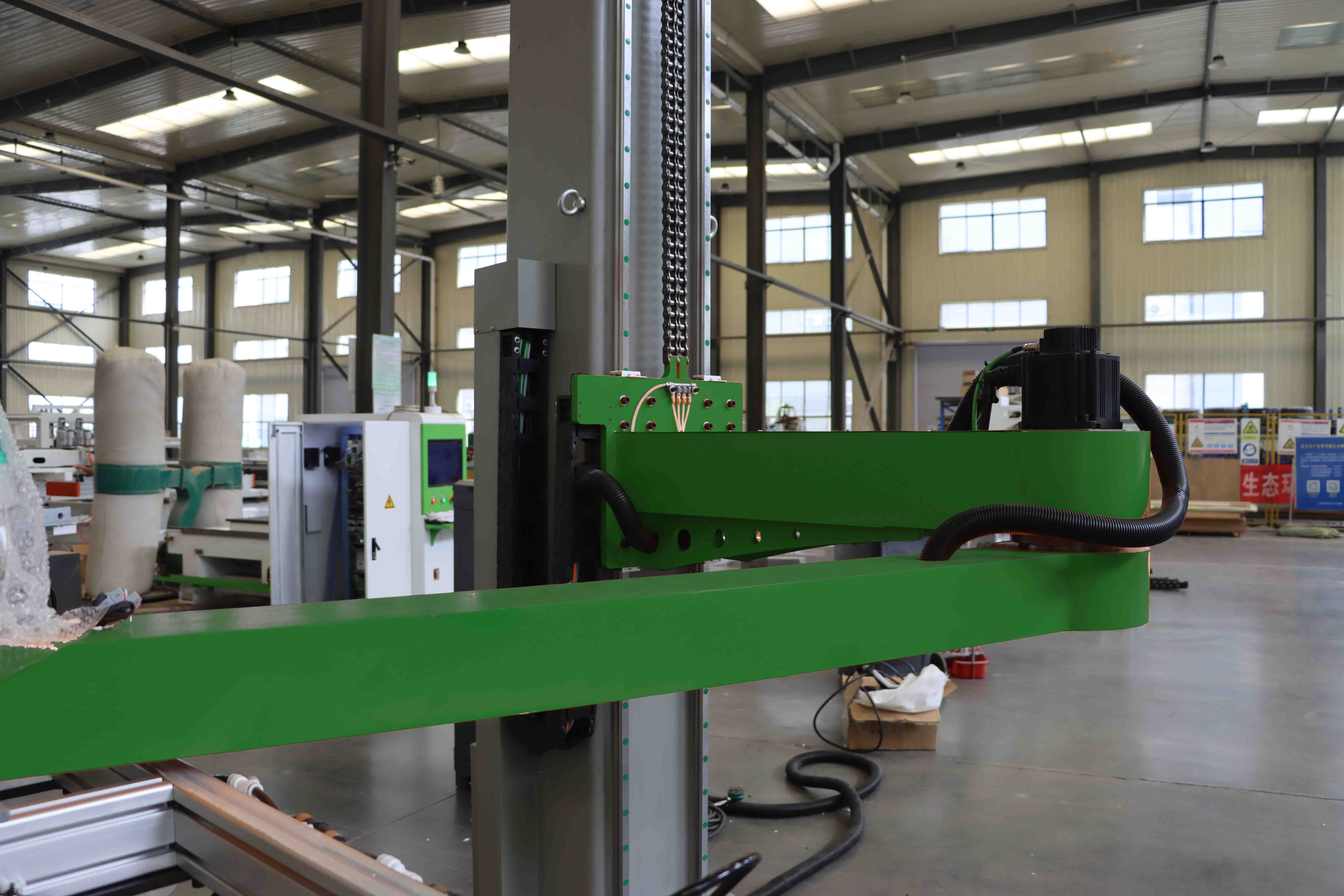
The relationship between linear guide quality and overall machine performance is most evident in the design philosophy of leading CNC manufacturers. ROCLAS® MACHINERY CO., LTD. , a company with over 15 years of experience in laser and CNC equipment, embeds linear guide selection into its broader structural integrity strategy. Their sheet metal fiber laser cutting machines, for example, utilize an industrial-grade heavy-duty steel structure processed on a CNC five-face machining center. The gantry is fixed, and the workbench moves—a configuration that minimizes the moving mass and allows the use of preloaded profile rail guides on both the X and Y axes. The result is a positioning accuracy of ±0.03 mm and repositioning accuracy of ±0.02 mm, figures that are competitive with European and Japanese systems at a significantly lower total cost of ownership.
A specific case is their RCL-1530 series, which employs German igus® cables and imported servo drives from Leadshine, but the critical motion component is the linear guide rail itself. ROCLAS specifies ball-type profile rails with a load capacity of 35 kN for the X-axis (longitudinal) and 40