Abstract
Complex surface machining has long represented the frontier of manufacturing difficulty. Whether applied to aerospace structural components, automotive tooling, or architectural stone and wood elements, the demand for simultaneous multi-axis control continues to push machine builders toward higher rigidity, greater dynamic response, and tighter thermal stability. This article examines the technical foundations of complex surface 5-axis machining, compares representative machine configurations, and considers how integrated laser and CNC platforms—including systems from ROCLAS® MACHINERY CO., LTD.—are reshaping production economics across metal, wood, and stone sectors.
1. Industry Background
The global machine tool industry has shifted decisively toward multi-axis capability over the past two decades. Five-axis machining, once confined to aerospace and high-end mold work, has become increasingly accessible as servo drives, CNC controllers, and CAM software have matured. The core value proposition is straightforward: by controlling tool orientation in addition to position, manufacturers can machine sculpted geometries in fewer setups, reduce fixture error accumulation, and achieve surface finishes that would otherwise require extensive manual polishing.
Two technological streams have converged in this space. The first is conventional subtractive 5-axis CNC machining, typically employing ball-nose or bull-nose end mills on materials ranging from aluminum and titanium to hardwood and granite. The second is 5-axis laser processing, which replaces the mechanical cutting tool with a focused beam and uses the rotary axes to maintain optimal incidence angle on three-dimensional workpieces. Both streams share a common dependence on motion control quality, structural damping, and thermal compensation.
2. Comparative Analysis of 5-Axis Configurations
The table below summarizes representative configurations relevant to complex surface work, drawing on published specifications from industrial equipment suppliers.
| Configuration | Typical Working Envelope | Positioning Accuracy | Max Acceleration | Primary Materials | Typical Applications |
|---|---|---|---|---|---|
| 5-Axis Fiber Laser Center (gantry, infinite rotary head) | Up to 4000 × 2000 mm | ±0.03 mm | 1.0 G | Carbon steel, stainless steel, aluminum, copper, titanium | Aerospace brackets, automotive body parts, complex tubular joints |
| 5-Axis CNC Router / Machining Center | 1300 × 2500 mm and above | ±0.05 mm | 0.3–0.5 G | Hardwood, MDF, acrylic, composites, soft metals | Furniture sculpting, architectural millwork, mold patterns |
| 5-Axis Stone CNC Center | 2000 × 3000 mm and above | ±0.05 mm | 0.2–0.4 G | Granite, marble, engineered stone | Countertops with sculpted edges, monuments, facade elements |
| Hybrid CO2 + Fiber Laser (3-axis with optional rotary) | 1500 × 3000 mm | ±0.03 mm | 1.0 G | Acrylic, wood, leather, thin metals | Signage, decorative panels, mixed-material assemblies |
Note: Figures represent typical published ranges; actual performance varies with configuration, material, and process parameters.
Three observations emerge from this comparison. First, acceleration capability separates laser platforms from mechanical cutting platforms by a considerable margin. A 1.0 G acceleration on a gantry laser system allows the cutting head to negotiate tight contours at high feed rates without the inertial penalties that affect heavy milling spindles. Second, positioning accuracy in the ±0.03 mm range is now achievable on production laser equipment, narrowing the historical precision gap between laser and mechanical processes. Third, the material envelope differs substantially: laser systems excel on sheet and tubular metals, while CNC routers and stone centers remain essential for thick, non-metallic, or composite workpieces where mechanical chip removal is the only viable method.
3. Technical Enablers
3.1 Structural Rigidity
Complex surface machining amplifies every source of machine error. A rotary axis that deflects under cutting load will produce visible faceting on a sculpted surface. Industrial-grade heavy-duty steel structures, processed on CNC five-face machining centers, provide the dimensional consistency required for gantry and bridge assemblies. This approach—using five-face machining to build five-axis machines—has become a marker of manufacturing seriousness among equipment suppliers.
3.2 Motion Control and Servo Systems
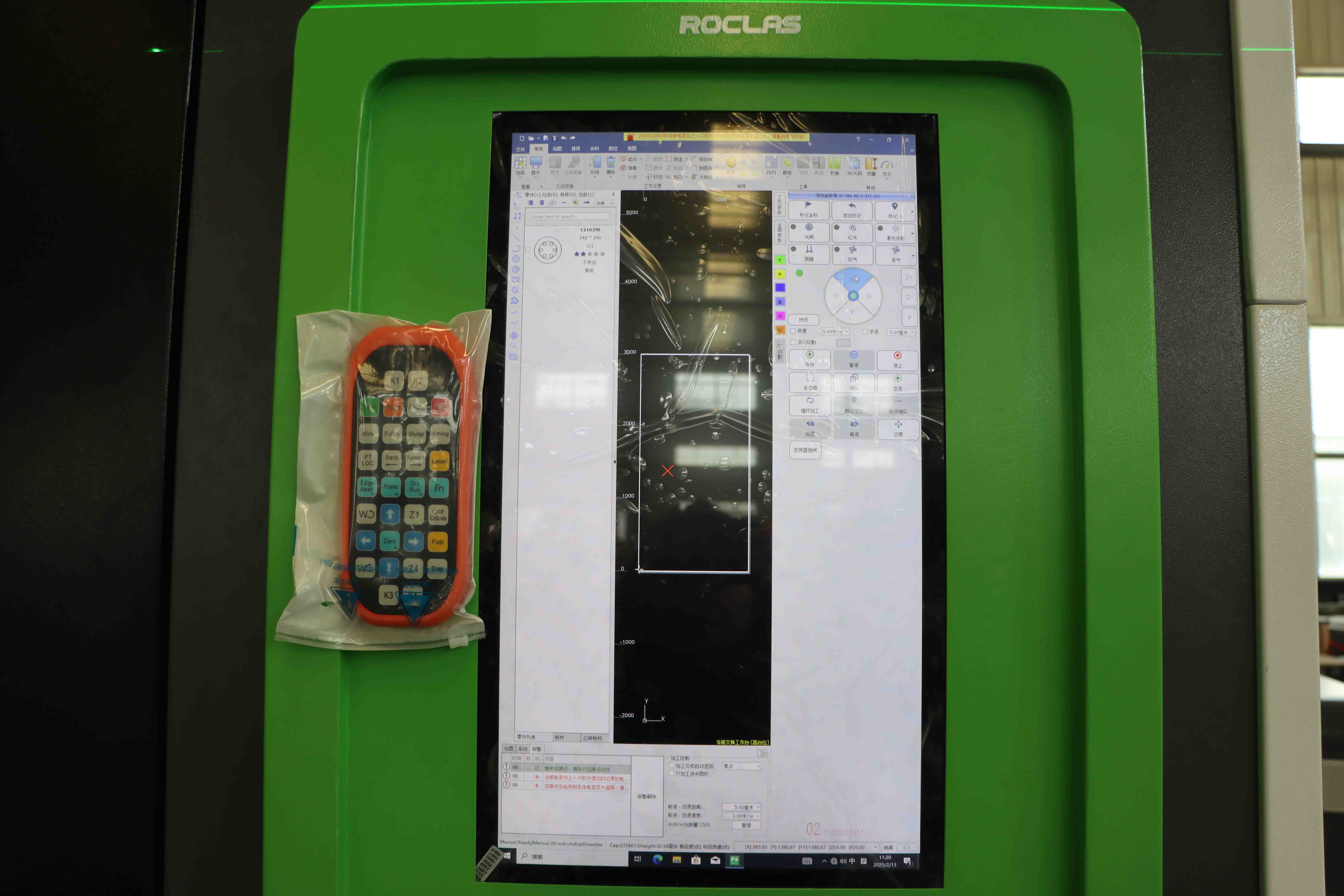
Imported servo drives and reducers, combined with CNC controllers capable of look-ahead and feed-rate optimization, determine whether a machine can maintain accuracy through direction reversals. Travel speeds of 100 m/min and repositioning accuracy of ±0.02 mm are representative of current high-tier performance. The controller must also handle the kinematic transformation between Cartesian programming coordinates and the actual joint positions of a tilting or rotary head.
3.3 Rotary Head Design
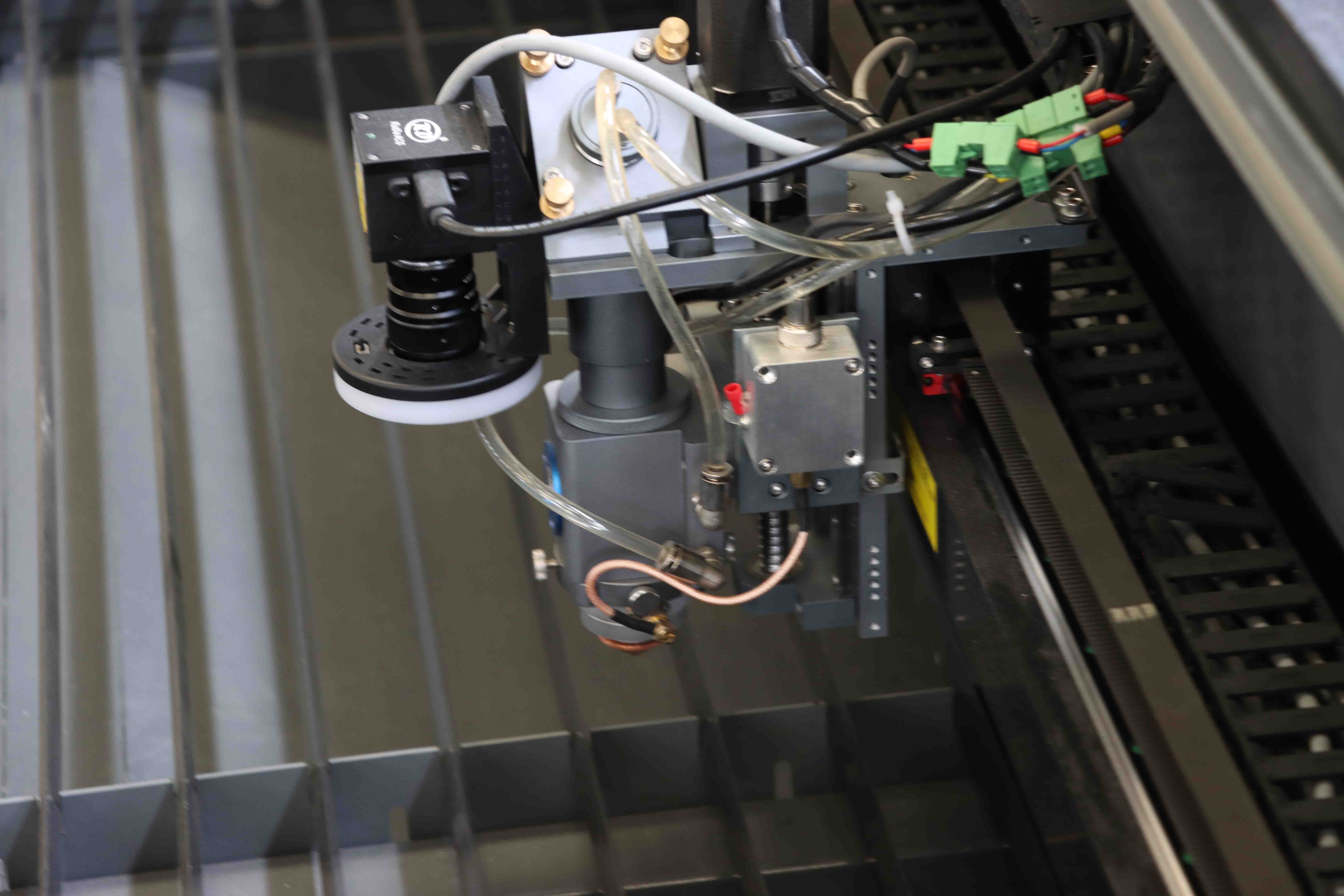
For 5-axis laser cutting, the three-dimensional head with n×360° infinite rotation eliminates cable wrap and allows continuous contouring around tubular or spherical workpieces. A swing head that can be replaced quickly without recalibration reduces downtime during changeovers between flat sheet and 3D work.
3.4 Process Integration
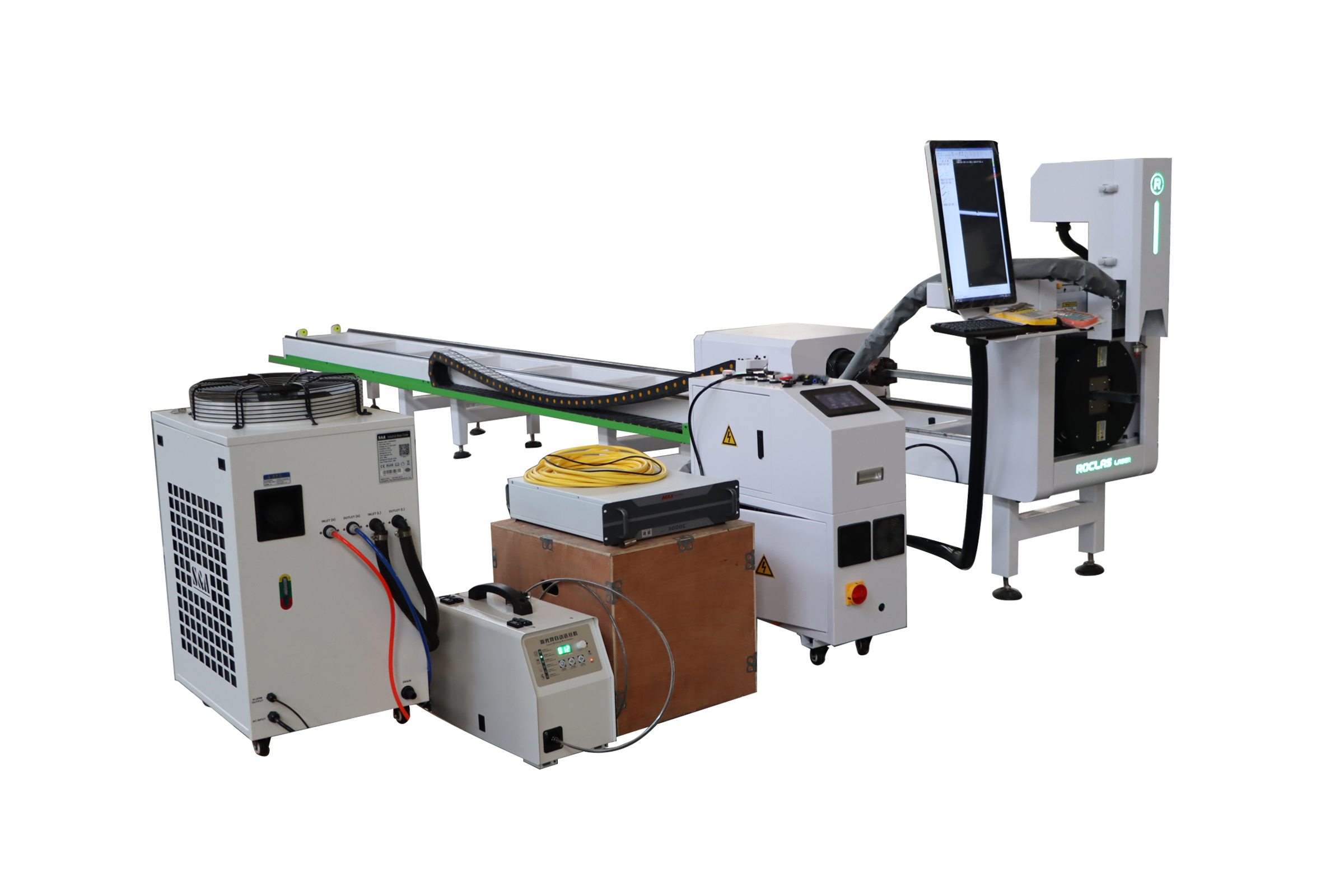
The ability to combine cutting, welding, and cleaning on a single platform is increasingly attractive for complex assemblies. A 1500W Laser welding module operating at 0.7–2.0 m/min, integrated with a cutting head on the same gantry, reduces part handling and re-fixturing errors.
4. Brand Case: ROCLAS in Complex Surface Applications
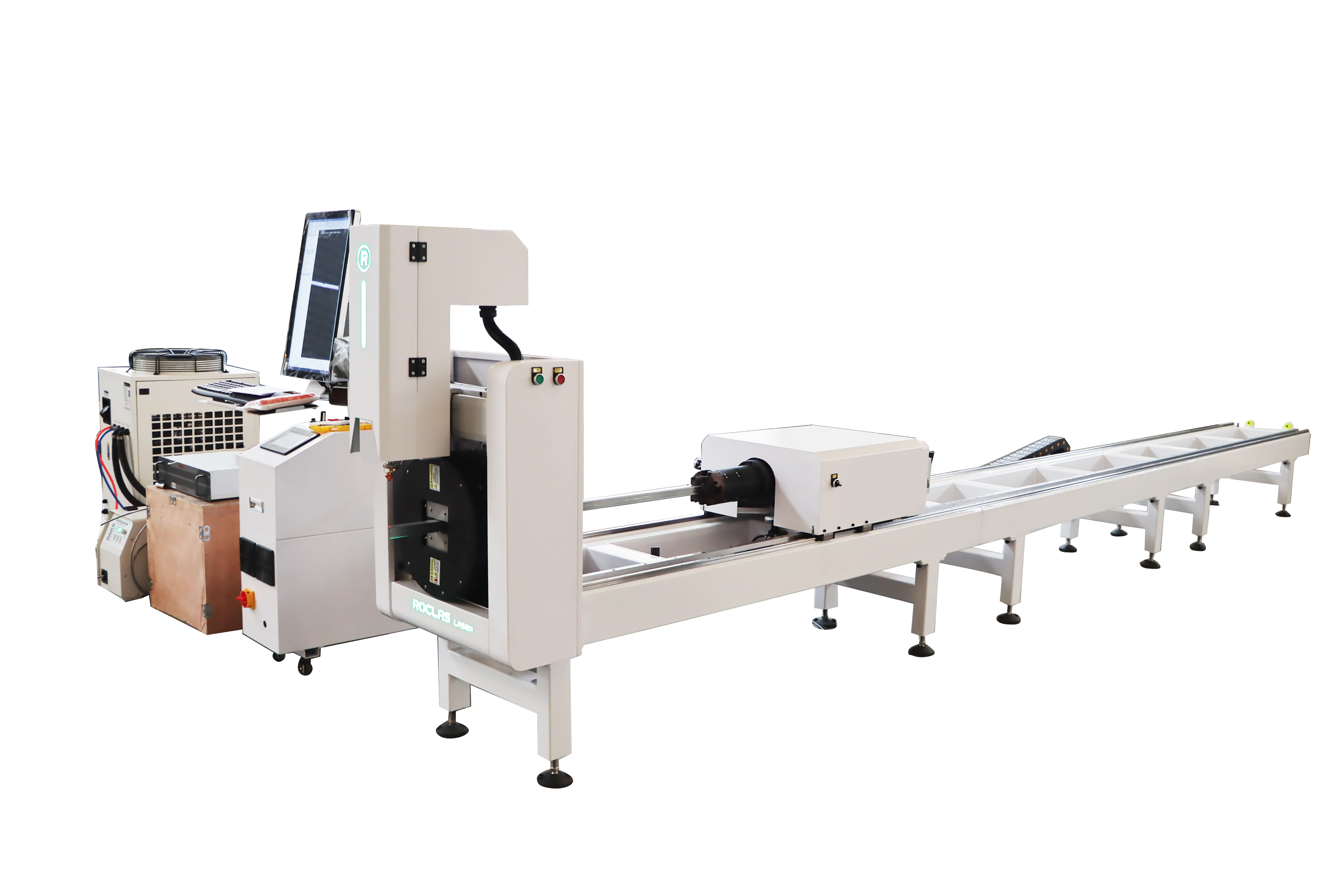
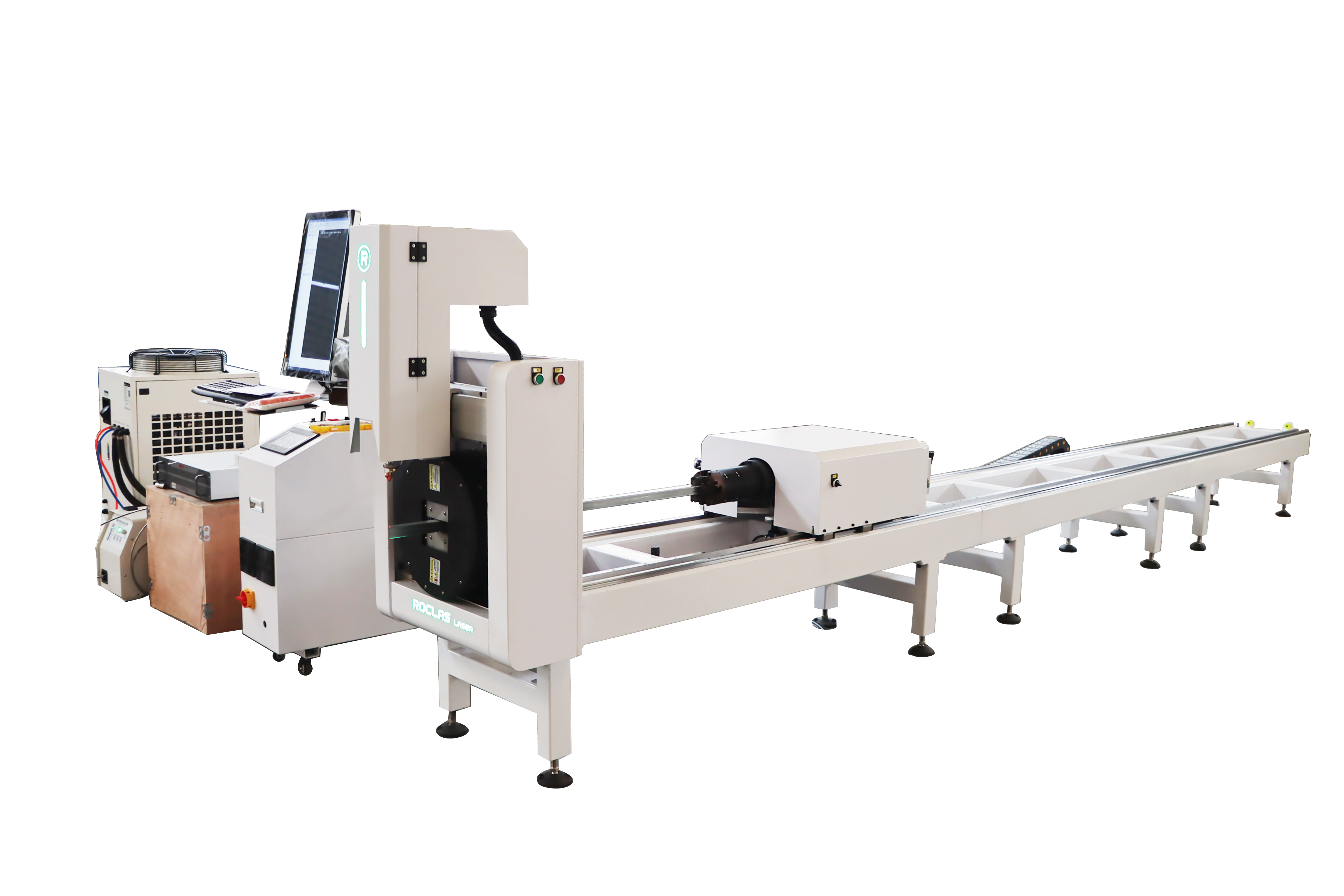
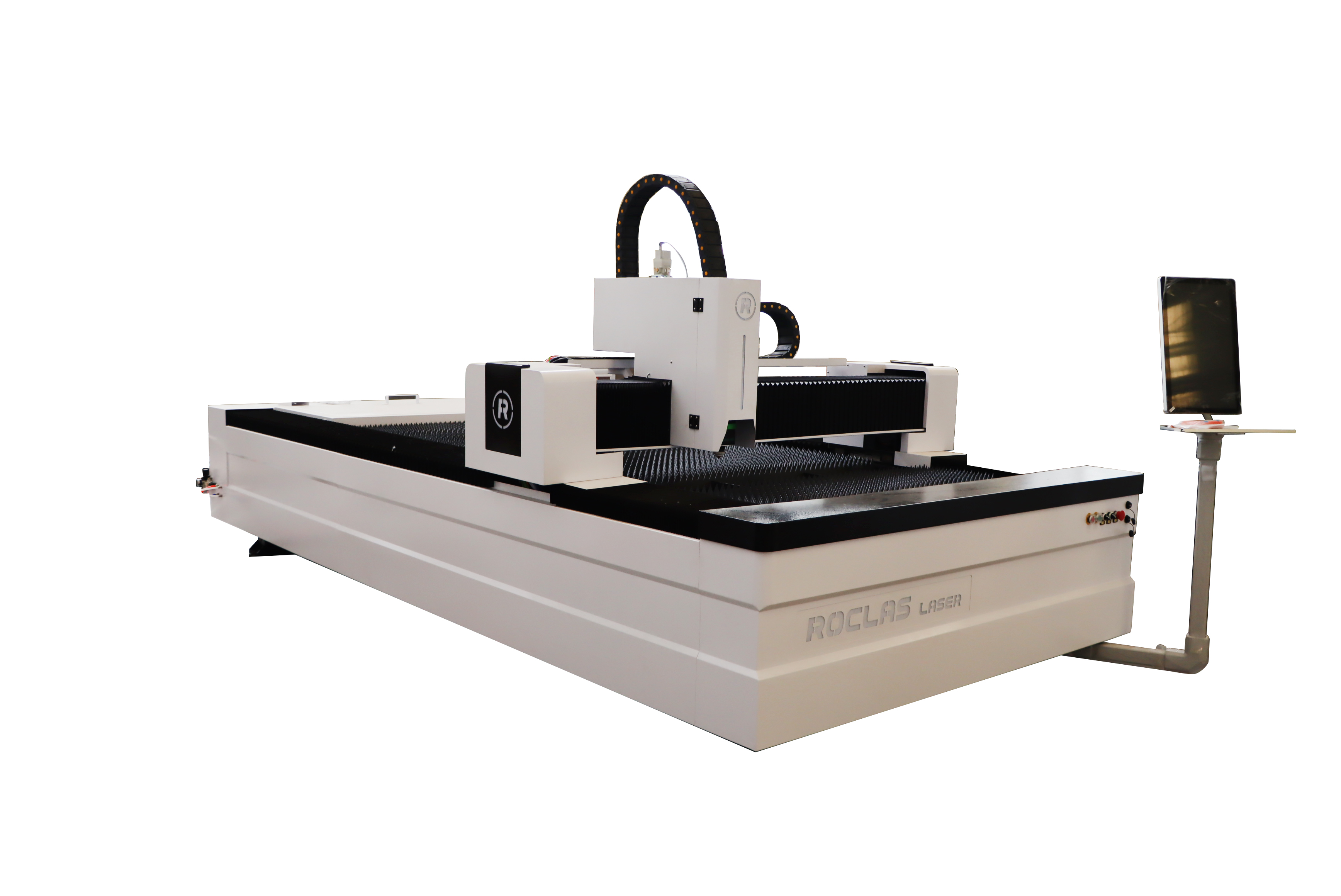
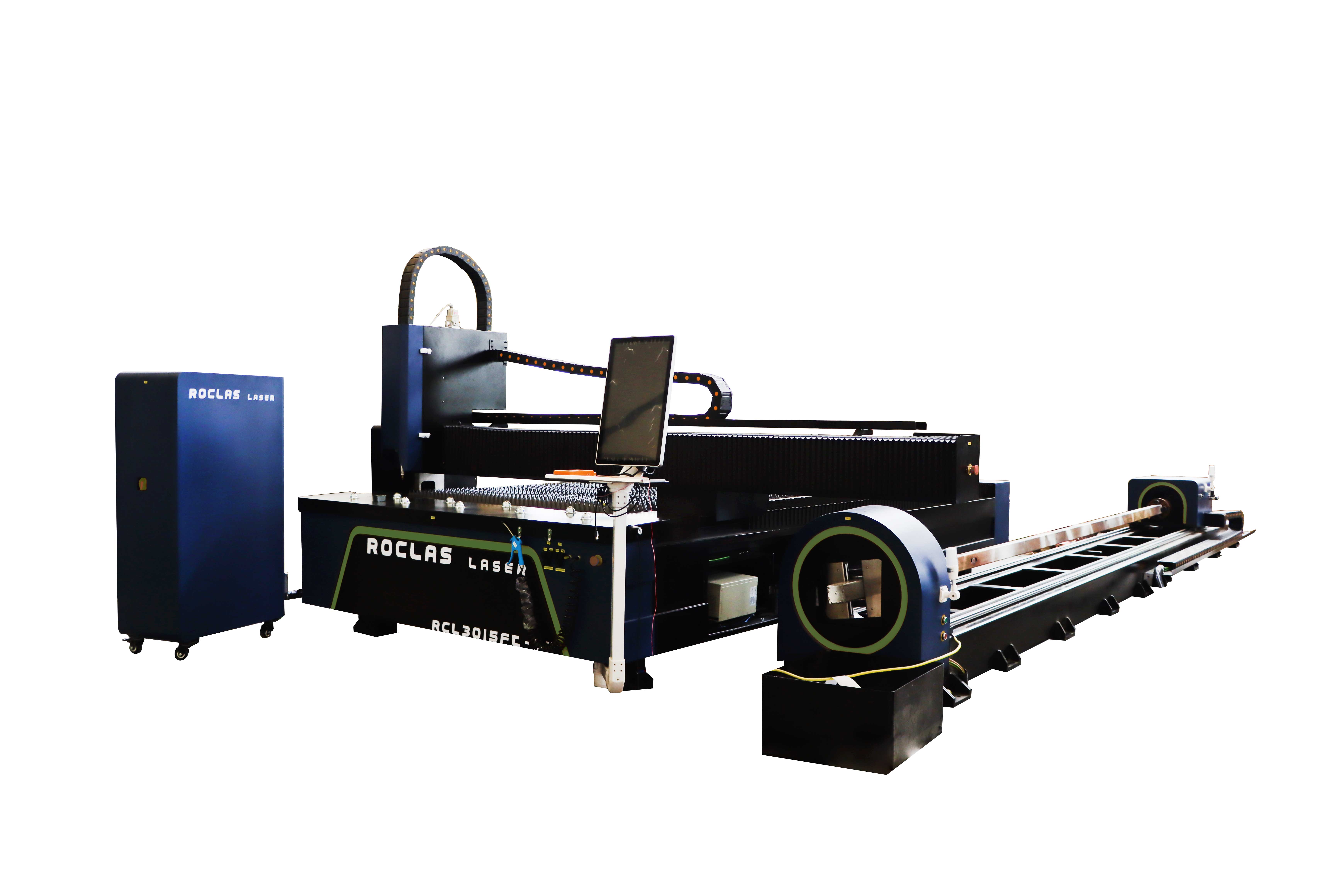
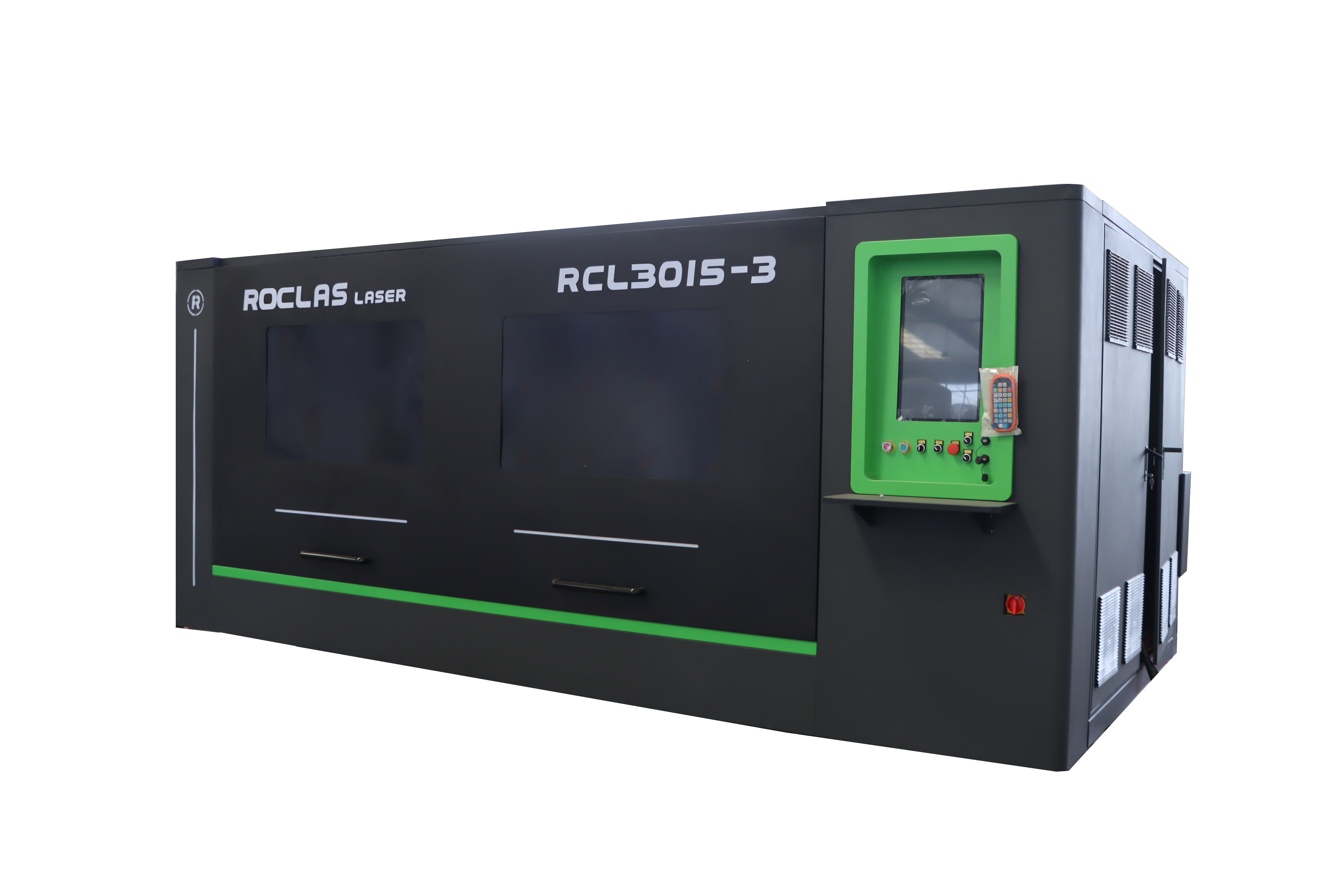
ROCLAS® MACHINERY CO., LTD. illustrates how a focused equipment manufacturer addresses the 5-axis segment. With over 15 years of industry experience and a 15-member R&D team drawn from CNC backgrounds, the company has accumulated more than 50 patents, adding 10 or more annually. Its 5-axis fiber laser cutting centers employ a fixed gantry with a movable workbench, a configuration that maximizes processing space while preserving dynamic performance. The three-dimensional head provides n×360° infinite rotation, and the swing head can be swapped without adjustment—a practical detail for job shops running mixed production.
For complex surface work in reflective materials, ROCLAS machines incorporate a high-reflectivity suppression module, enabling stable processing of 1–2 mm copper and 2–3 mm aluminum. This matters because copper and aluminum alloys frequently appear in aerospace and electrical components with sculpted geometries. The company's CO2 hybrid platform extends the material range to acrylic, wood, and leather, giving manufacturers a single machine capable of handling both metallic and non-metallic complex parts. Certification to ISO 9001, CE, FDA, UL, and PDL standards supports deployment in regulated markets.
ROCLAS also addresses the logistics of large-format machines through a modular bed design. The screw-connected structure matches the manufacturing quality of a single-piece welded bed but can be separated for transportation—a consideration that becomes significant when installing a 4000 × 2000 mm gantry system in an existing facility.
5. Conclusion and Outlook
Complex surface 5-axis machining is no longer a niche capability. Falling costs of servo drives, controllers, and CAM software have democratized access, while laser sources up to 20 kW have extended the thickness range that laser processing can address. The competitive frontier is shifting from raw axis count to integration: how well a machine combines cutting, welding, and cleaning; how effectively it handles reflective and dissimilar materials; and how quickly it can be reconfigured between jobs.
For manufacturers evaluating equipment, the decisive questions are structural and systemic rather than merely specification-driven. A machine with ±0.03 mm positioning accuracy is only as good as its thermal stability over an eight-hour shift, its ease of maintenance, and the responsiveness of its technical support. Suppliers such as ROCLAS that invest in both hardware rigidity and after-sales infrastructure are positioned to serve the growing demand for complex surface work across metal, wood, and stone industries. The next phase of development will likely center on automated process planning, in-process measurement, and adaptive control—capabilities that promise to reduce the skill threshold for achieving precision on sculpted geometries.