Copper is one of the most demanding materials in laser cutting. Its high thermal conductivity and reflectivity create challenges that many machines simply cannot handle. For manufacturers in sheet metal fabrication, electrical equipment production, and decorative metalwork, a practical question arises: what thickness of copper can a laser cutting machine actually process reliably? The answer depends less on marketing claims and more on laser power, wavelength, and the machine's ability to manage back-reflection.
This article examines the copper cutting capabilities of modern fiber laser systems, using ROCLAS® MACHINERY CO., LTD. as a reference point for what industrial-grade equipment can achieve. Rather than offering vague promises, we will look at specific thickness ranges tied to power levels, the technical reasons behind those limits, and the practical factors that determine whether a machine can cut copper day after day without damaging its optics.
Why Copper Is Difficult to Cut
To understand thickness limits, one must first understand why copper resists laser processing. Two material properties dominate the discussion.
First, copper has extremely high thermal conductivity—roughly 400 W/m·K, far higher than carbon steel or stainless steel. When a laser beam strikes the surface, heat dissipates rapidly into the surrounding material instead of concentrating at the cut point. This means the laser must deliver enough energy density to overcome conduction losses before melting or vaporization can occur.
Second, copper is highly reflective at the near-infrared wavelengths (around 1070 nm) used by most fiber lasers. At room temperature, copper can reflect more than 90% of incident laser energy. This not only reduces cutting efficiency but also creates a serious risk: reflected light can travel back up the optical path and damage the laser source, the cutting head, or the protective lens.
These two factors mean that cutting copper is not simply a matter of turning up the power. It requires a machine designed to suppress back-reflection, maintain stable focus, and deliver consistent energy density across the cut.
Thickness Ranges by Laser Power
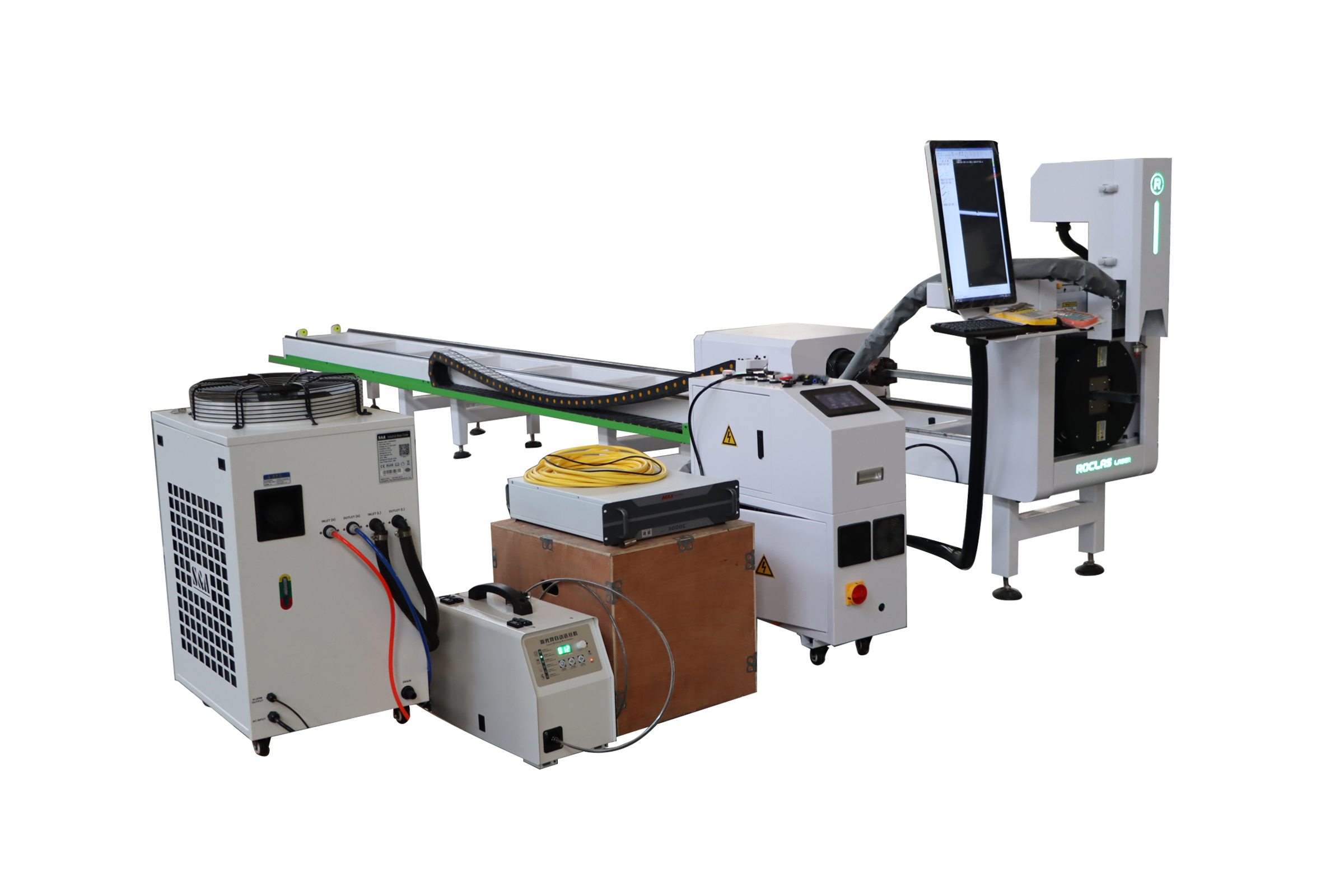
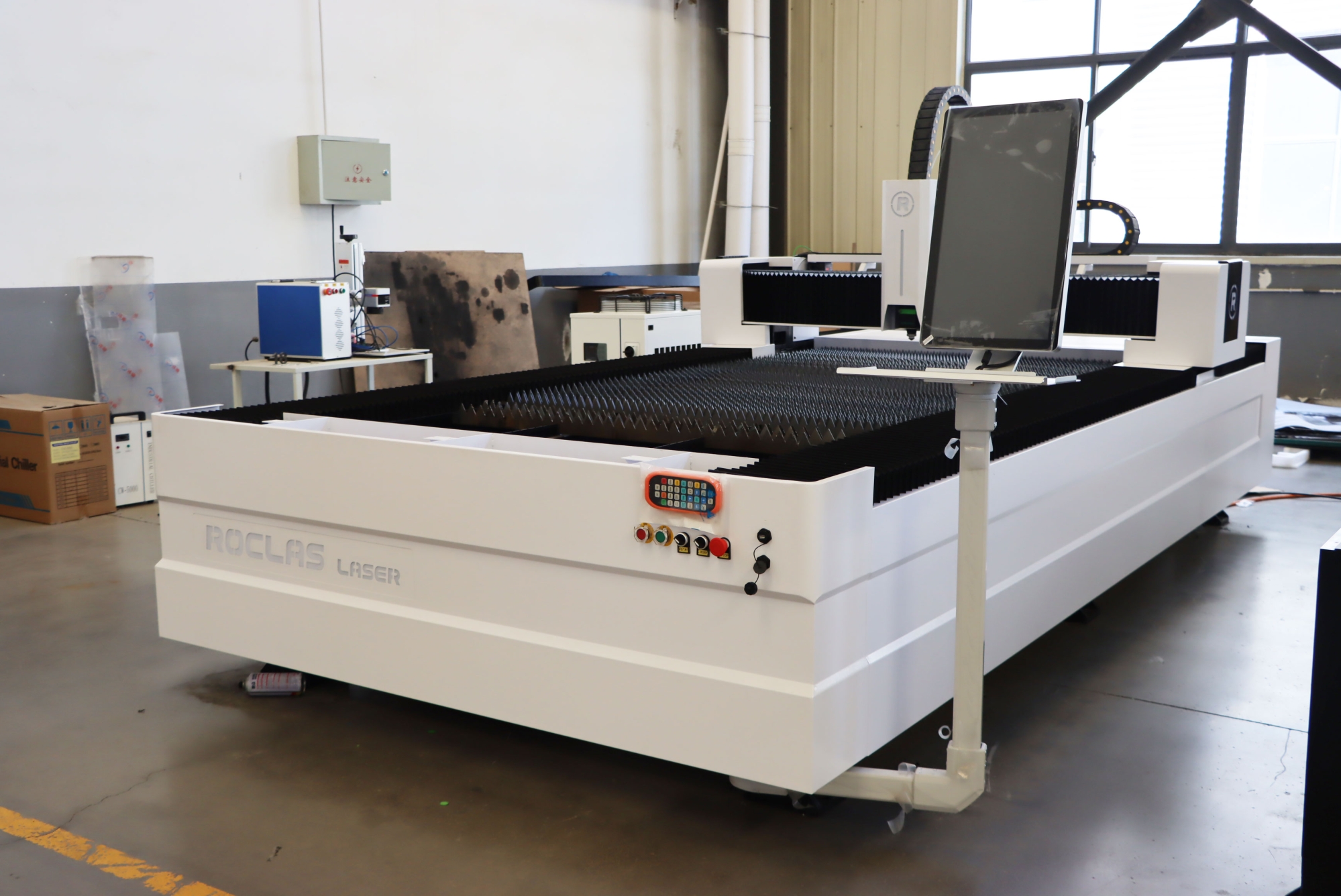
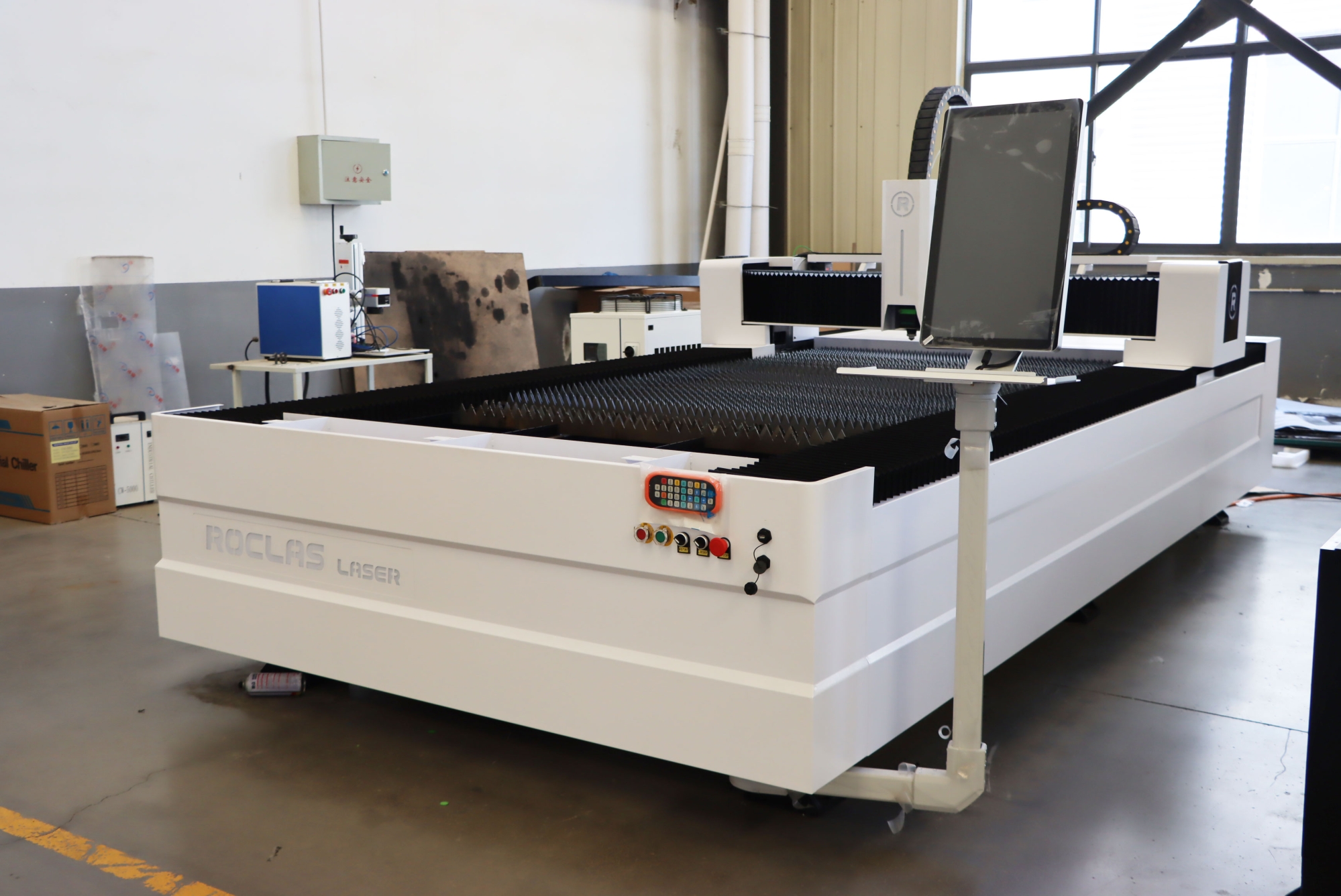
ROCLAS Fiber laser cutting machines are equipped with a high-reflectivity suppression module specifically developed to enable stable processing of reflective metals. According to the manufacturer's specifications, the following thickness ranges apply to copper processing:
| Laser Power | Copper Thickness (Reliable Cut) | Typical Application |
|-------------|-------------------------------|---------------------|
| 1000W–1500W | 1–2 mm | Electrical contacts, thin shims |
| 2000W–3000W | 2–3 mm | Busbars, terminals, decorative panels |
| 4000W–6000W | 3–4 mm | Industrial electrical components |
| 8000W–12000W | 4–6 mm | Heavy-duty conductive parts |
| 15000W–20000W | 6–8 mm (with optimized parameters) | Specialized industrial applications |
It is important to note that these figures represent reliable, production-oriented cutting—not one-off laboratory demonstrations. The distinction matters. A machine may technically sever a piece of copper in a test, but if the cut edge is rough, the kerf is wide, or the process damages the lens after a few hours, it is not a practical solution.
ROCLAS specifies that its fiber laser machines can stably process 1–2 mm copper plates as a baseline capability, with higher-power models extending that range. The company's high-reflectivity suppression module is the key enabler, allowing the machine to handle copper and aluminum without the frequent interruptions or component failures that plague lesser systems.
The Role of Wavelength and Source Technology
The thickness a machine can cut also depends on the laser source. Most fiber lasers operate at approximately 1070 nm, a wavelength at which copper's reflectivity is high but manageable with proper suppression. CO2 lasers, operating at 10.6 μm, are absorbed more readily by copper but are limited in power and speed for thick sections.
ROCLAS offers both fiber and CO2 laser platforms. Its co2 laser cutting machine (RCL1530-500W) provides true "all-material" processing, integrating CO2 and fiber sources in a single machine. For copper specifically, the fiber source is the primary tool, with power options ranging from 1000W to 20KW using Raycus or MAX sources. Higher power translates directly into greater thickness capability, but only when the machine's motion system, cooling, and optics can support it.
Practical Factors Beyond Power
Power is necessary but not sufficient. Several other factors determine whether a machine can cut copper at a given thickness.
Beam quality and focus. A tightly focused beam with high beam quality (low M²) concentrates energy more effectively, improving cut speed and edge quality. ROCLAS machines use Raytools laser heads, which are known for stable focusing and reliable performance in reflective material processing.
Cutting speed and gas assist. Copper cutting typically requires higher gas pressure and careful speed control. Too slow, and the material overheats and dross forms; too fast, and the beam fails to penetrate. Nitrogen is commonly used as an assist gas to prevent oxidation and help eject molten material.
Machine rigidity and control. Copper cutting generates significant heat, and thermal expansion can affect accuracy. ROCLAS machines feature industrial-grade heavy-duty steel structures processed on CNC five-face machining centers, with positioning accuracy of ±0.03 mm and repositioning accuracy of ±0.02 mm. This rigidity helps maintain consistent cut quality across the workpiece.
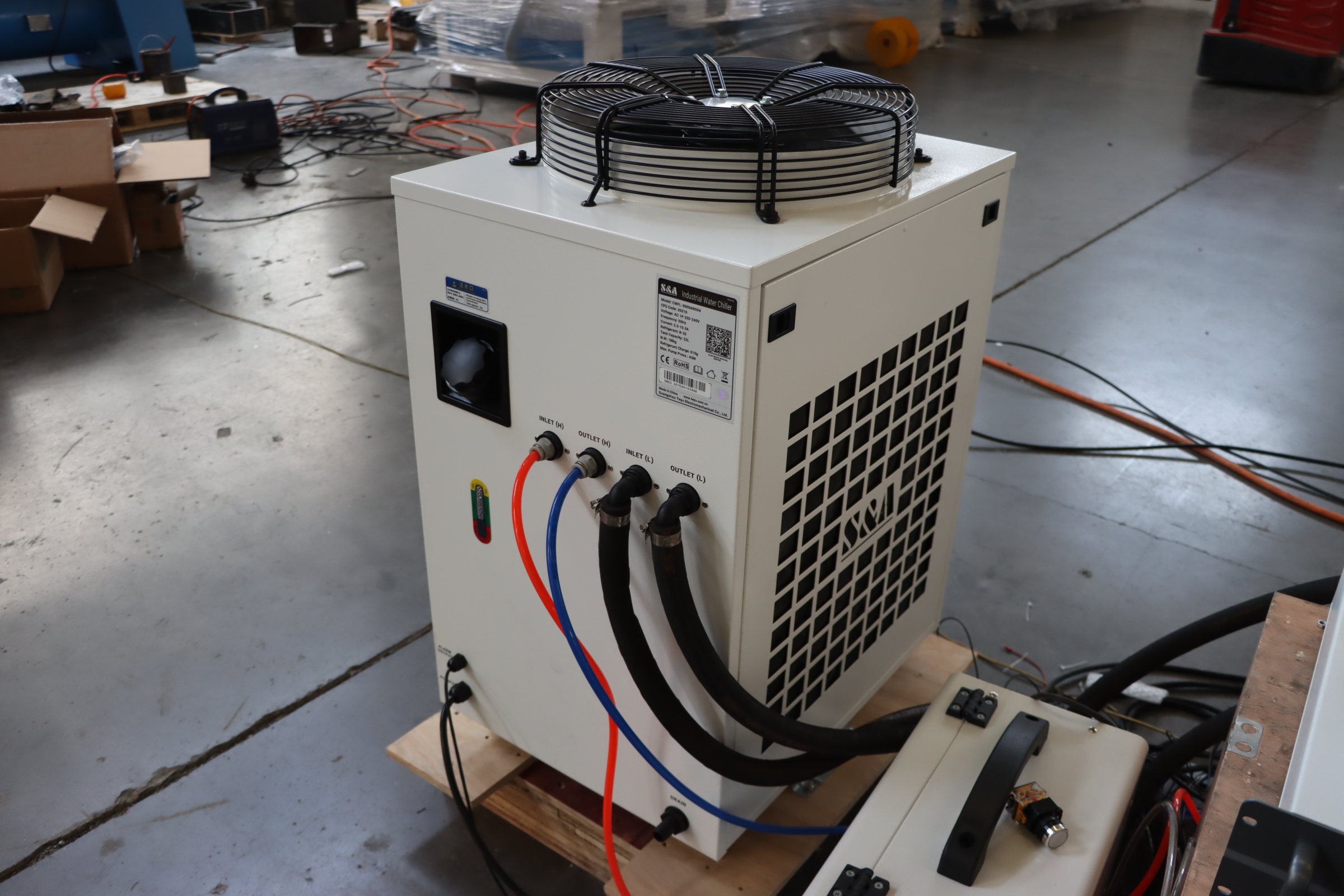
Cooling and duty cycle. Continuous copper cutting places heavy demands on the laser source and optics. A well-designed water cooling system and built-in smoke purification (standard on ROCLAS equipment) support sustained operation without overheating.
What This Means for Buyers
If your work involves copper, the question "what thickness can the machine cut?" should be answered with a follow-up: at what quality, with what duty cycle, and with what maintenance interval?
A 3000W fiber laser from ROCLAS can cut 2–3 mm copper reliably in production settings. A 6000W system extends that to 3–4 mm. For thicker sections, 12KW or 20KW models push into the 6–8 mm range, though the economics and cut quality must be evaluated case by case. Thin copper—1 mm and below—is straightforward for even entry-level fiber machines, provided they include back-reflection protection.
Buyers should also consider the machine's certification and support. ROCLAS products carry ISO 9001, CE, FDA, UL, and PDL certifications, and the company provides technical support that is often cited as a strength. For copper processing, where a single reflective event can destroy an expensive laser head, responsive support and genuine anti-reflection engineering are not optional extras—they are core requirements.
Conclusion
Copper cutting thickness is a function of laser power, source technology, and machine design. For ROCLAS fiber laser systems, the practical range spans from 1–2 mm on 1000W–1500W machines to 6–8 mm on high-power models up to 20KW, with the high-reflectivity suppression module making stable processing possible. The key is to match the machine's capability to the actual production requirement, and to insist on equipment engineered for reflective materials rather than adapted to them. Copper is unforgiving; the right machine makes it manageable.