Abstract
In high-mix, high-volume sheet metal fabrication, the laser cutter is only as productive as its loading and unloading cycle allows. While much marketing attention focuses on laser power—now routinely reaching 20 kW—the real bottleneck on most shop floors is the dead time between nested sheets. A Fiber laser cutting machine with an exchange table addresses this directly by decoupling part removal from the cutting process. This article examines how dual-table architecture interacts with gantry rigidity, servo dynamics, and control software, and where the configuration fits within the broader equipment portfolios offered by established CNC builders such as ROCLAS® MACHINERY CO., LTD.
1. The Economics of Non-Productive Time
A 6 kW fiber laser cutting 2 mm mild steel may spend only three to five minutes per nest, yet manual unloading, slag removal, and reloading can consume an equal or greater interval. On a single-table machine, that interval is pure downtime. For a shop running twenty nests per shift, the cumulative loss can exceed two hours of available cutting time per day.
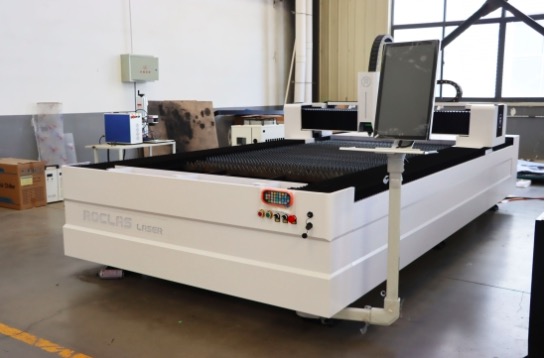
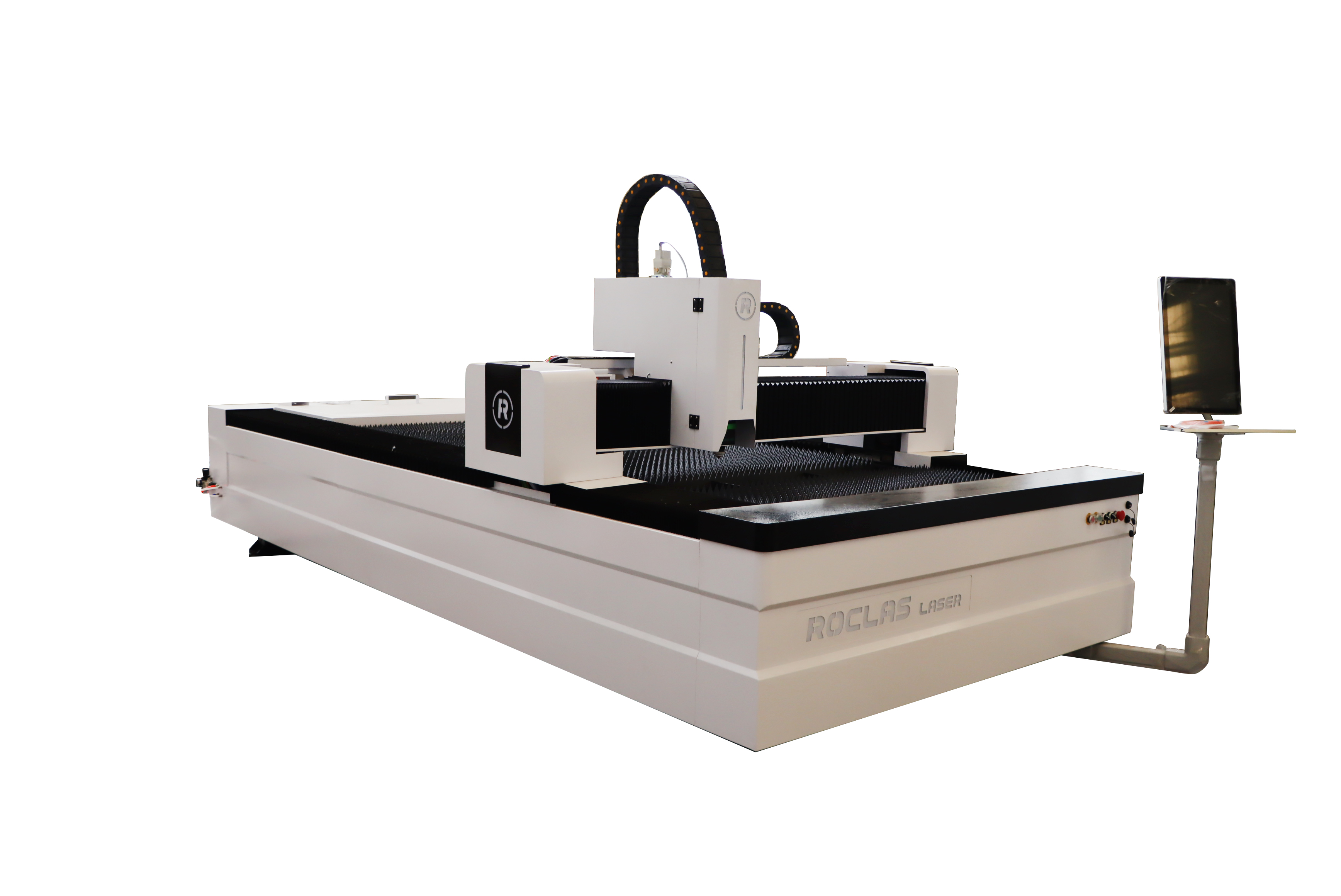
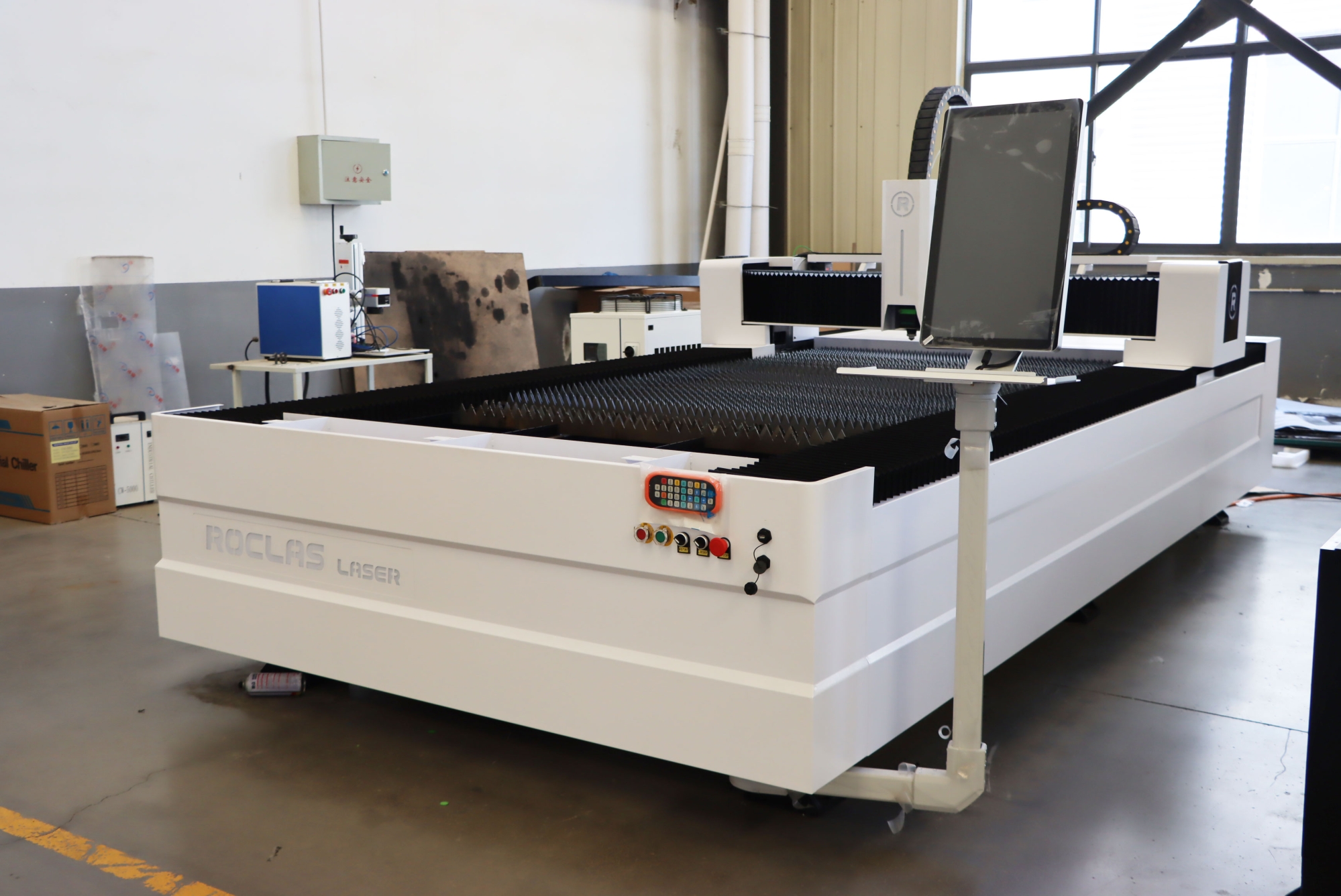
The exchange table, sometimes called a shuttle table or pallet changer, resolves this by mounting two interchangeable workbeds on a rotating or translating mechanism. While the laser head processes the sheet on table A, the operator unloads finished parts and loads the next blank on table B. When cutting completes, the tables swap—typically in 10 to 30 seconds—and production resumes with minimal interruption. The operator's labor is likewise redistributed from waiting to working, which improves both throughput and ergonomics.
2. Table Configuration Data and Interpretation
The table below summarizes representative specifications across exchange-table and fixed-table fiber laser platforms. Figures are drawn from published Roclas Laser product documentation and typical industry configurations.
| Parameter | Exchange-Table Fiber Laser | Single-Table Fiber Laser | Tube Fiber Laser |
|---|---|---|---|
| Working area (per table) | 3000 × 1500 mm / 4000 × 2000 mm | 3000 × 1500 mm / 4000 × 2000 mm | 1500 × 4000 mm |
| Laser power range | 1000 W – 20 kW | 1000 W – 20 kW | 1000 – 3000 W |
| X/Y positioning accuracy | ±0.03 mm | ±0.03 mm | ±0.05 mm |
| X/Y repositioning accuracy | ±0.02 mm | ±0.02 mm | ±0.03 mm |
| Travel speed | 100 m/min | 100 m/min | 100 m/min |
| Max acceleration | 1.0 G | 1.0 G | 1.0 G |
| Control system | Cypcut 3000S | Cypcut 3000S | Cypcut 3000S |
| Max tube diameter | — | — | 220 mm |
| Typical table swap time | 10–30 s | N/A | N/A |
Two observations follow from this data. First, the exchange table does not compromise motion performance: positioning and repositioning accuracy, travel speed, and acceleration are identical to single-table equivalents. The shuttle mechanism is a material-handling subsystem, not a motion subsystem, so the cutting carriage retains its full dynamic envelope.
Second, the power ceiling of 20 kW applies across both configurations. This matters because higher-power lasers cut thicker material faster, which shortens the cutting cycle and therefore increases the relative cost of manual load/unload. The faster the laser, the stronger the economic case for an exchange table—a point frequently overlooked when shops upgrade power without upgrading material handling.
3. Mechanical and Control Considerations
An exchange table imposes specific demands on machine design. The bed must maintain flatness and vibration damping across two positions rather than one, and the positioning mechanism must repeat accurately over thousands of cycles. Builders address this through heavy-duty steel structure design and CNC five-face machining of the frame, which ensures the guide surfaces and table interfaces are aligned within tight tolerances before assembly.
The control system must also coordinate the swap sequence with cutting completion. On Cypcut 3000S-based machines, the exchange cycle is integrated into the nesting workflow: the software signals cut completion, retracts the head to a safe position, and releases the table interlock. Safety interlocks prevent table motion while the laser is active. Roclas configures its fiber laser platforms with imported servo drives and reducers, which provide the response characteristics needed for rapid, repeatable table indexing without settling oscillation.
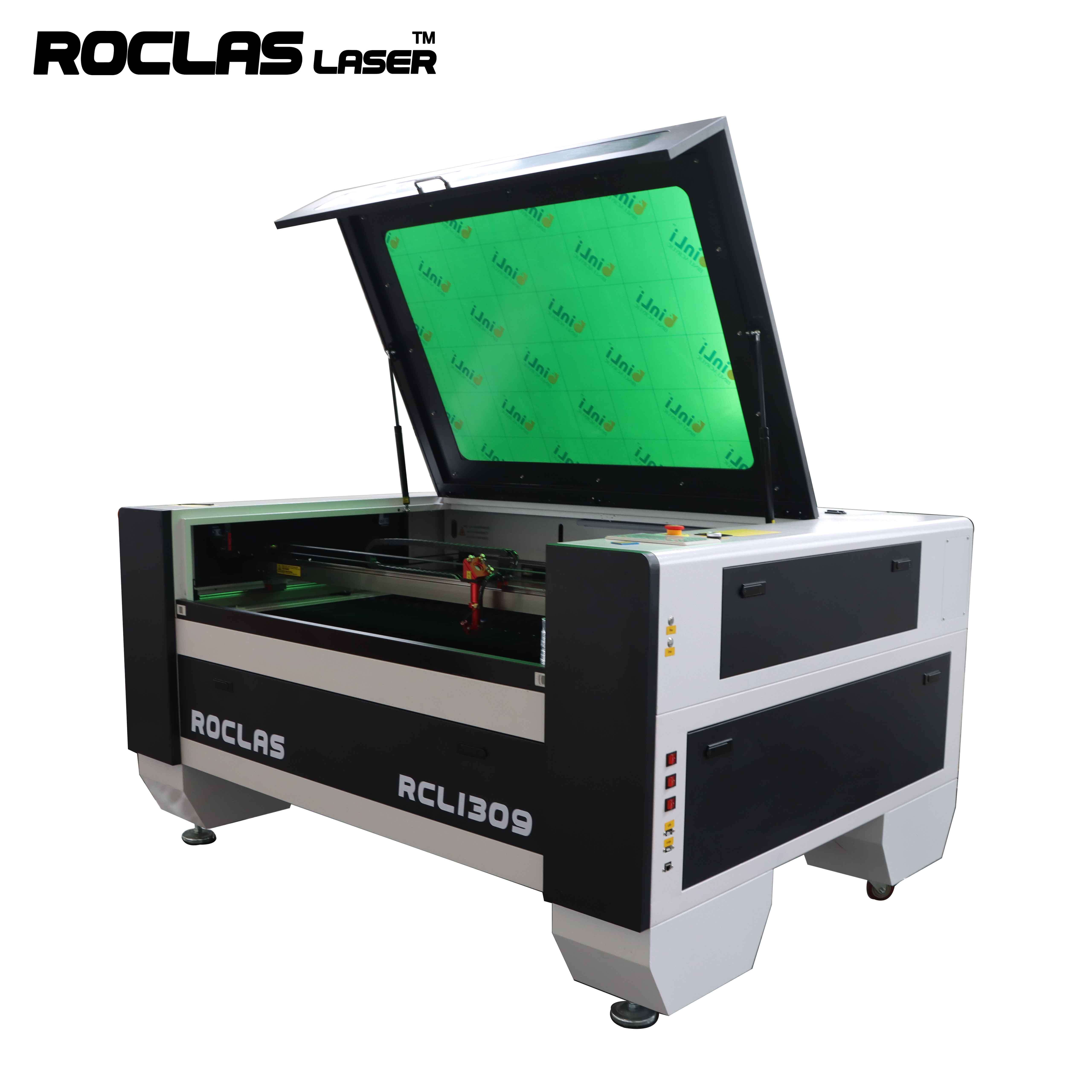
Material versatility is unchanged. Exchange-table machines process carbon steel, stainless steel, aluminum, copper, brass, galvanized steel, and titanium, with a high-reflectivity suppression module enabling stable cutting of 1–2 mm copper and 2–3 mm aluminum. For shops that also handle non-metals, a hybrid CO2 plus fiber configuration is available, though the CO2 option is typically specified on single-table platforms.
4. Application Fit
The exchange table is most valuable in operations with continuous nested-sheet production: kitchen equipment manufacturing, stainless steel furniture frames, advertising signage, elevator components, and general sheet metal job shops. In these environments, the machine often runs unattended during cutting and attended only during the swap, allowing one operator to supervise multiple machines.
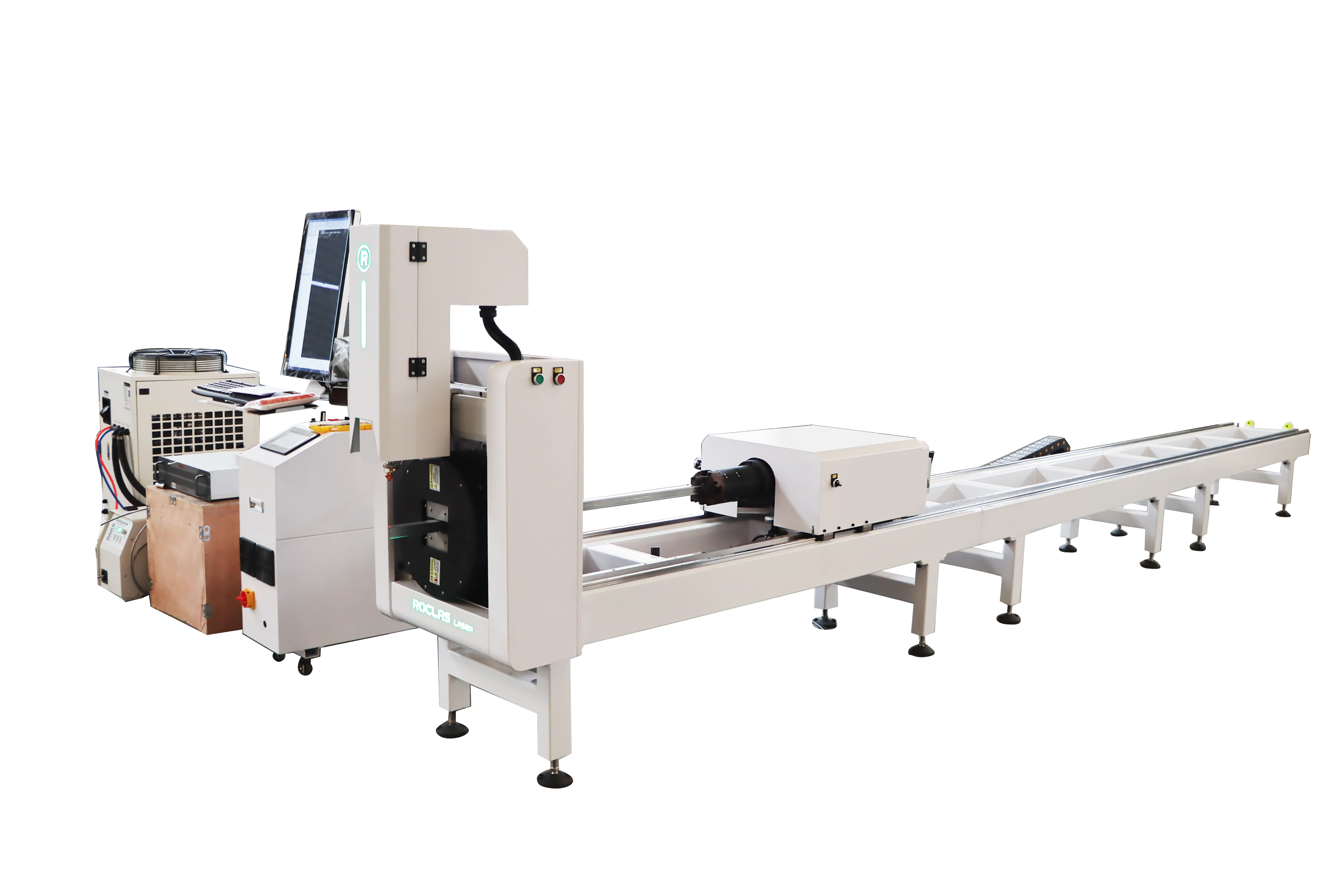
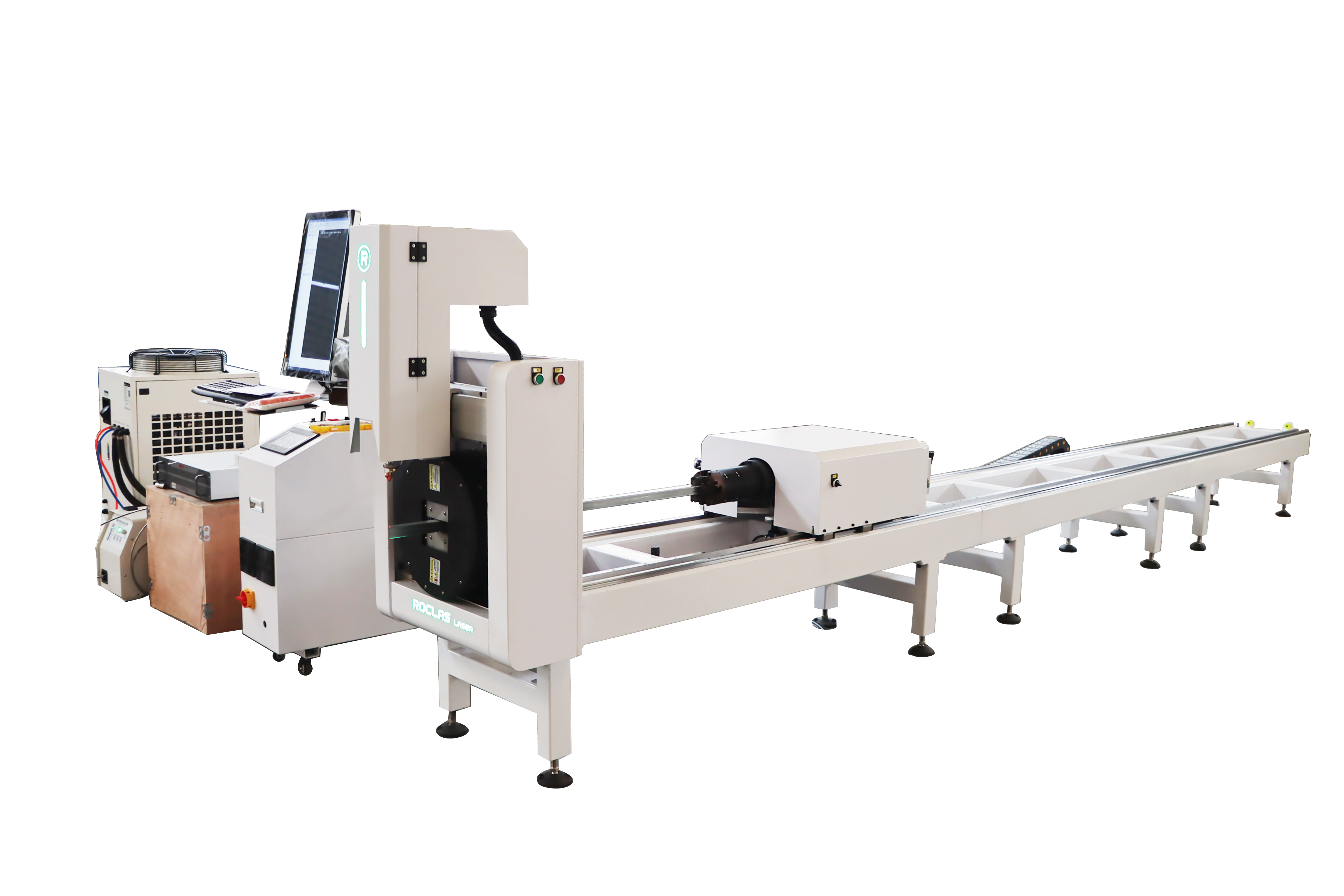
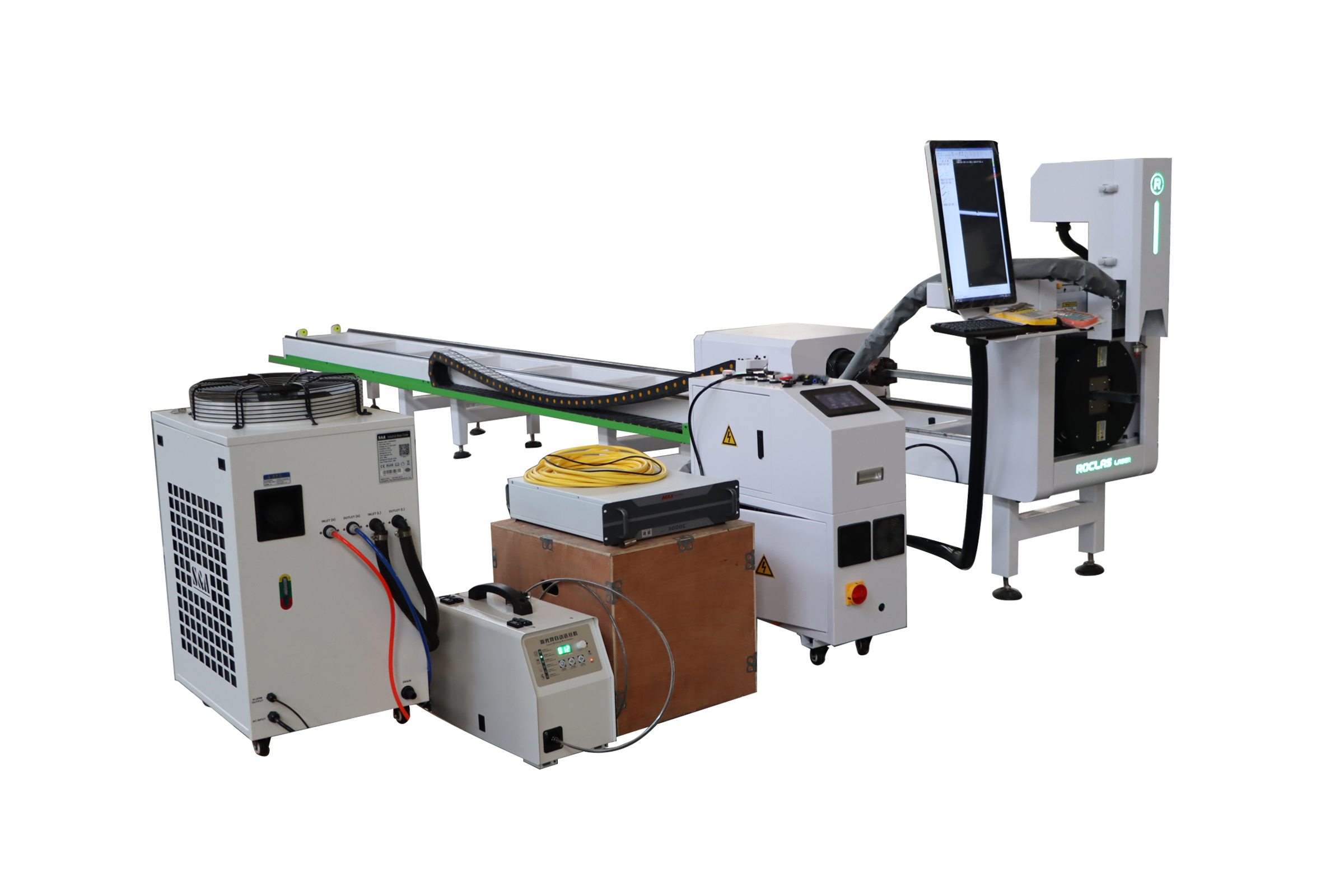
For tube and pipe work, the equivalent productivity gain comes from automatic chuck systems rather than exchange tables. Roclas addresses this segment with dedicated tube fiber laser cutting machines handling diameters up to 220 mm, and with combined sheet-and-tube models for shops that need both capabilities in one footprint.
Where floor space is constrained, the modular bed option—screw-connected rather than welded—allows the machine to be separated for transport and reassembled without sacrificing structural rigidity. This is relevant for exchange-table machines, whose footprint is inherently larger than single-table units.
5. Conclusion
The exchange table is not a peripheral accessory but a core productivity architecture. By converting load/unload time into cutting time, it raises effective machine utilization without altering cut quality, accuracy, or material capability. As fiber laser power continues to climb toward 20 kW and beyond, the imbalance between cutting speed and manual handling will only widen. Shops evaluating new equipment should therefore treat table configuration as a first-order decision alongside power and control system selection—and should verify that the chosen platform preserves full motion specifications, as the Roclas exchange-table fiber laser series is documented to do.
For further technical details, Roclas Laser can be reached at [email protected] or +86 531-86085880.