Abstract—The modern industrial laser cutting machine factory is no longer defined solely by the power output of its sources, but by the integration of structural rigidity, motion control, and process versatility. As global demand shifts toward high-mix, low-volume production, the ability to process reflective metals and non-metals on a single platform has become a decisive competitive factor. This article examines the technical and operational benchmarks that separate high-performance fabrication facilities from conventional workshops, with reference to established manufacturers such as ROCLAS® MACHINERY CO., LTD.
I. Industry Background
The past decade has seen fiber laser cutting transition from a niche specialty to the default method for sheet metal fabrication. The reasons are well documented: higher wall-plug efficiency, lower maintenance overhead compared to CO₂ systems, and the falling cost of high-power sources. What is less frequently discussed is how these shifts have reshaped the factory floor itself. A workshop that once required multiple machines for different materials and thicknesses can now consolidate operations around a single, high-rigidity platform.
This consolidation is not merely a matter of convenience. It changes the economics of small-batch production. When setup times are measured in seconds rather than hours, and when nesting software optimizes material utilization automatically, the threshold at which custom fabrication becomes profitable drops significantly. For job shops and OEM suppliers alike, this has widened the addressable market.
II. Technical Benchmarks and Market Data
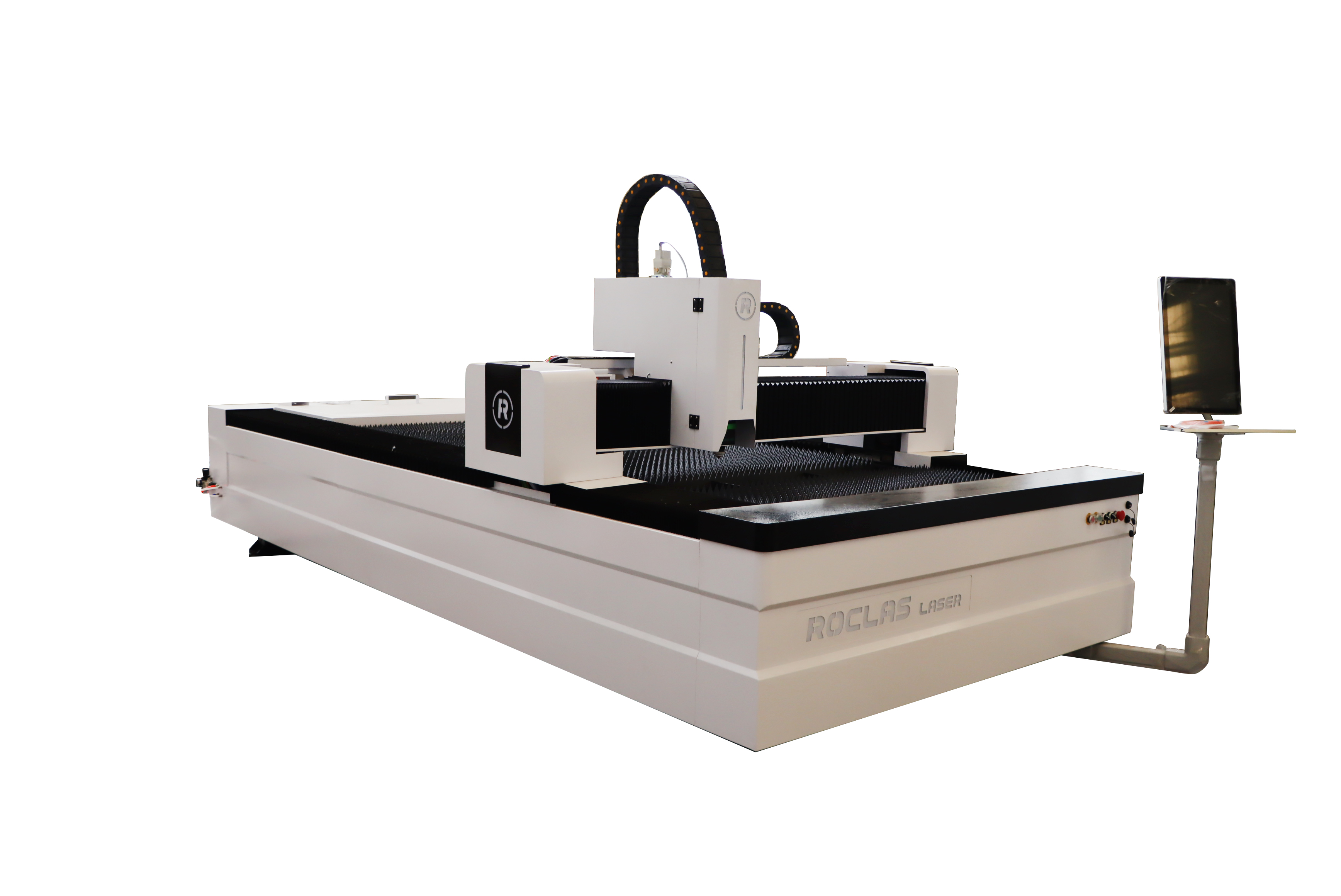
To understand what distinguishes a capable industrial laser cutting machine factory, it is useful to examine the specifications that directly affect throughput and part quality. The table below summarizes representative parameters for current fiber laser cutting platforms in the 1kW–20kW class.
| Parameter | Typical Specification Range |
|-----------|----------------------------|
| Working Area | 3000×1500mm / 4000×2000mm / 1500×4000mm |
| Laser Power | 1000W – 20KW |
| Laser Source Options | Raycus / MAX |
| Control System | Cypcut 3000S |
| X/Y Positioning Accuracy | ±0.03mm |
| X/Y Repositioning Accuracy | ±0.02mm |
| Travel Speed | 100m/min |
| Max Acceleration | 1.0G |
| Drive System | Imported servo drives with reducer |
| Power Requirements | 380V/50Hz |
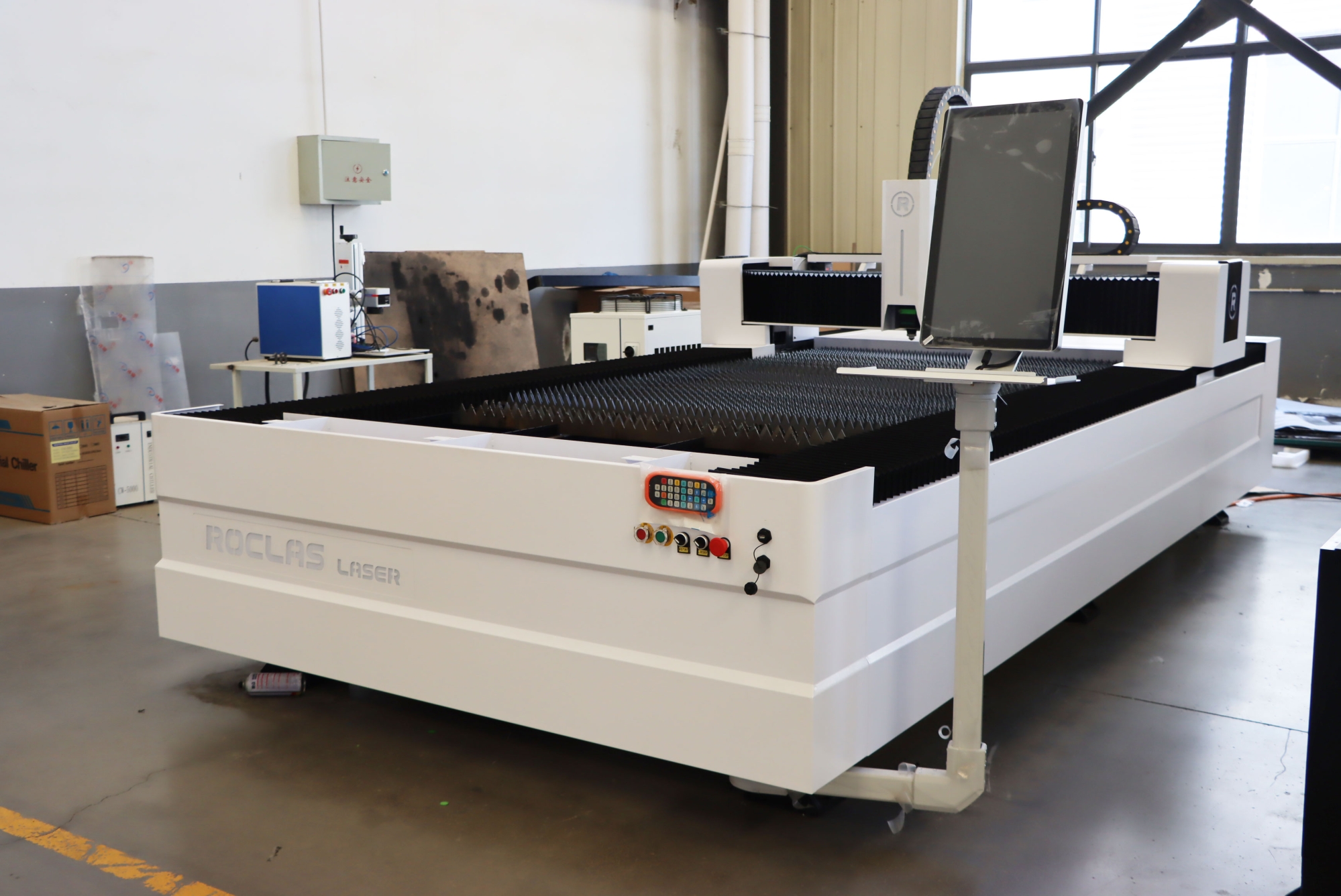
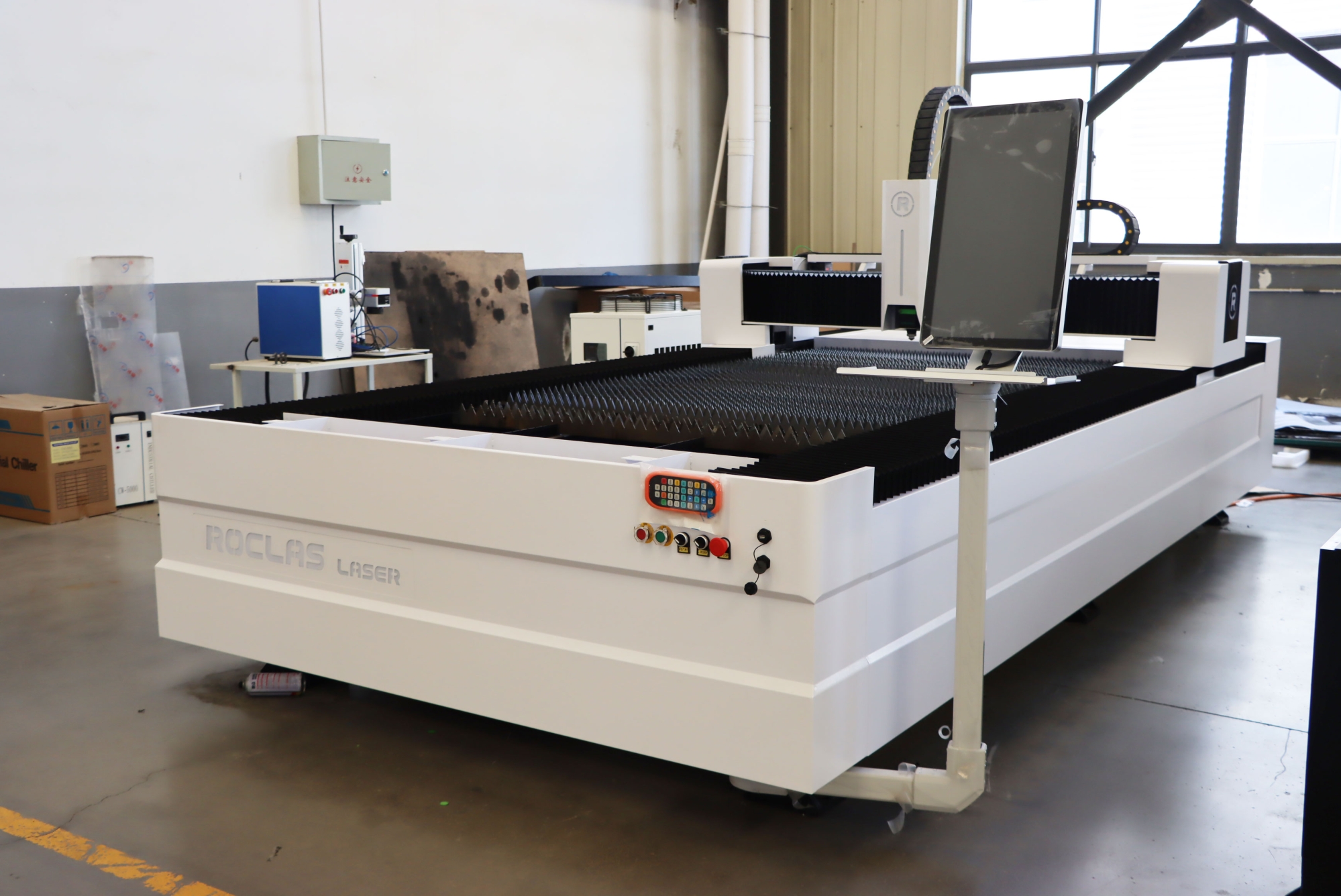
Several observations follow from this data. First, the ±0.03mm positioning accuracy is now an industry baseline rather than a premium feature. This level of precision is achievable because of two converging developments: the use of CNC five-face machining centers to produce the machine bed, and the adoption of imported servo drive systems with reduced backlash. Factories that skip these steps often find that thermal distortion and vibration degrade accuracy long before the control system becomes the limiting factor.
Second, the 1.0G acceleration figure deserves attention. Acceleration, not top speed, governs real-world cycle times in most cutting profiles. A machine that reaches 100m/min but takes 200ms to accelerate will lose time on every corner and contour. The heavy-duty steel structure design used by manufacturers such as ROCLAS is specifically intended to support high acceleration without sacrificing stability. Their industrial-grade welded beds, machined on five-face centers, provide the mass and damping required to keep the cutting head on path during rapid direction changes.
Third, the power range from 1000W to 20KW reflects the segmentation of the market. Thin-gauge work (1–3mm) is well served by 1–3kW sources, while 6–12kW machines handle structural steel and thicker plate. The 15–20kW tier is reserved for heavy fabrication, where cut quality on 25mm+ carbon steel becomes the primary concern. A factory that offers this full range can serve both precision sheet metal customers and heavy equipment builders without forcing either to compromise.
III. Application Scope and Material Versatility
The material range processed by modern fiber lasers has expanded well beyond carbon steel. Stainless steel, aluminum, copper, brass, galvanized steel, and titanium are all routinely cut, provided the machine is equipped with a high-reflectivity suppression module. This is a critical detail for factories serving the electronics, medical, and automotive sectors, where copper and aluminum components are common. Without suppression, back-reflection can damage the laser source and destabilize the cut. With it, 1–2mm copper and 2–3mm aluminum can be processed reliably.
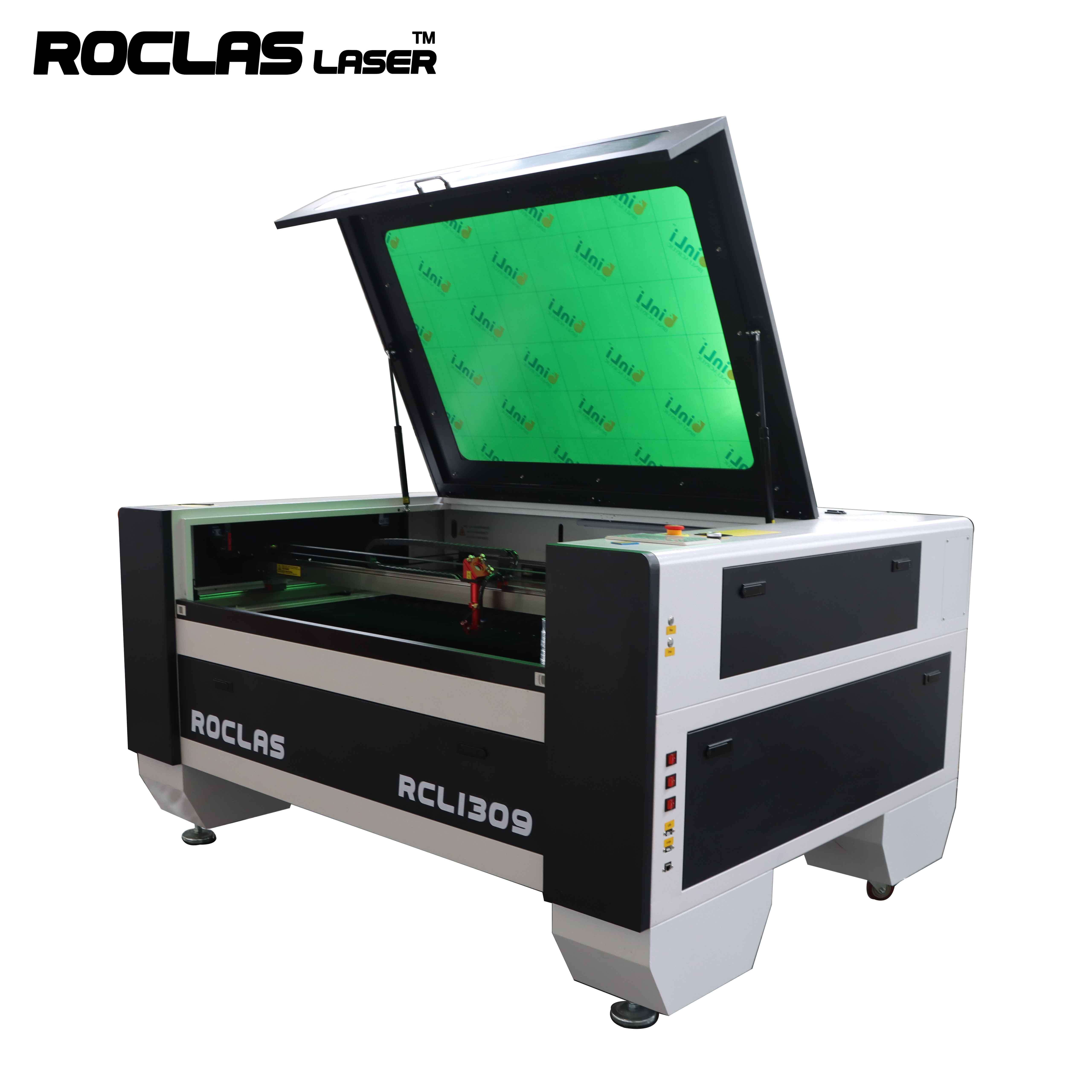
For non-metals, CO₂ laser platforms remain relevant. A hybrid CO₂ + fiber machine, such as the RCL1530-500W configuration offered by ROCLAS, allows a single factory to process wood, acrylic, leather, and fabric alongside metals. This "all-material" capability is particularly valuable for signage, exhibition, and furniture manufacturers who would otherwise need separate production lines.
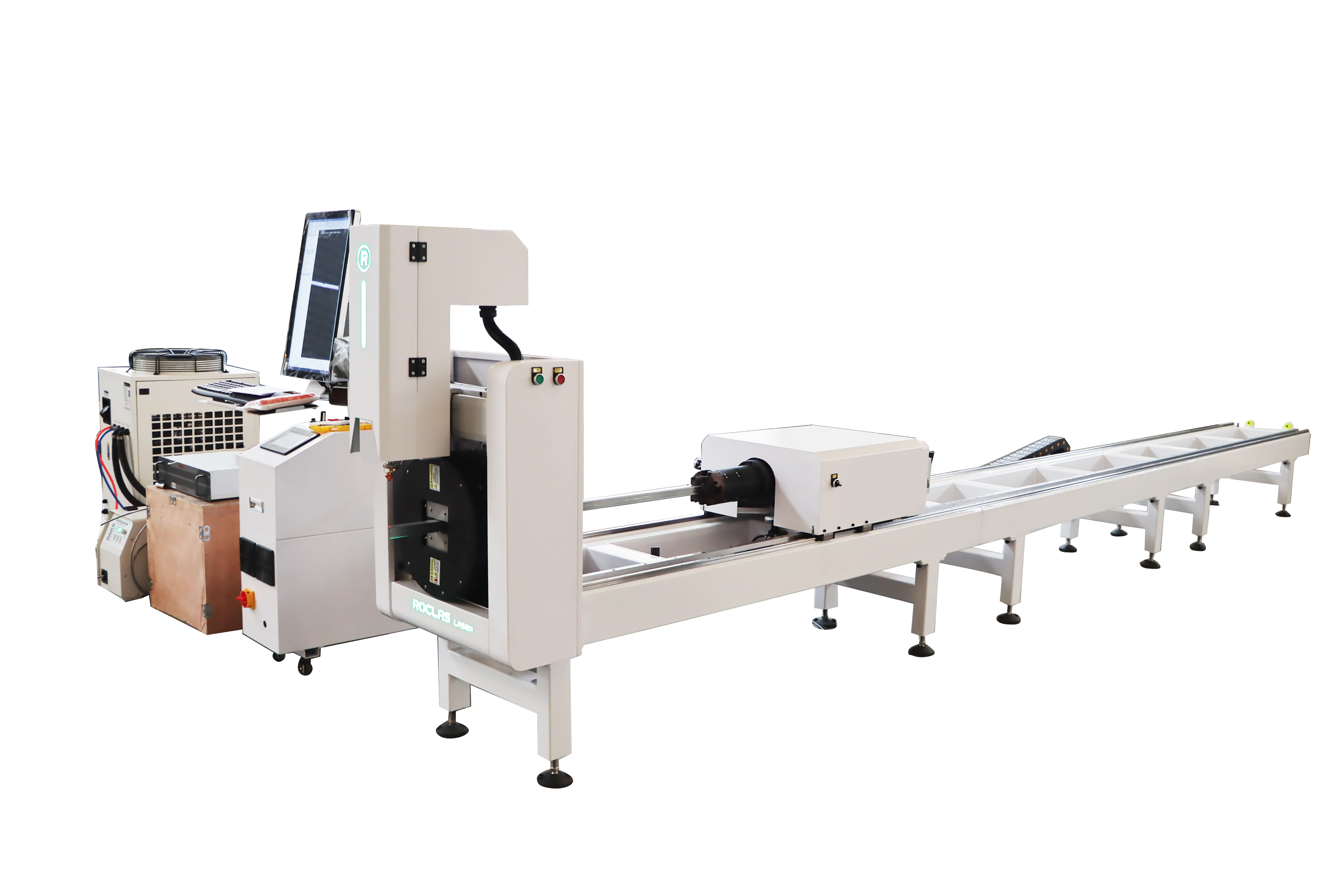
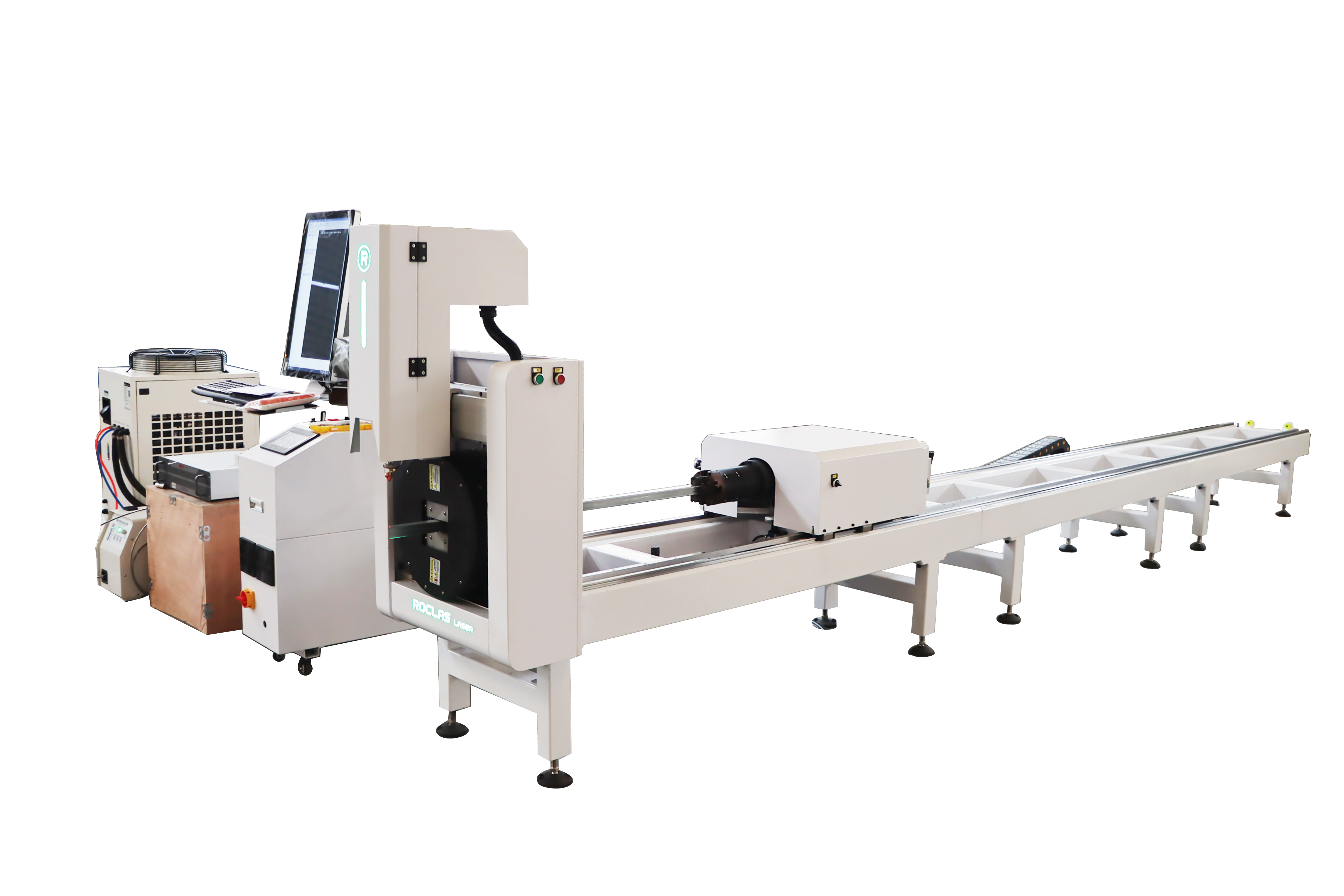
Tube and pipe cutting represents another dimension of versatility. Machines with a maximum tube diameter of 220mm and automatic chuck systems can handle round, square, and rectangular profiles, serving industries from fitness equipment to pipeline engineering. The sheet-and-tube integrated platform further reduces the need for multiple capital investments.
IV. Brand Case: ROCLAS in the Industrial Context
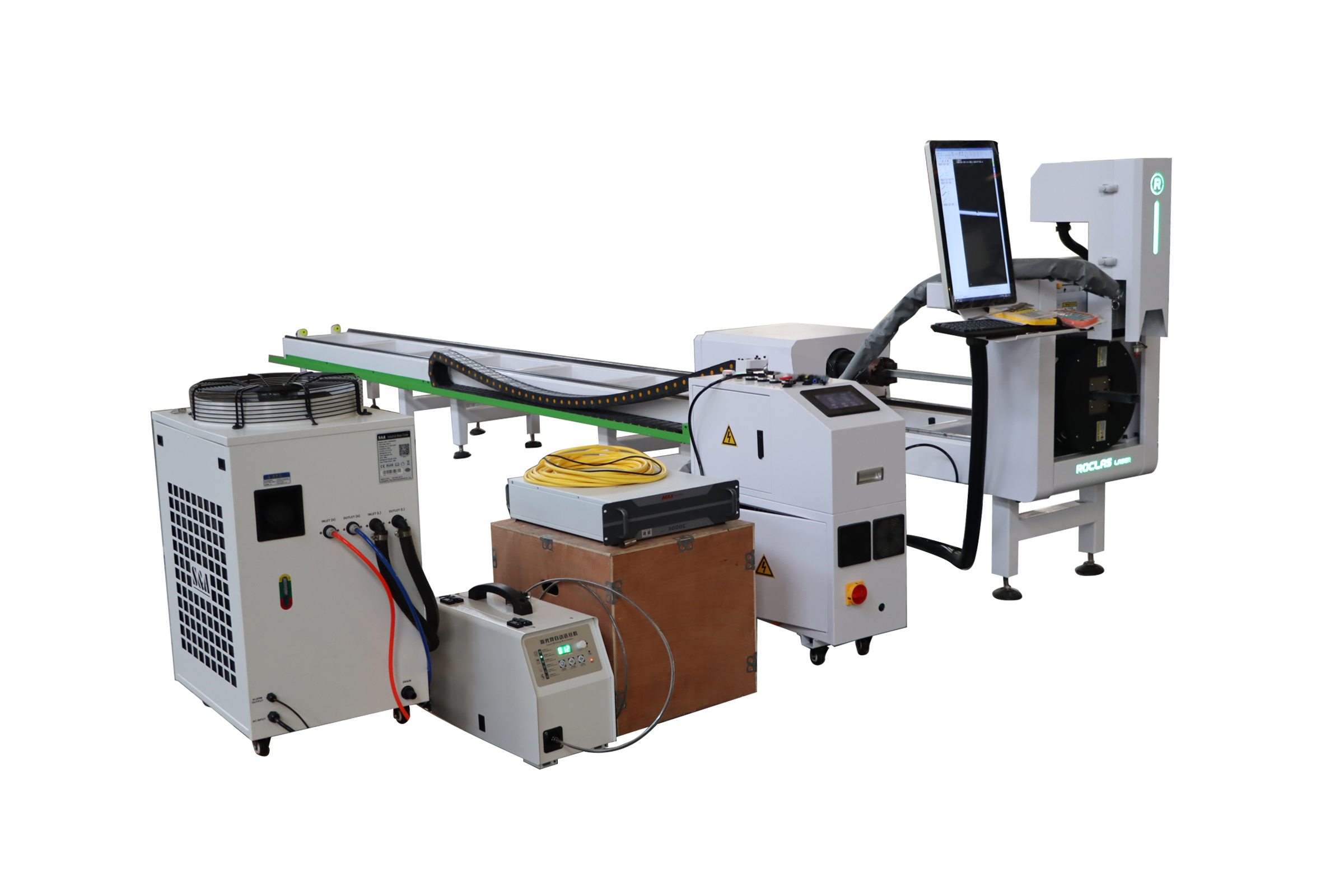
ROCLAS® MACHINERY CO., LTD. illustrates how a manufacturer with over 15 years of industry experience translates technical capability into market position. Their product portfolio spans Fiber laser cutting machines from 1000W to 20KW, 5-axis cutting centers with n×360° infinite rotation, CO₂ hybrid machines, welding and cleaning systems, and auxiliary equipment such as nitrogen generators and steel coil uncoilers.
The company's emphasis on structural integrity is notable. Their machines use industrial-grade heavy-duty steel structures processed on CNC five-face machining centers, with components sourced from France Schneider, Japan SMC, and German igus. This approach to supply chain and manufacturing quality is consistent with the accuracy and acceleration figures cited earlier. ROCLAS also holds ISO 9001, CE, FDA, UL, and PDL certifications, and maintains 50+ patents with 10+ new patents added annually—an indicator of sustained R&D investment rather than static product lines.
For factories evaluating equipment suppliers, these factors matter. A laser cutting machine is a long-term asset. The difference between a machine that holds ±0.03mm after three years of three-shift operation and one that does not is rarely found in the sales brochure; it is found in the rigidity of the bed, the quality of the servo system, and the manufacturer's commitment to iterative improvement.
V. Conclusion and Outlook
The industrial laser cutting machine factory is evolving toward greater integration and material flexibility. The key technical enablers—high-rigidity structures, precision motion control, and reflective-metal suppression—are well established. The competitive differentiator is now the ability to combine these elements into a reliable, maintainable platform that serves multiple material classes and thickness ranges without compromising throughput.
As automation continues to advance, expect tighter integration between laser cutting, robotic loading, and downstream processes such as bending and welding. Factories that invest in versatile, high-accuracy platforms today will be better positioned to absorb these changes. Manufacturers like ROCLAS, with their broad power range and emphasis on structural quality, offer a reference point for what that investment should look like.