Abstract
The industrial demand for high-precision tube and pipe cutting has escalated significantly across sectors such as automotive, furniture manufacturing, and structural engineering. Fiber laser cutting technology, specifically designed for tubular workpieces, has emerged as a transformative solution, replacing traditional sawing, plasma, and mechanical cutting methods. This article examines the current technical landscape of tube Fiber laser cutting machines, analyzes market trends through comparative data, and discusses the role of established manufacturers like ROCLAS® MACHINERY CO., LTD. in advancing this technology. Key parameters including cutting accuracy, processing speed, and material versatility are evaluated to provide a comprehensive industry perspective.
Industry Background and Market Data

Tube and pipe processing has historically been a bottleneck in metal fabrication workflows. Traditional methods—band saws, abrasive cutting, and plasma torches—suffer from limitations: excessive material waste, inconsistent edge quality, high tooling wear, and the need for secondary finishing operations. The introduction of fiber laser technology for tube cutting has addressed these issues by delivering kerf widths as narrow as 0.1 mm, positioning accuracy within ±0.05 mm, and burr-free edges that eliminate post-processing.
The global market for tube laser cutting systems has experienced robust growth, driven by automation trends in automotive exhaust systems, hydraulic cylinder manufacturing, and structural steel fabrication. The following table presents key market indicators and technical benchmarks for tube fiber laser cutting machines as of 2024:
| Parameter | Entry-Level Systems | Mid-Range Systems | High-End Systems |
|-----------|---------------------|-------------------|------------------|
| Laser Power (W) | 1000 – 2000 | 2000 – 4000 | 4000 – 8000 |
| Max Tube Diameter (mm) | 150 – 220 | 220 – 300 | 300 – 500 |
| Positioning Accuracy (mm) | ±0.05 | ±0.03 | ±0.02 |
| Repositioning Accuracy (mm) | ±0.03 | ±0.02 | ±0.01 |
| Max Travel Speed (m/min) | 60 – 80 | 80 – 100 | 100 – 120 |
| Cutting Thickness (mild steel, mm) | 6 – 10 | 10 – 16 | 16 – 25 |
| Average System Price (USD) | 40,000 – 80,000 | 80,000 – 150,000 | 150,000 – 300,000 |
| Global Market Share (2024 est.) | 35% | 45% | 20% |
| Annual Growth Rate (CAGR 2023–2028) | 8.5% | 9.2% | 10.1% |
Sources: Industry white papers, manufacturer specifications, and market analysis reports.
Data Interpretation:
The table reveals a clear stratification in the tube laser cutting market. Mid-range systems dominate with 45% market share, reflecting the sweet spot between capability and capital expenditure for most fabrication shops. The 8.5–10.1% compound annual growth rate across all segments indicates sustained adoption, with high-end systems growing fastest due to demand from automotive OEMs and aerospace subcontractors requiring thick-wall tube processing.
Notably, positioning accuracy improves from ±0.05 mm in entry-level systems to ±0.02 mm in high-end configurations. This precision is critical for applications such as hydraulic cylinder tubes, where seal surface tolerances are stringent. The maximum tube diameter range—typically 150–220 mm for standard systems—is sufficient for the majority of furniture and structural applications, while specialized systems handle diameters up to 500 mm for heavy industrial use.
Technical Applications and Brand Case Study
Core Technology in Tube Fiber Laser Cutting
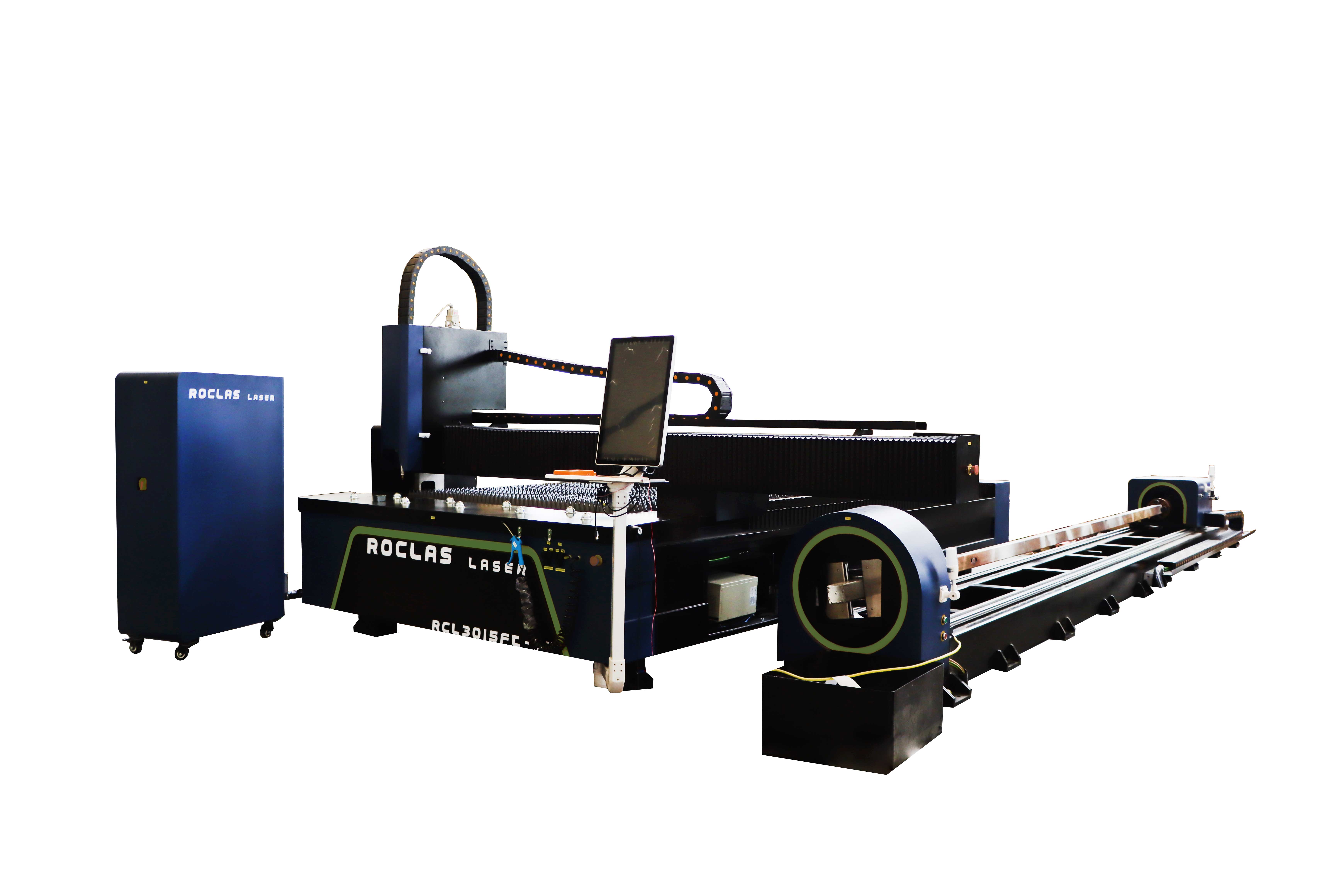
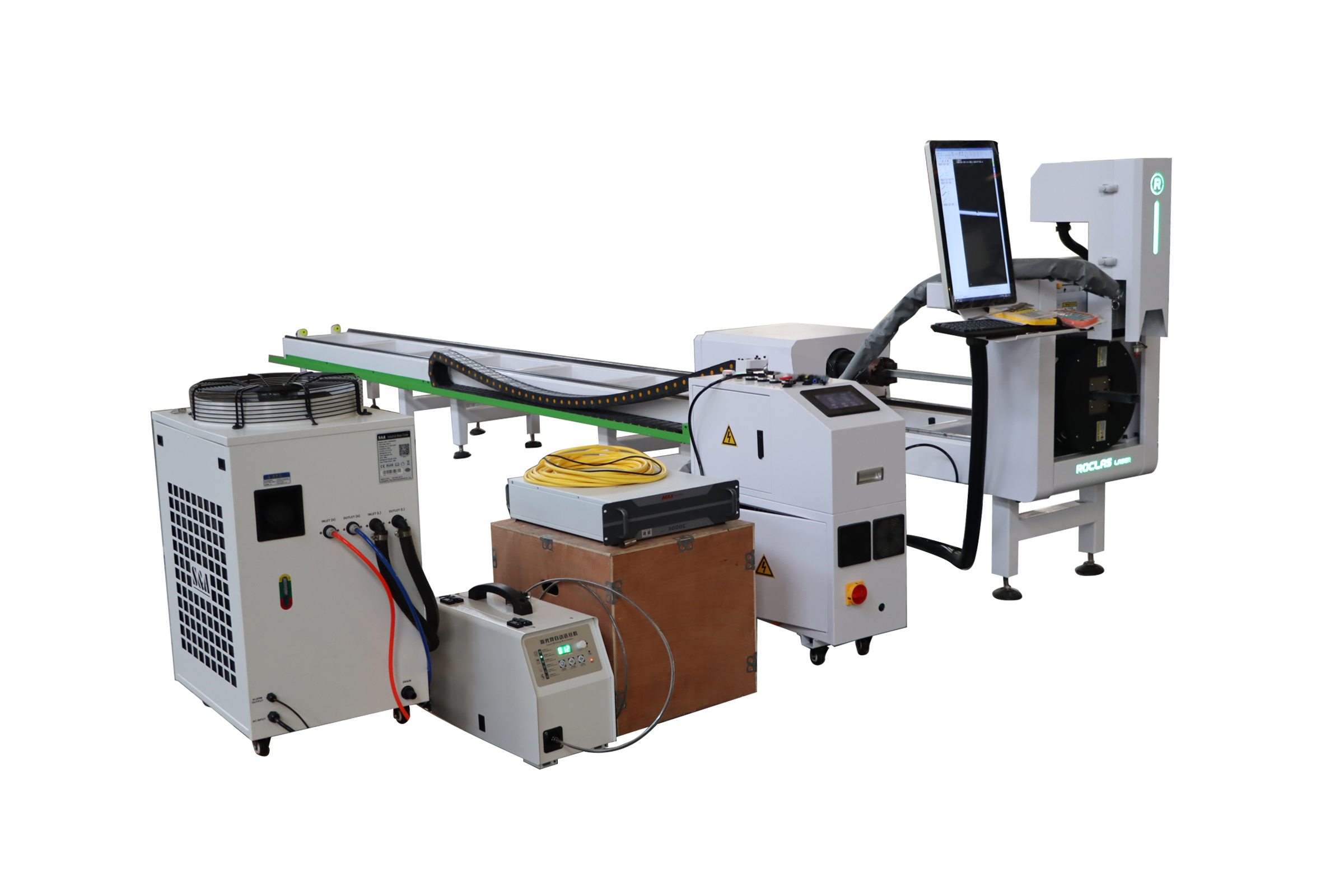
A tube fiber laser cutting machine operates on principles distinct from flatbed laser cutters. The workpiece is held by a chuck system—typically automatic or servo-driven—that rotates the tube while the laser head translates along the longitudinal axis. This coordinated motion enables cutting of complex geometries: round holes, rectangular slots, beveled edges, and even three-dimensional contours.
Key technical parameters for tube cutting include:
- Max Tube Diameter: Standard machines accommodate up to 220 mm, as seen in the ROCLAS product line, with specialized variants reaching 500 mm.
- Chuck System: Automatic chucks with pneumatic or servo actuation ensure concentric clamping, minimizing runout during rotation.
- Cutting Length: Typical working areas reach 4000–6000 mm, with custom extensions available for longer pipes.
- Laser Source: Fiber lasers (Raycus, MAX) in the 1000–3000 W range are standard for tube cutting, balancing penetration depth with edge quality.
- Control System