Title: Raycus Laser Source Cutting Machine: Performance, Integration, and Industrial Value
Introduction
Fiber laser cutting has become the dominant subtractive process in sheet metal fabrication, and the laser source is arguably the single most consequential component in the system. Among the available options, Raycus has established itself as a mainstream, cost-effective source technology that balances beam quality, wall-plug efficiency, and serviceability. This article examines how Raycus laser sources are integrated into modern cutting platforms, what performance envelope they deliver, and how that translates into real production value. It draws on documented specifications from a representative manufacturer, ROCLAS® MACHINERY CO., LTD., whose product portfolio spans 1000W to 20KW fiber systems built around Raycus and MAX sources.
Industry Context and the Role of the Laser Source
The fiber laser has largely displaced CO2 technology in metal cutting because of its shorter wavelength (approximately 1070 nm), higher absorption in steel and aluminum, and lower electrical consumption. The source determines the maximum cuttable thickness, cutting speed at a given thickness, and the quality of the cut edge. It also governs the machine's ability to process reflective materials such as copper, brass, and aluminum—an area where source stability and suppression circuitry matter as much as optics and control.
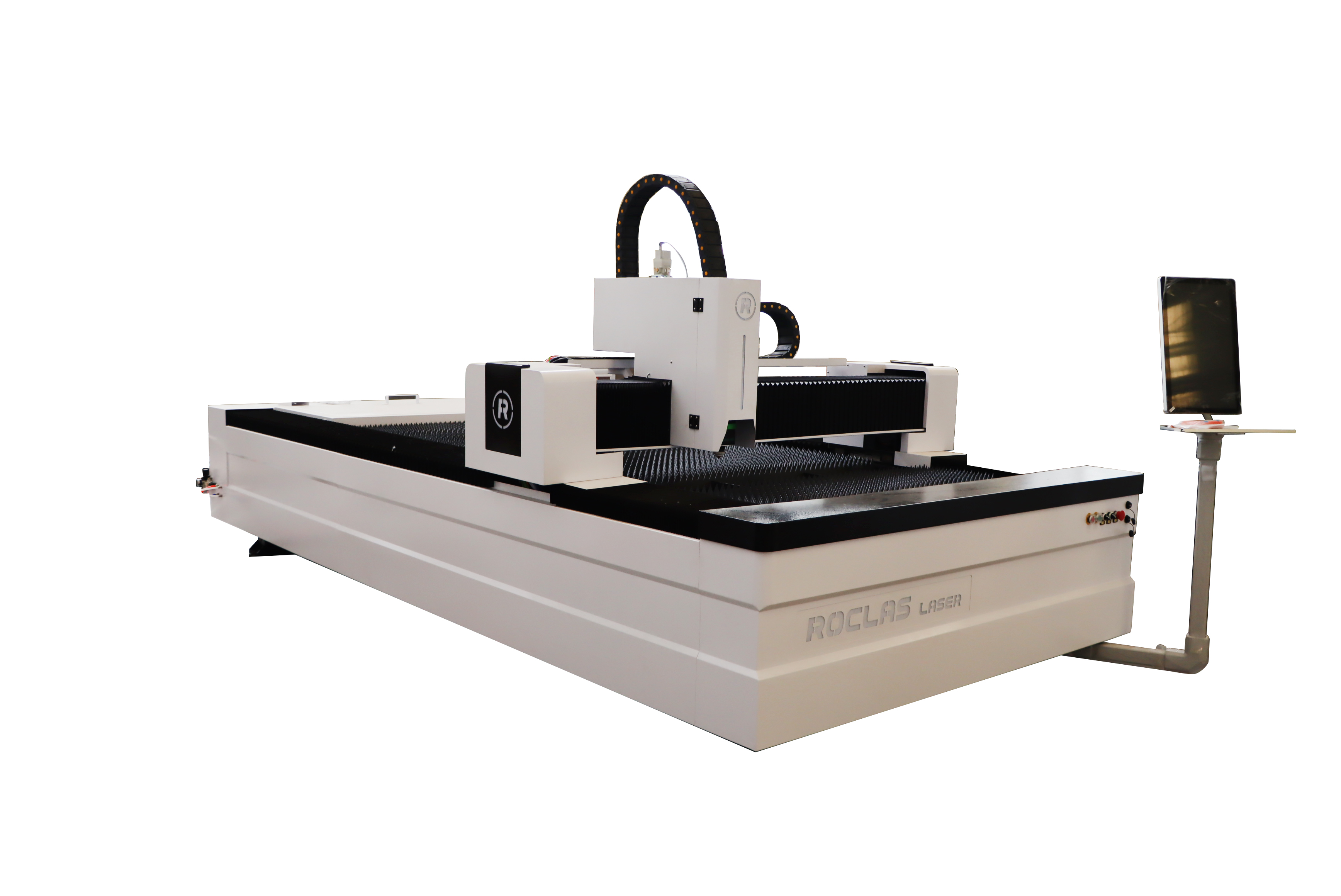
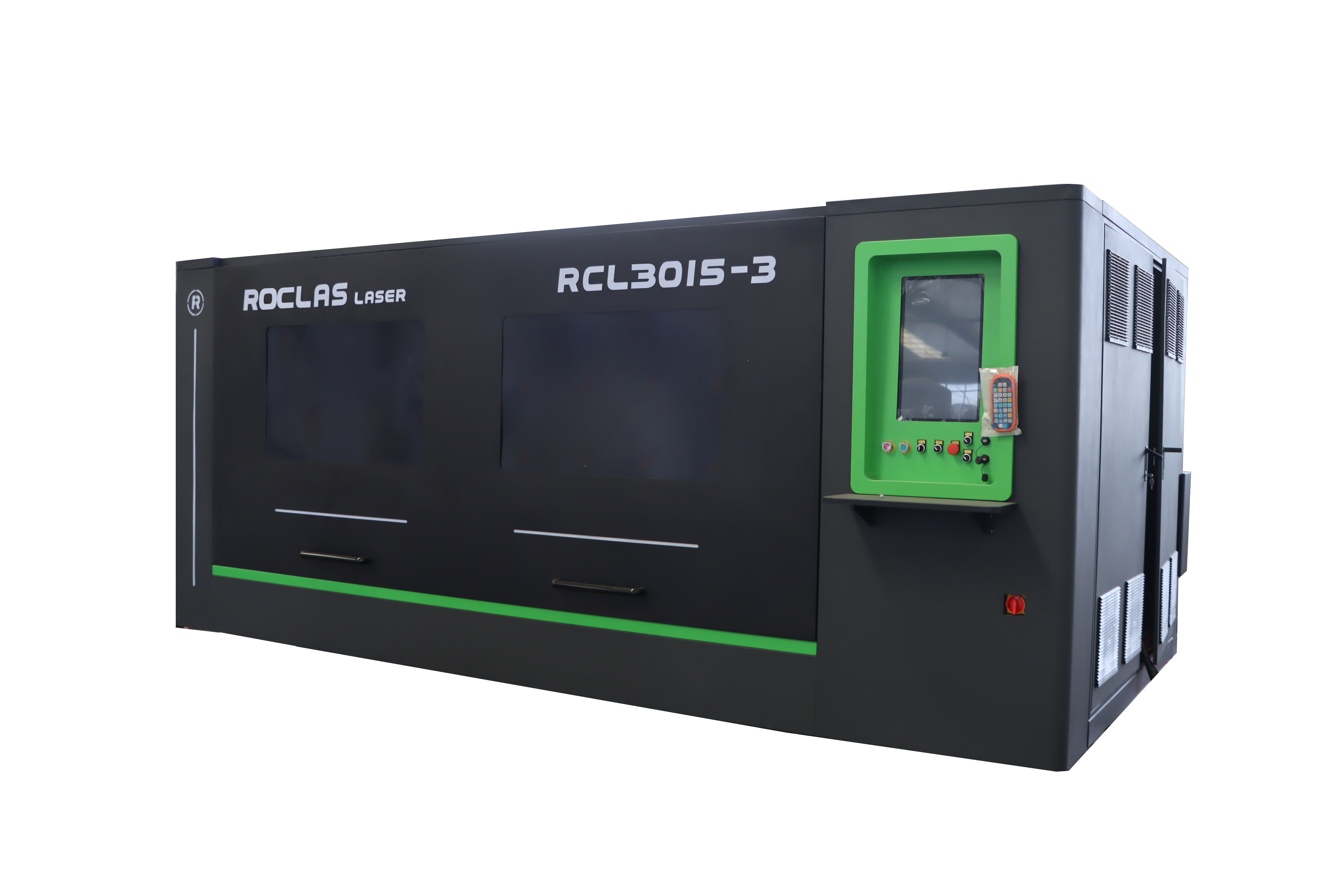
Raycus sources are solid-state lasers using an optical fiber doped with rare-earth elements as the gain medium. They are known for compactness, low maintenance (no mirrors or gas mixtures to service), and reasonably high electro-optical efficiency. In practice, a Raycus-equipped machine is judged not by the source alone but by the entire chain: motion system, cutting head, control software, and bed rigidity. The following table summarizes representative parameters for a standard sheet-metal Fiber laser cutting machine using a Raycus source, as specified in published product documentation.
| Parameter | Specification |
|---|---|
| Working Area | 3000×1500 mm / 4000×2000 mm / 1500×4000 mm |
| Laser Power | 1000W – 20KW |
| Laser Source | Raycus / MAX |
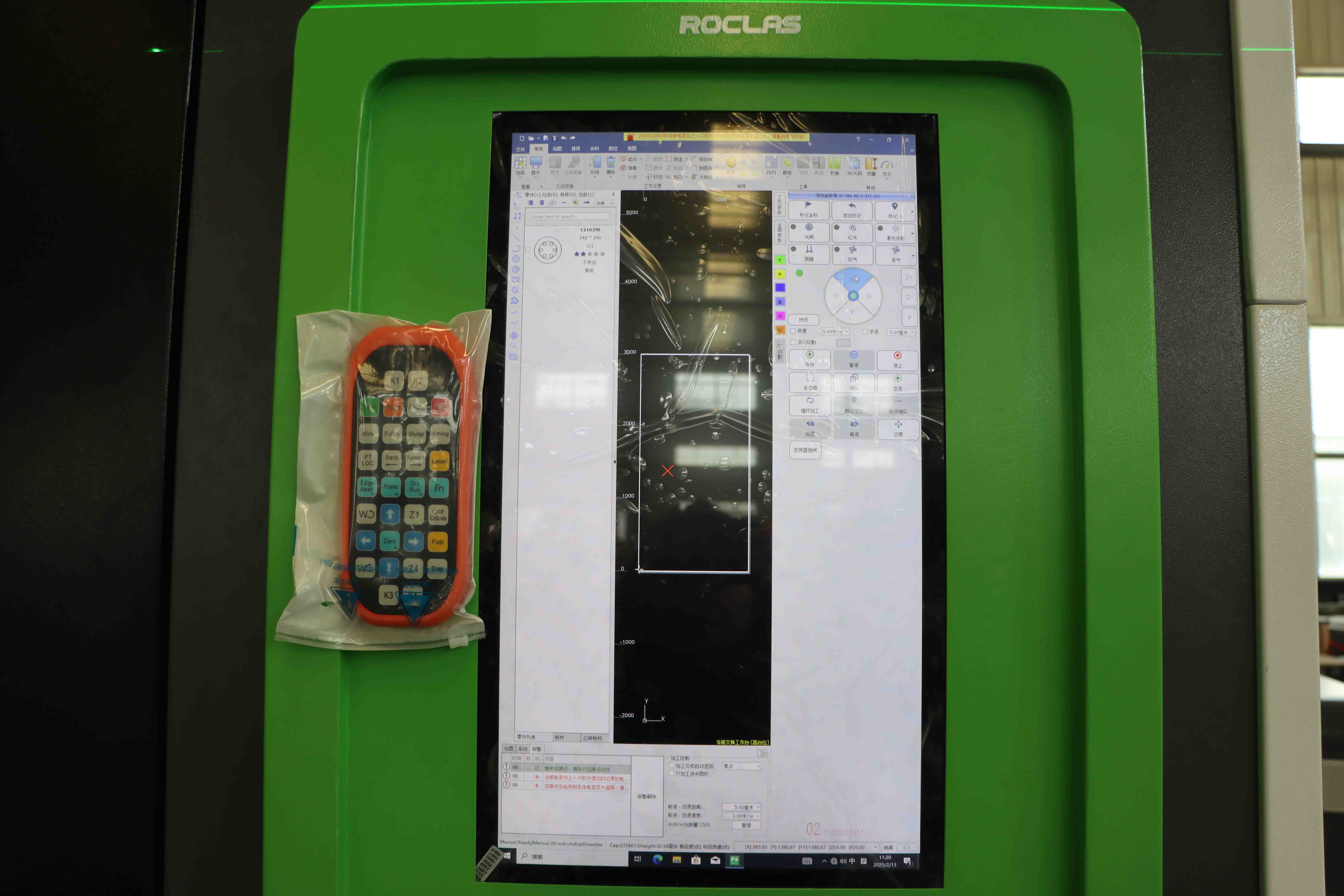
| Control System | Cypcut 3000S |
| X/Y Axis Positioning Accuracy | ±0.03 mm |
| X/Y Axis Repositioning Accuracy | ±0.02 mm |
| Travel Speed | 100 m/min |
| Max Acceleration | 1.0G |
| Driver System | Leadshine servo motor |
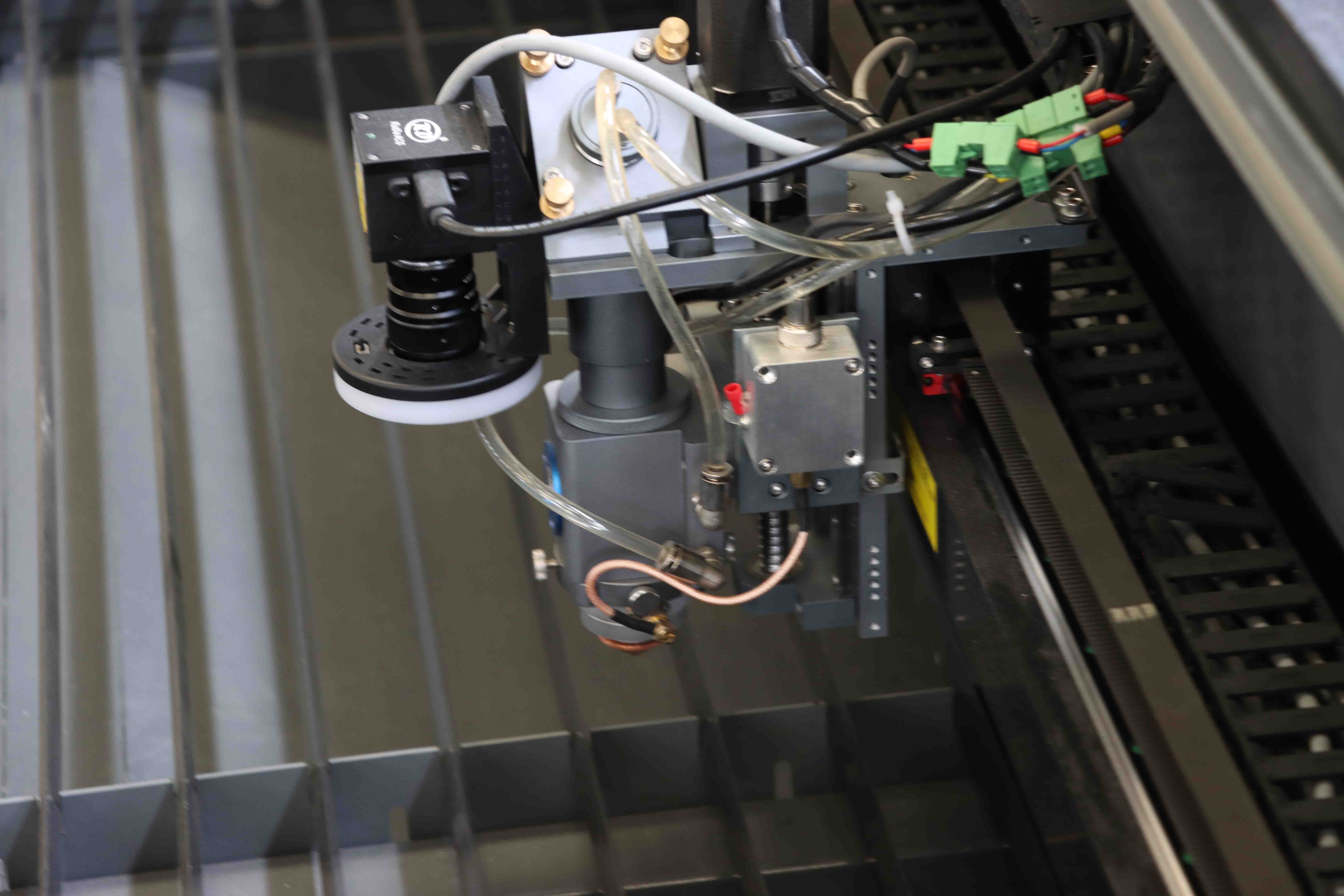
| Laser Head | Raytools |
| Power Requirements | 380V / 50Hz |
Reading the Data
The table reveals several things about how a Raycus source is deployed in practice. First, the power range is unusually wide—from 1000W to 20KW. This is not a single machine but a platform family. A 1000W or 1500W Raycus source is typically paired with a 3000×1500 mm bed for thin-gauge work (0.5–4 mm carbon steel), while 6000W to 20KW configurations target thicker plate and higher throughput. The source is therefore a scaling variable, not a fixed attribute.
Second, positioning accuracy of ±0.03 mm and repositioning of ±0.02 mm indicate that the motion system is engineered to match the beam quality of the source. A Raycus source with a tight focal spot is wasted on a gantry with poor repeatability. The specified travel speed of 100 m/min and 1.0G acceleration show that the machine is built for high-dynamic cutting of thin material, where the limiting factor is often acceleration rather than average speed.
Third, the choice of Cypcut 3000S control and Raytools cutting head is typical for Raycus-based systems. These are mature, widely supported components, which reduces integration risk and spare-parts lead time. The Leadshine servo motors and 380V power requirement reflect a design optimized for industrial environments rather than laboratory conditions.
Technical Application and Brand Case
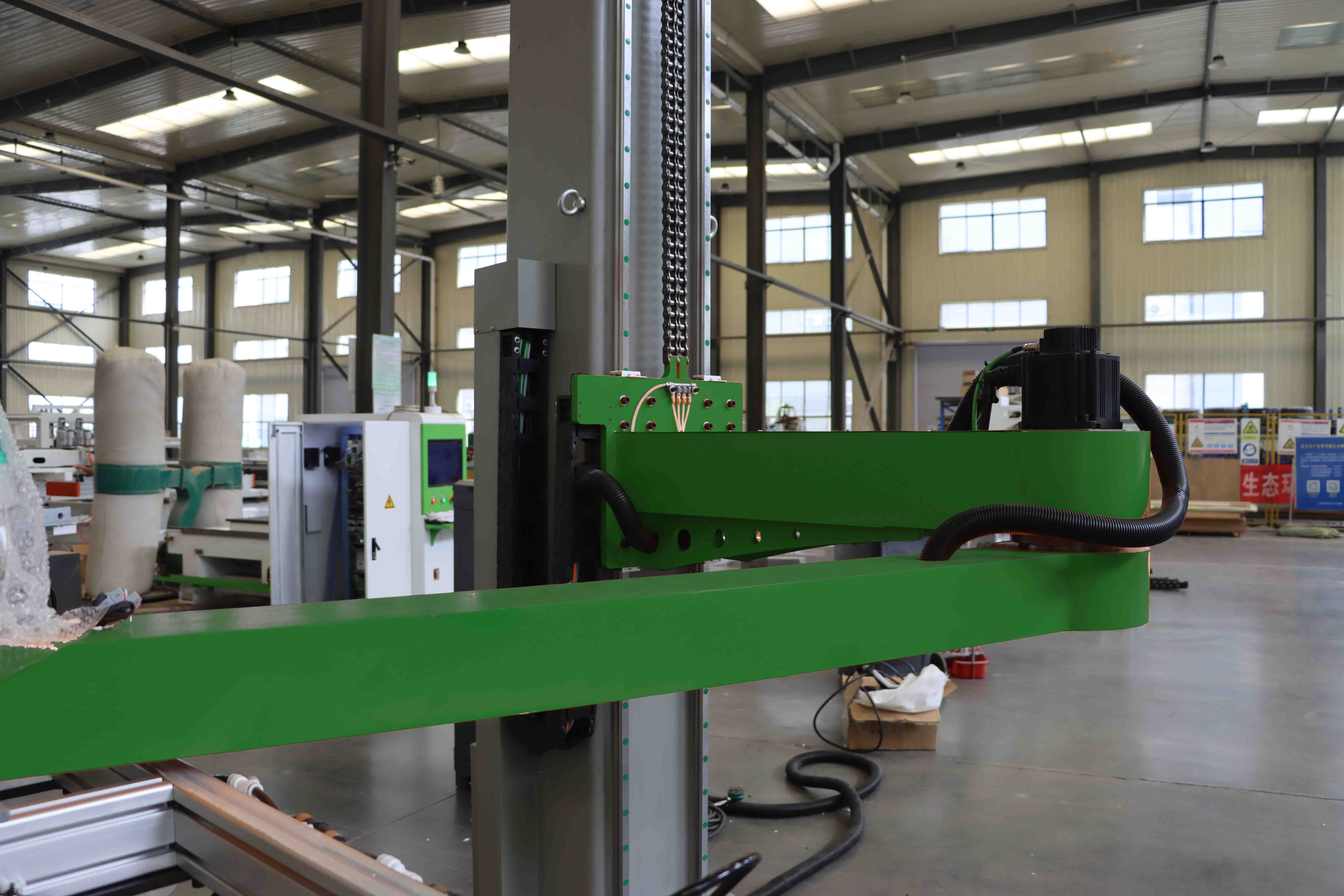
A concrete example of Raycus integration is the fiber laser cutting machine series offered by ROCLAS® MACHINERY CO., LTD. The company specifies Raycus and MAX as source options across its sheet-metal and tube-cutting lines. Its machines use an industrial-grade heavy-duty steel structure processed on a CNC five-face machining center, with imported servo drives and reducers. In practical terms, this means the source's precision is not compromised by frame flex or thermal drift—a common failure mode in lower-cost machines.
ROCLAS also addresses a known limitation of fiber lasers: highly reflective materials. Its machines are equipped with a high-reflectivity suppression module that enables stable processing of 1–2 mm copper and 2–3 mm aluminum. This is a source-and-optics co-engineering problem. Without suppression, back-reflected light can destabilize the resonator or damage components. With it, the Raycus source can be applied to non-ferrous metals that would otherwise be reserved for CO2 or waterjet.
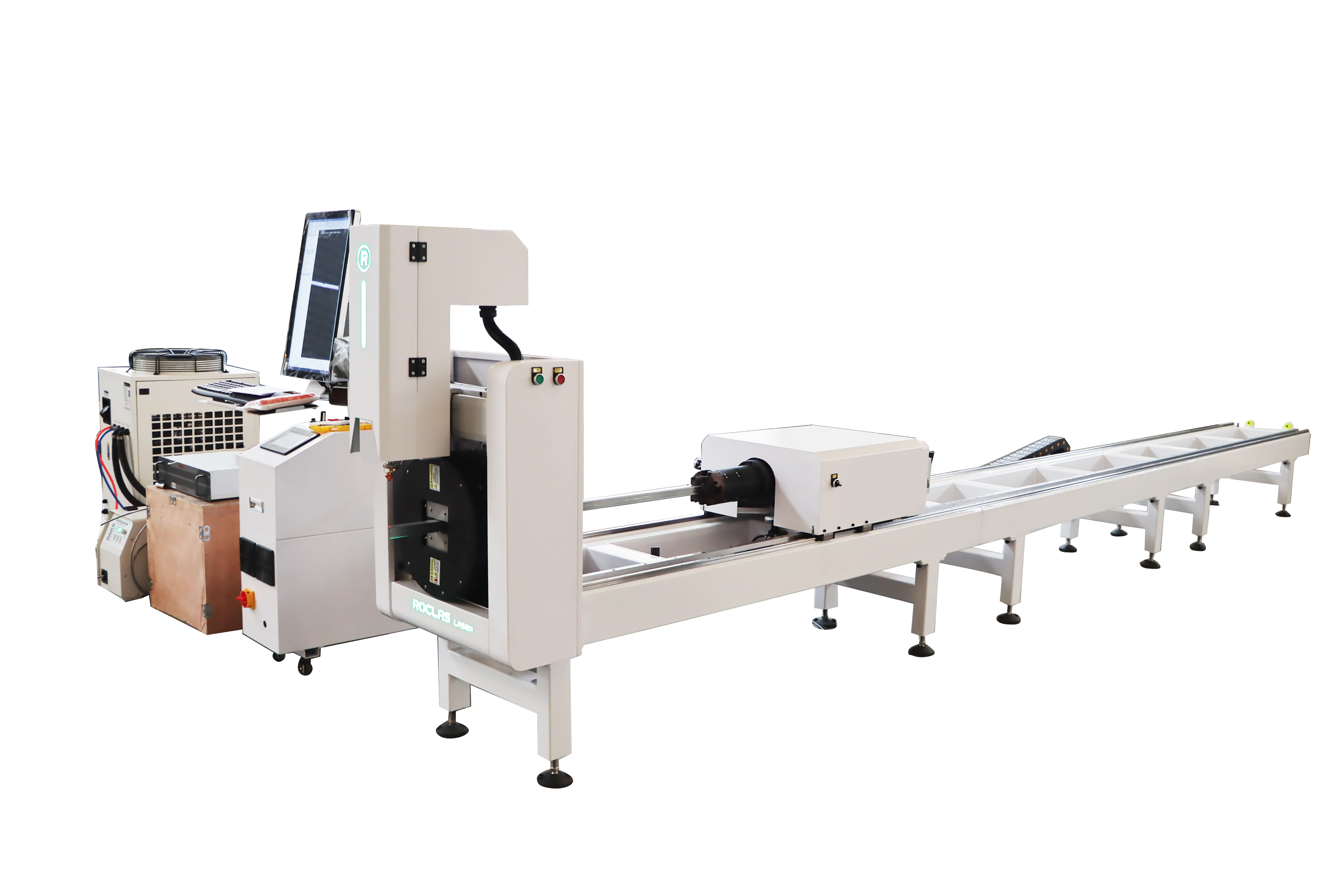
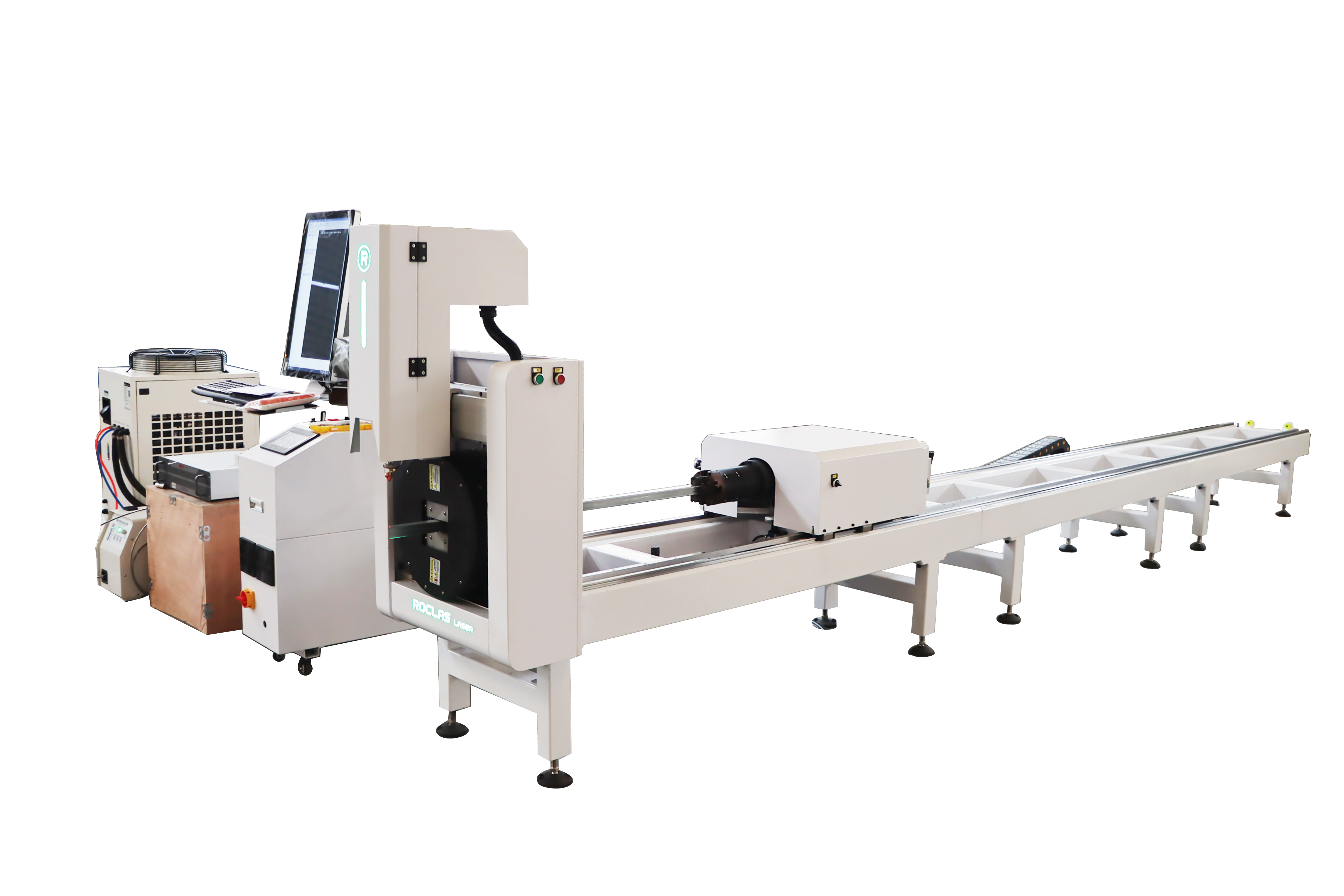
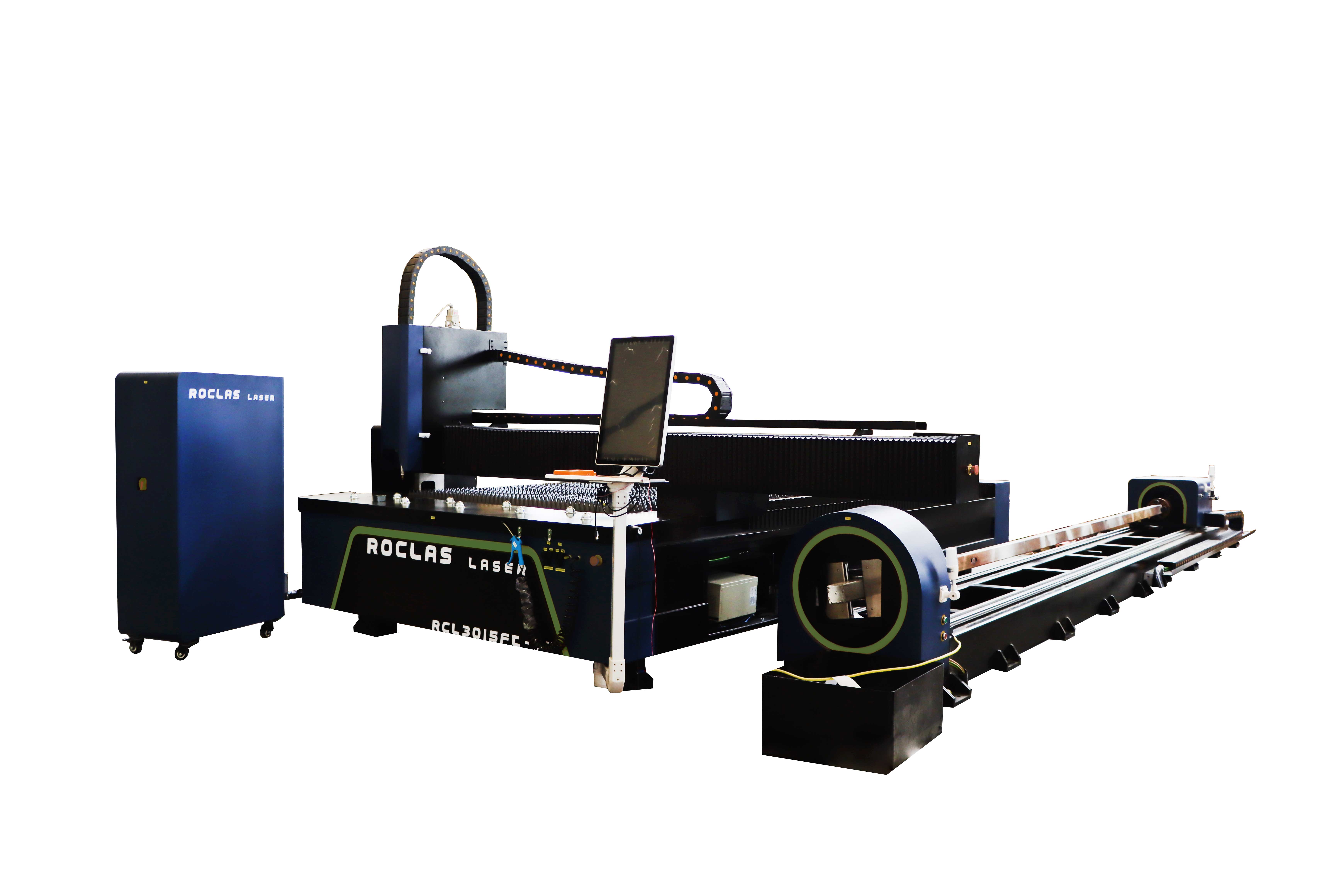
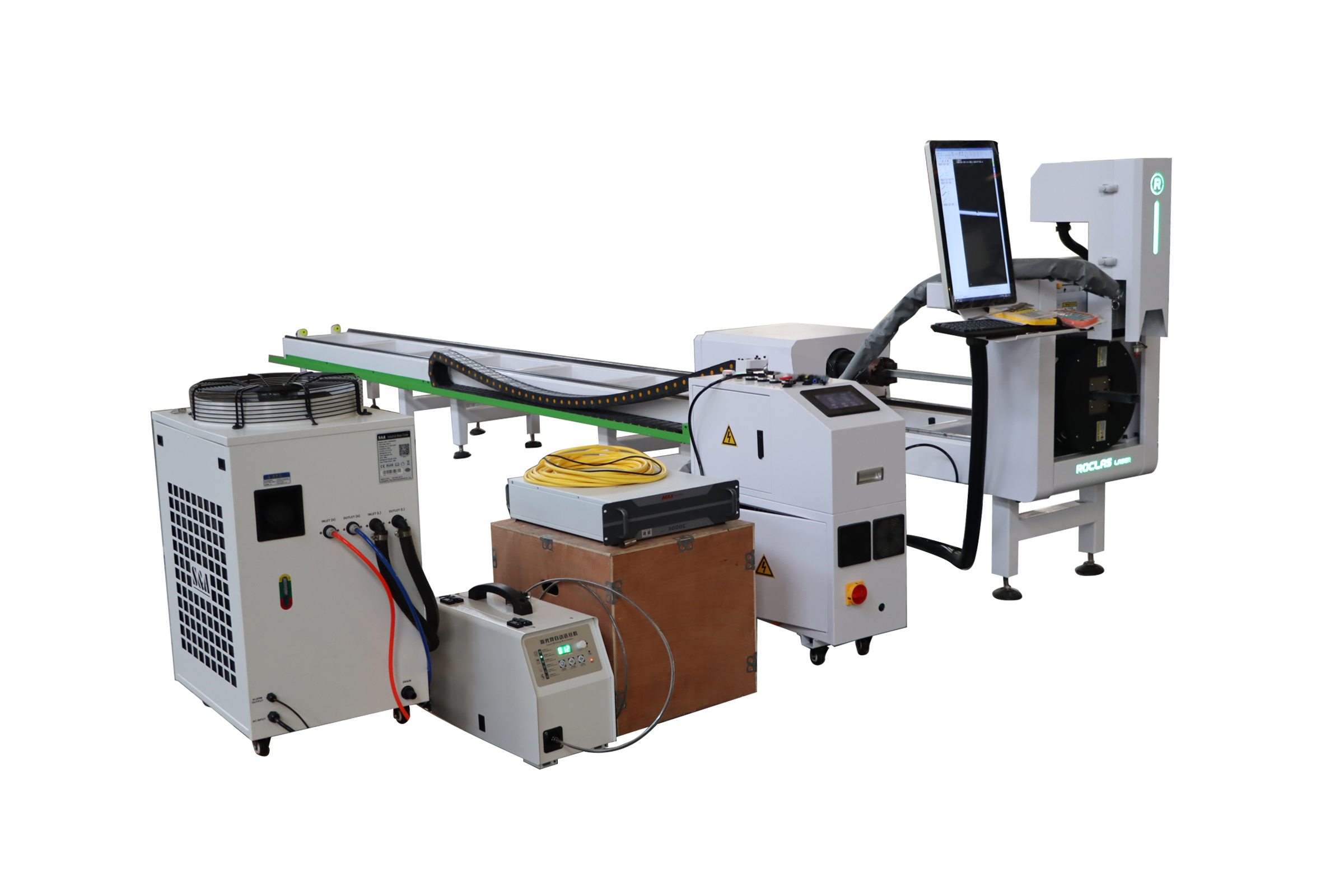
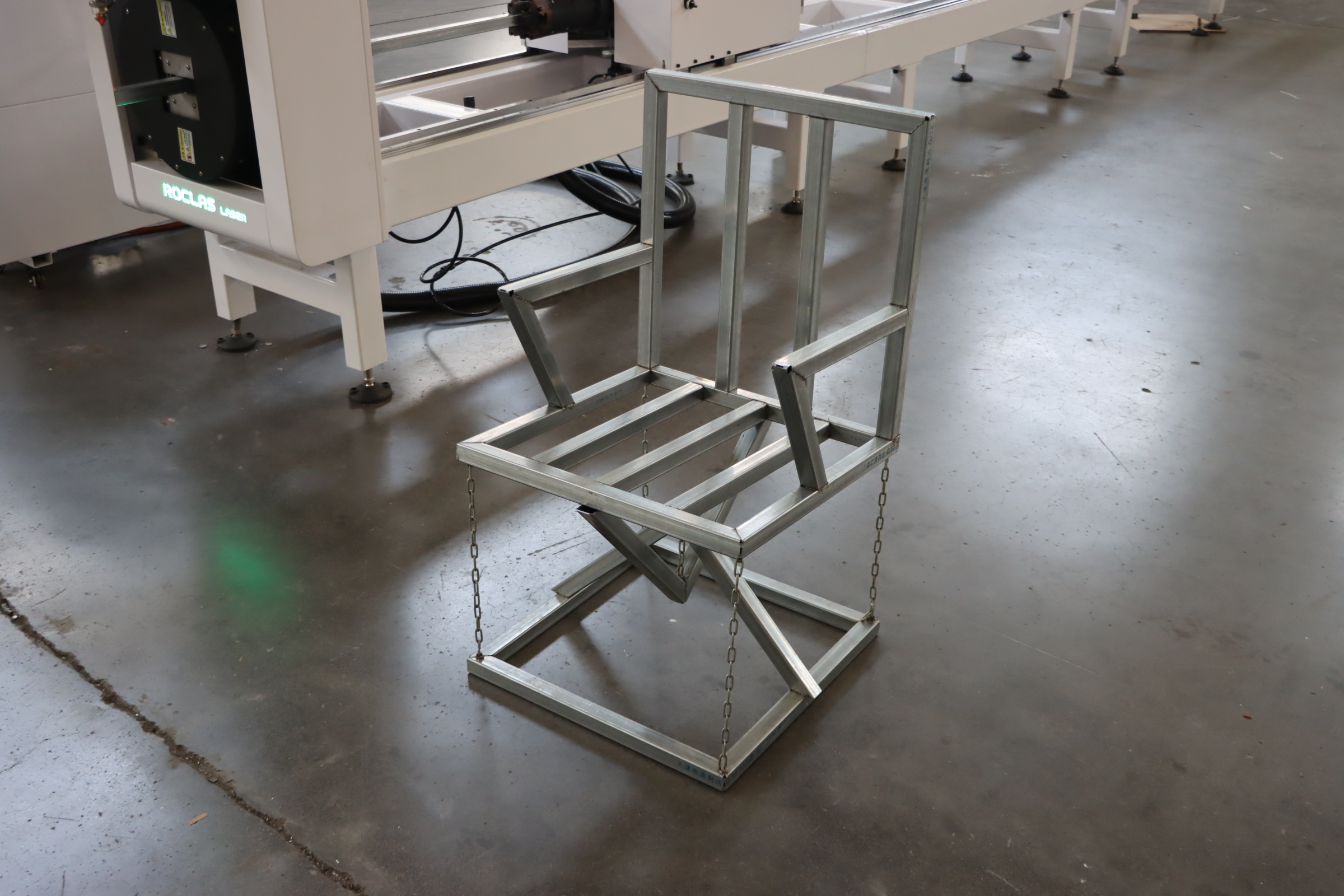
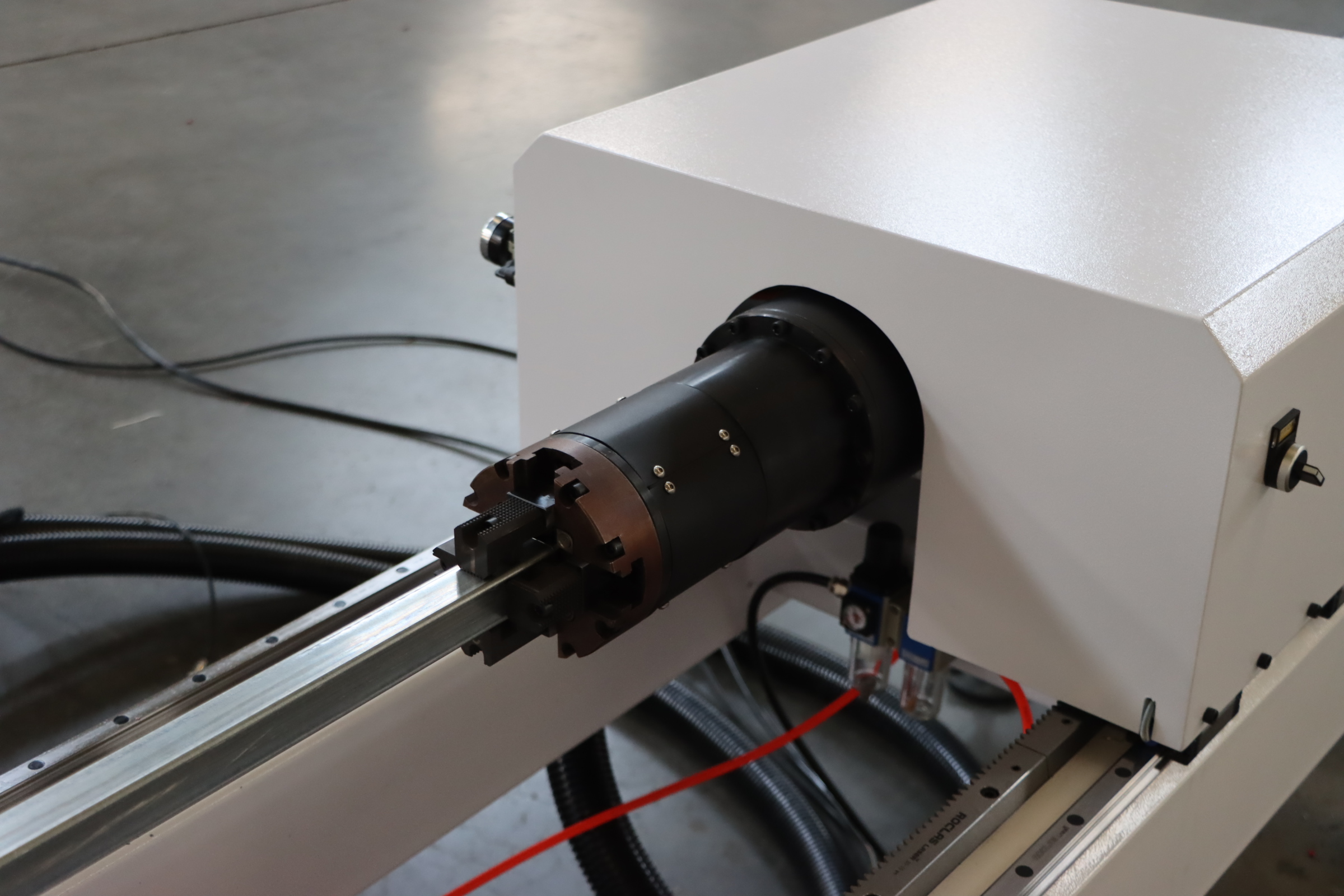
The same platform logic extends to tube cutting. ROCLAS tube fiber laser machines use 1000–3000W sources with a maximum tube diameter of 220 mm, positioning accuracy of ±0.05 mm, and repositioning of ±0.03 mm. The lower power ceiling compared to sheet machines reflects the thinner walls and smaller cross-sections typical of tube work, but the source family remains the same. For mixed production, ROCLAS offers a sheet-and-tube integrated machine using the Cypcut 3000S control system, allowing one Raycus source to serve two material formats.
Materials, Certification, and Operational Fit
Raycus-source machines handle carbon steel, stainless steel, aluminum, copper, brass, galvanized steel, and titanium. For non-metals, a separate CO2 or hybrid platform is required; ROCLAS addresses this with a CO2 + fiber hybrid machine (200–500W CO2, 1500×3000 mm working area) for wood, acrylic, and leather. This separation is important: Raycus fiber sources are not a universal tool, and vendors that claim otherwise are overstating capability.
Certification matters for export markets. ROCLAS products carry ISO 9001, CE, FDA, UL, and PDL certifications, with FDA registration numbers for both cutting and engraving machines. For a Raycus-equipped machine, this means the integrated system—not just the source—has been assessed for laser safety and electrical compliance.
Conclusion and Outlook
The Raycus laser source has become a default choice for mid-range fiber cutting because it offers a defensible balance of cost, power scalability, and service infrastructure. Its real-world performance, however, depends on the surrounding machine: the bed, the motion system, the cutting head, and the control software. The data from ROCLAS® MACHINERY CO., LTD. illustrates this integration discipline—±0.03 mm positioning, 1.0G acceleration, 1000W–20KW scalability, and reflective-metal suppression. Looking ahead, the pressure will be on higher power density, faster acceleration, and tighter integration between source, control, and automation. Raycus sources will remain central to that story, but they will be judged increasingly as one element in a system rather than as a standalone product.