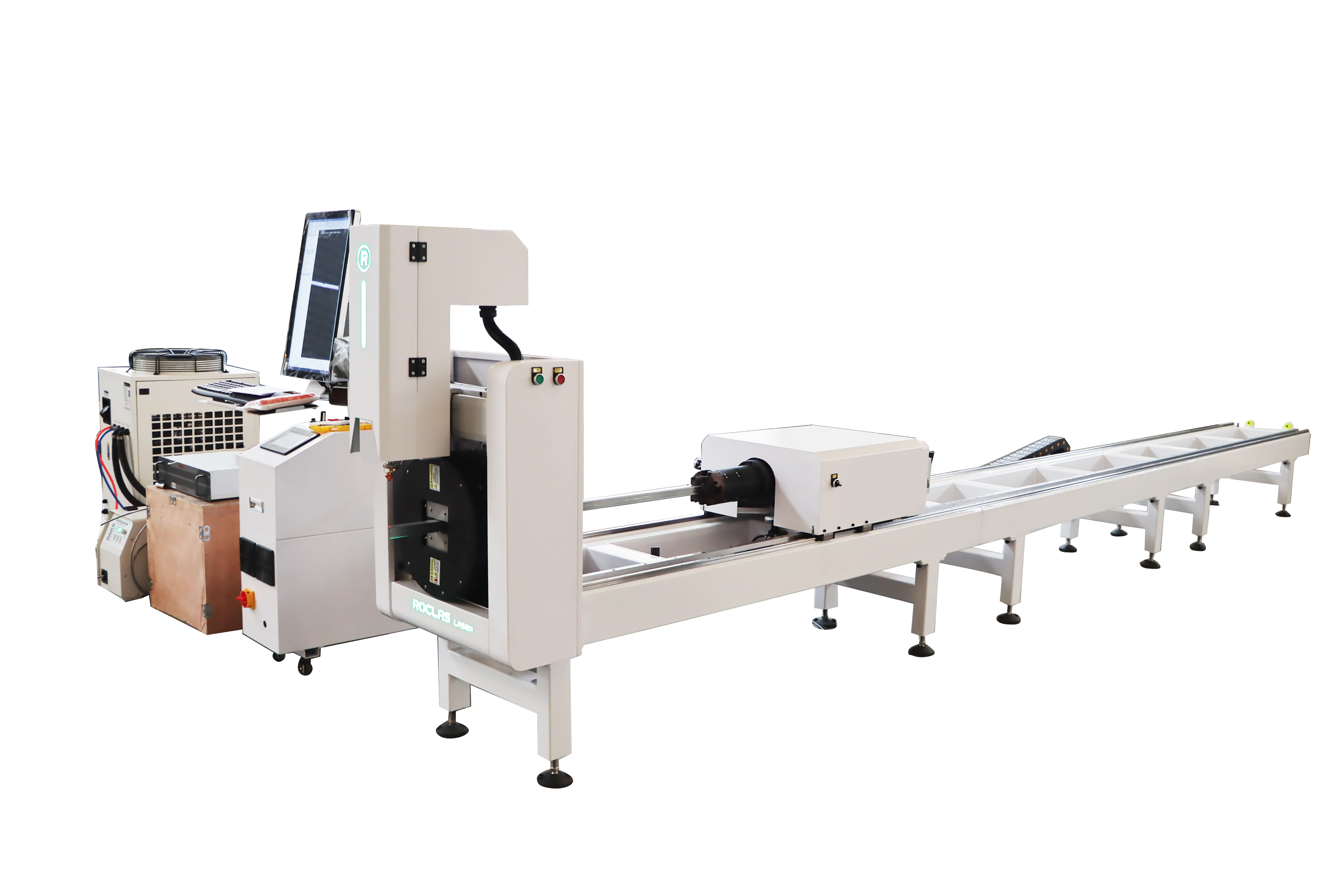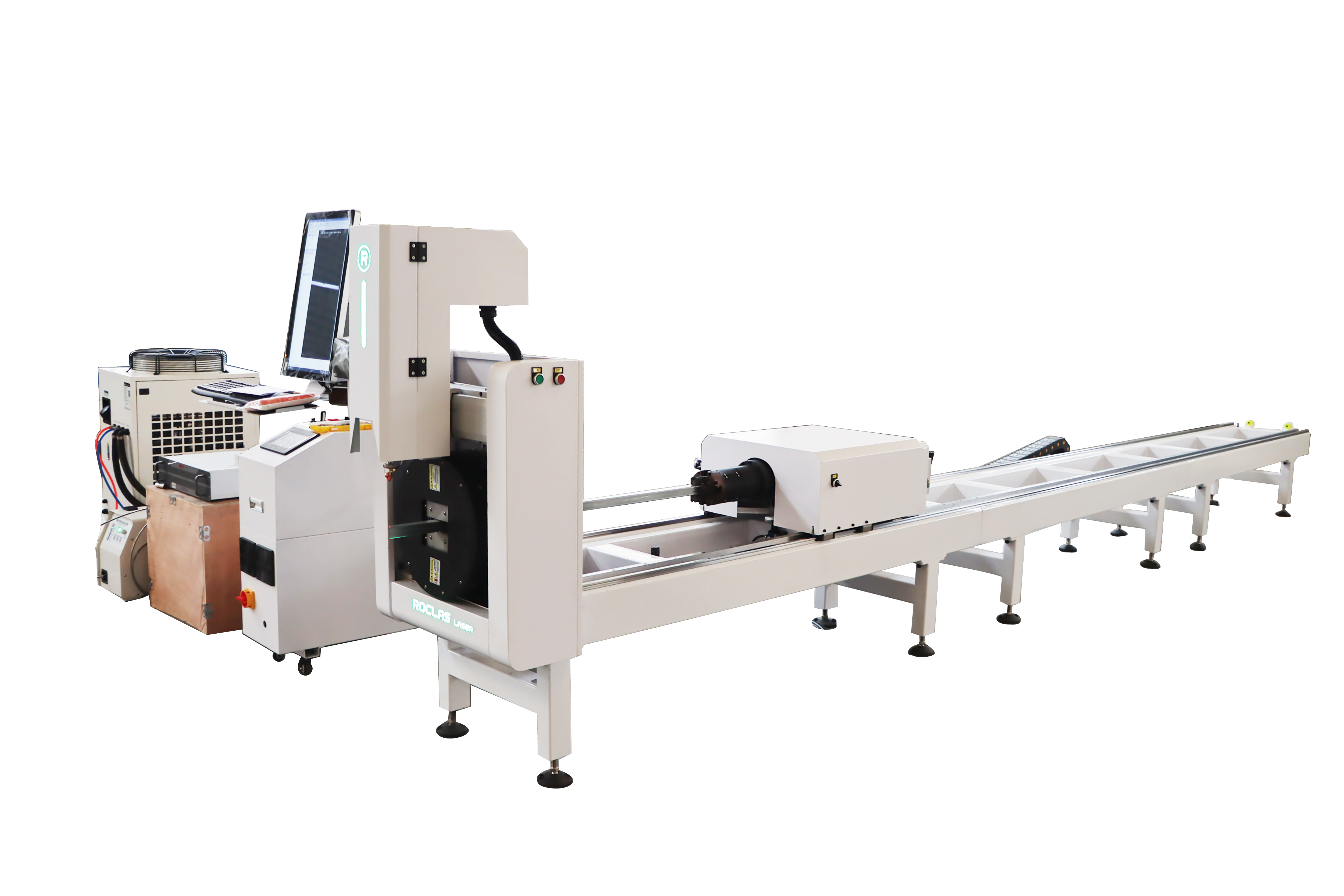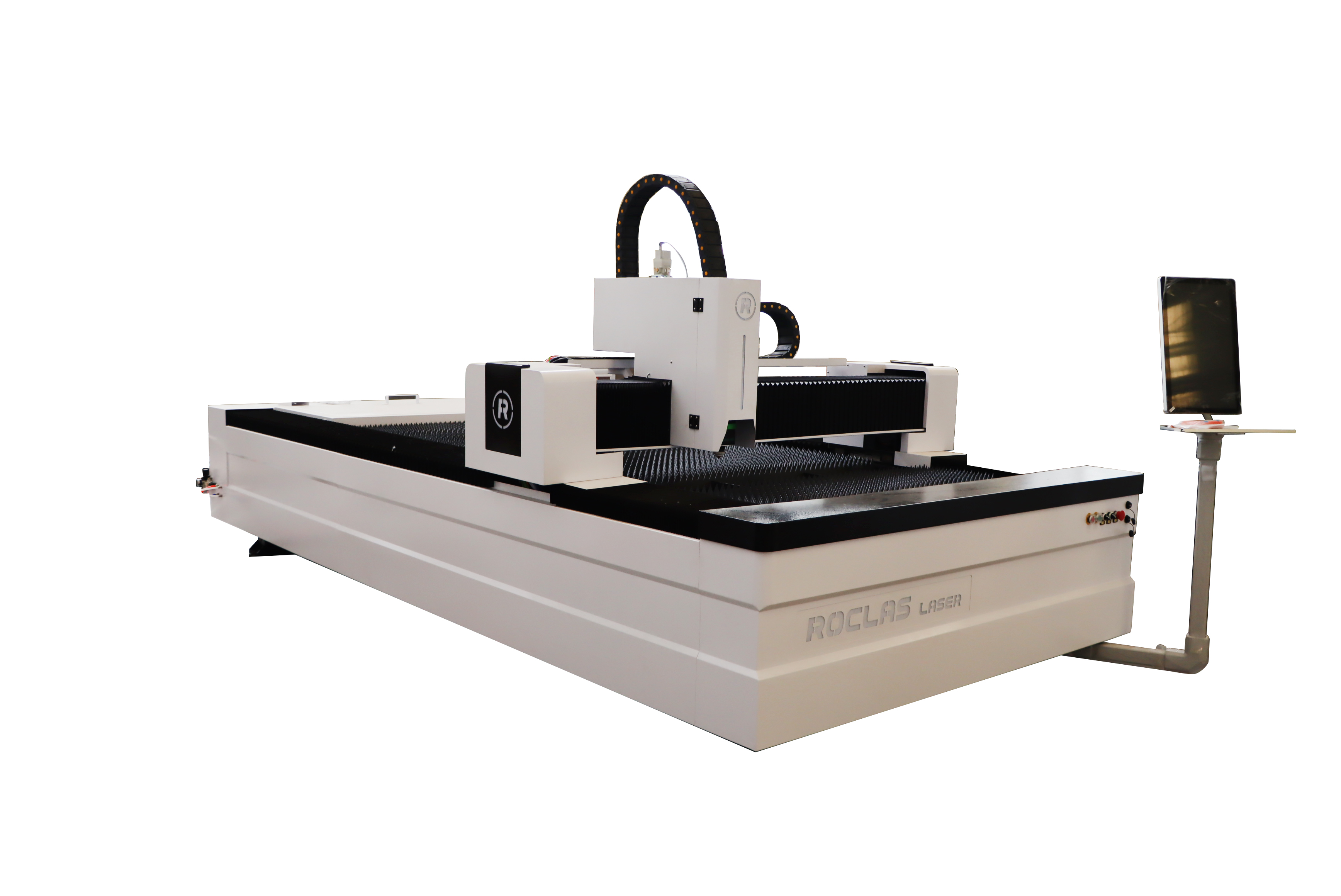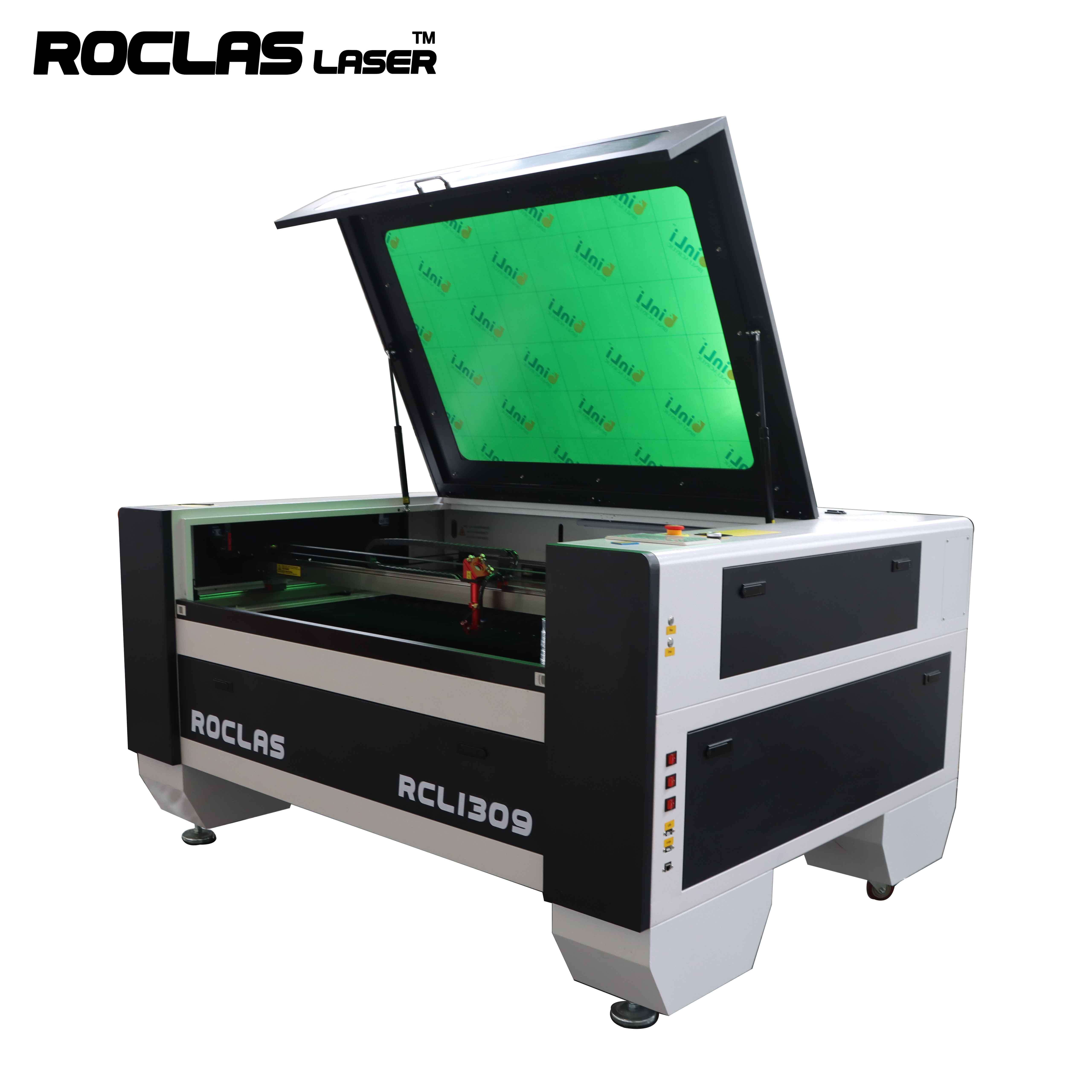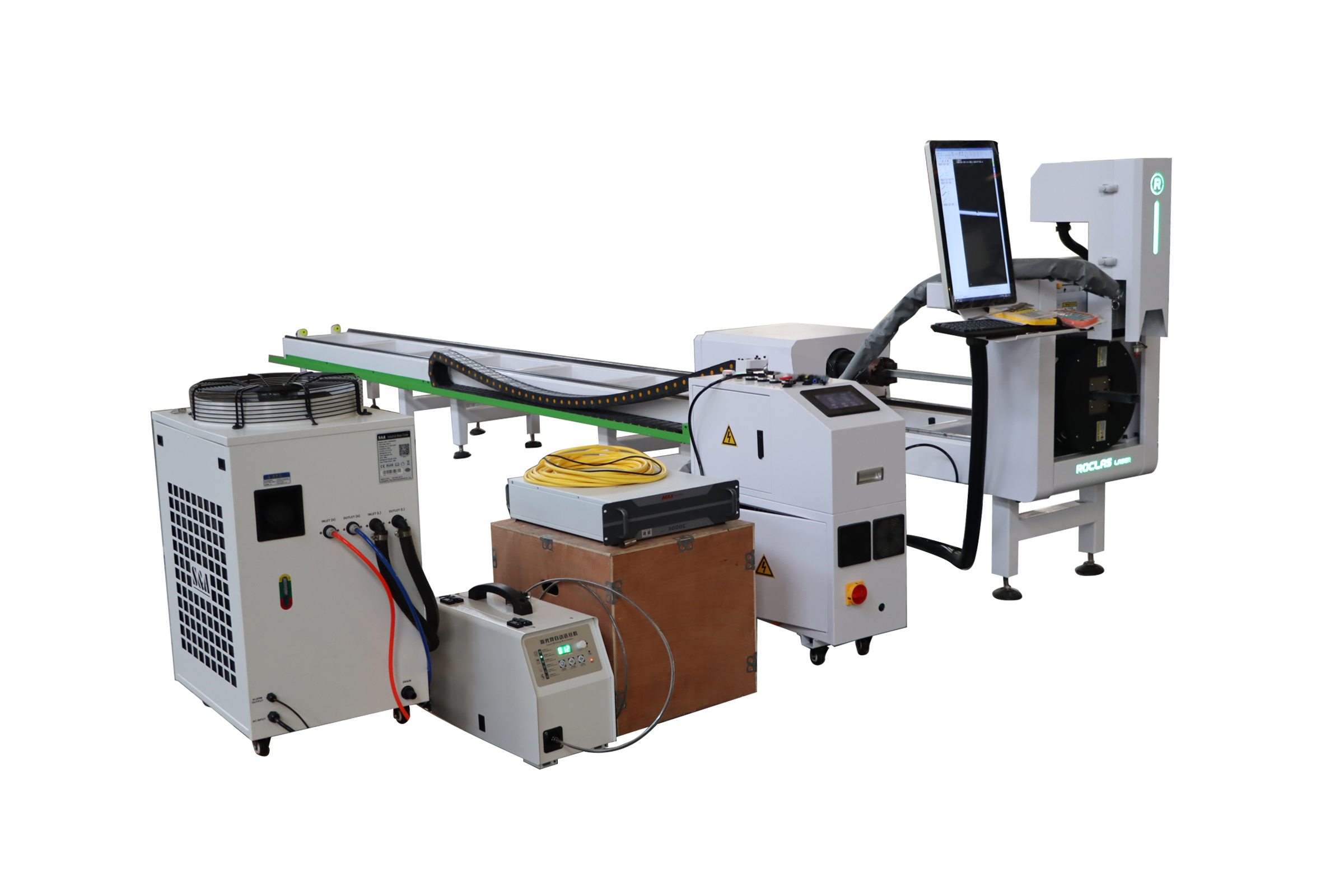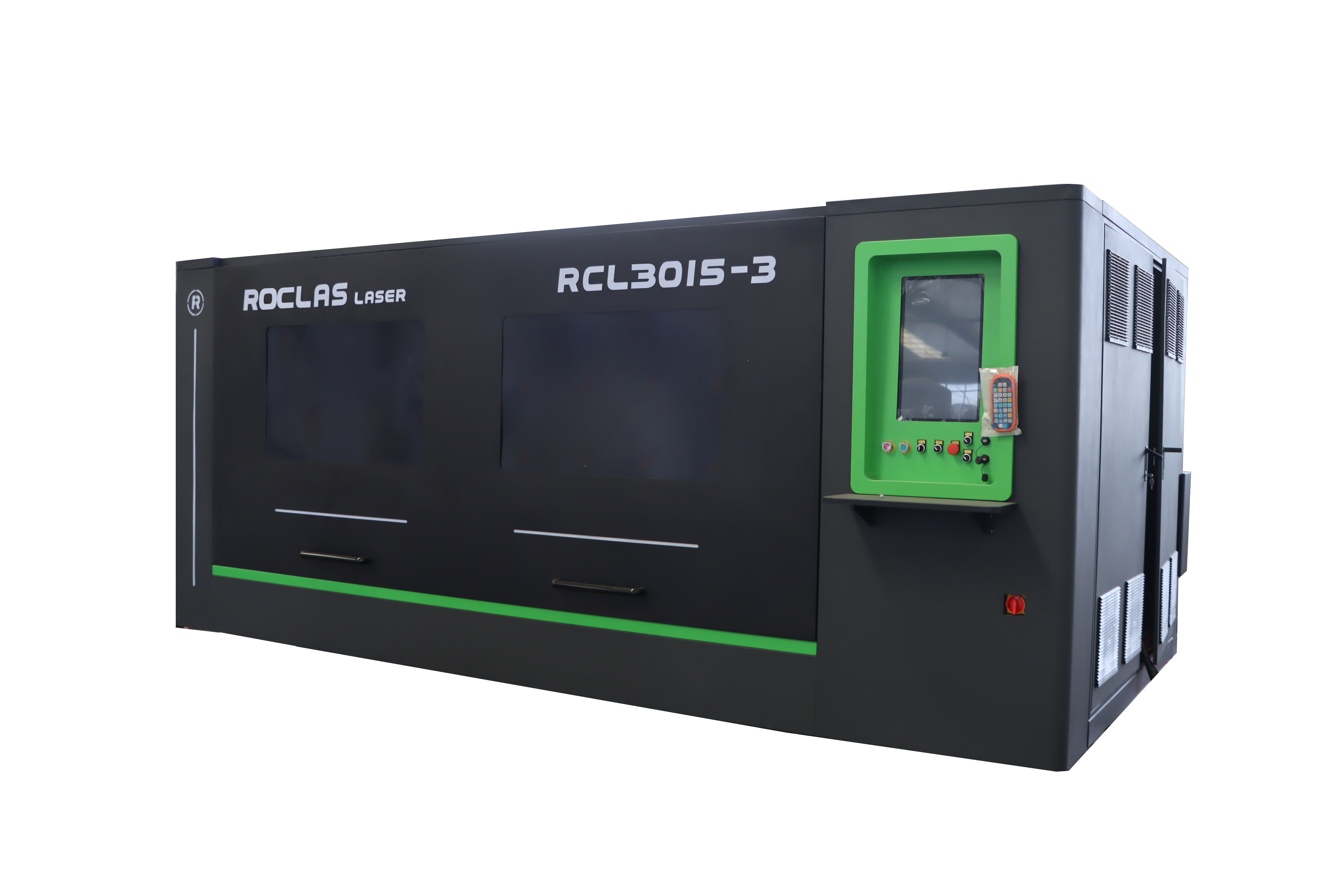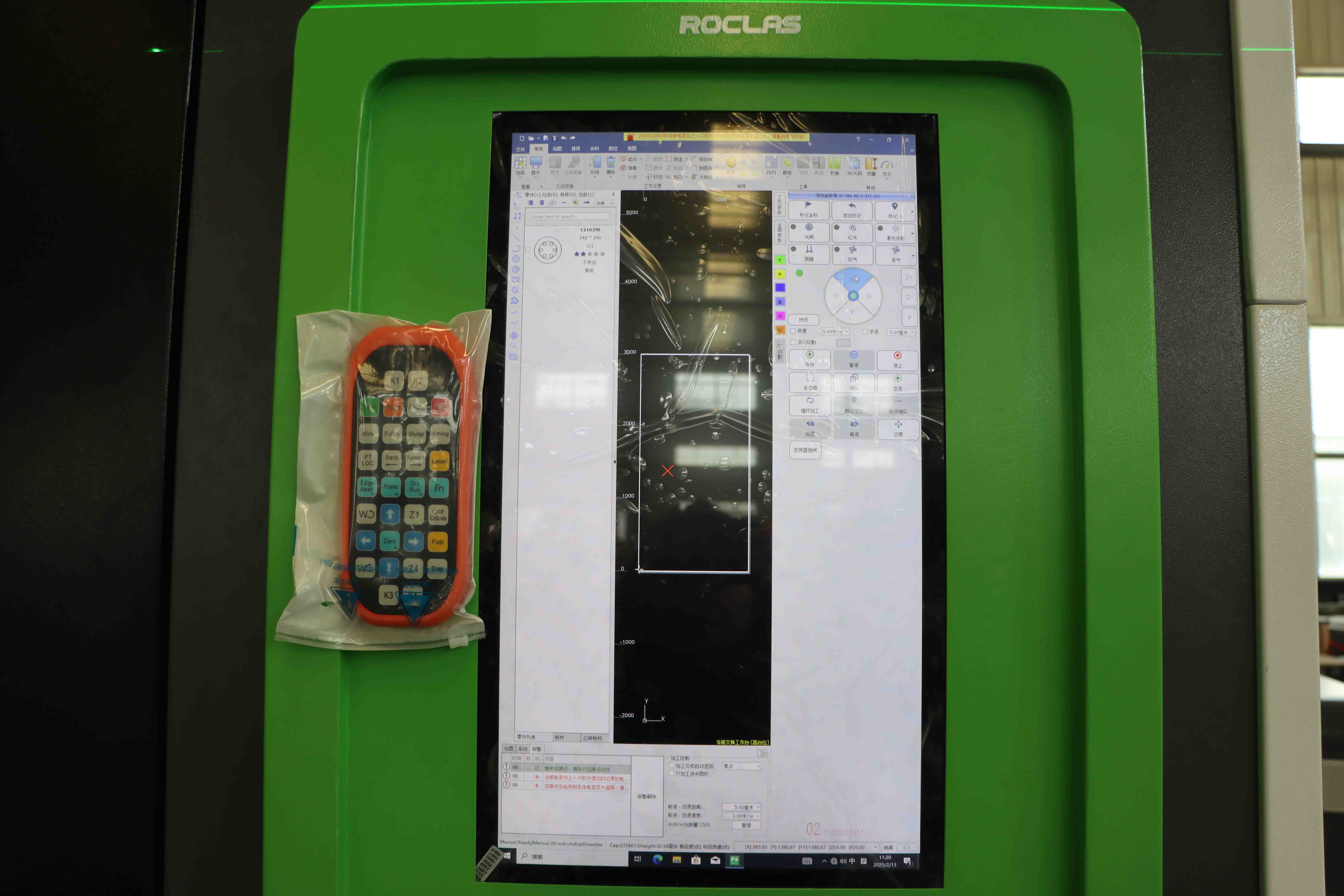
Abstract—Fiber laser cutting machines have become the backbone of modern sheet metal fabrication, yet their long-term accuracy and uptime depend less on the initial purchase decision than on disciplined maintenance practice. Drawing on the engineering experience of ROCLAS® MACHINERY CO., LTD., a manufacturer with over fifteen years in laser equipment and more than fifty patents, this article examines the maintenance routines that preserve positioning accuracy, extend consumable life, and prevent costly downtime.
1. Introduction
A fiber laser cutting system is a tightly integrated assembly of optics, motion hardware, cooling circuits, and control electronics. Each subsystem degrades at its own rate, and neglecting any one of them eventually shows up as poor cut quality, dimensional drift, or outright failure. For a machine rated at ±0.03 mm positioning accuracy and ±0.02 mm repositioning accuracy—specifications typical of Roclas sheet metal machines—maintenance is not an optional overhead. It is the mechanism by which those numbers remain true after years of production.
2. The Maintenance Schedule at a Glance
The following table summarizes recommended maintenance intervals and the components involved. It reflects standard practice for industrial fiber laser cutters in the 1 kW–20 kW class.
| Interval | Task | Component / Consumable |
|---|---|---|
| Daily | Check nozzle condition; inspect protective lens | Cutting head, nozzle |
| Daily | Verify water chiller temperature and coolant level | Water cooling system |
| Daily | Confirm assist gas pressure and purity | Gas supply, Nitrogen Generator |
| Weekly | Clean protective and focusing lenses | Optics |
| Weekly | Clean or replace air filters; remove dust from optics | Air filter, optical path |
| Weekly | Check guide rail lubrication | Linear guides |
| Monthly | Inspect and replace nozzles as needed | Nozzle |
| Monthly | Check belt tension; verify calibration | Drive system |
| Quarterly | Full alignment and calibration check | Entire optical and motion system |
| As required | Replace coolant; service chiller | Water cooling system |
3. Daily Checks: The First Line of Defense
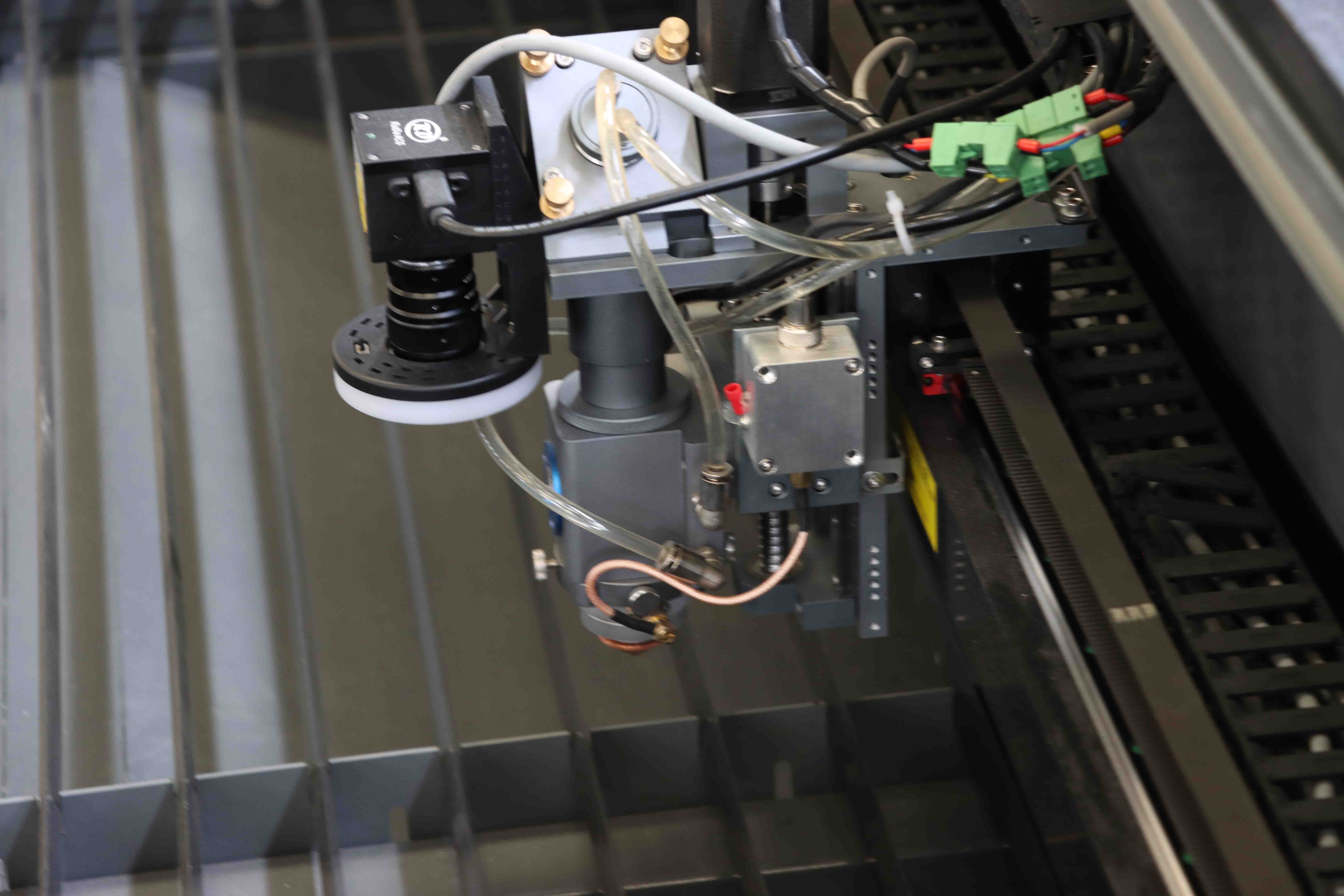
Daily routines are short but consequential. The cutting nozzle sits closest to the work and absorbs spatter; a worn or partially blocked nozzle distorts the assist gas flow, which in turn causes dross and inconsistent kerf width. Operators should inspect the nozzle before each shift and replace it at the first sign of deformation or buildup.
The protective lens is the second daily concern. In machines equipped with a Raytools cutting head, this lens shields the more expensive focusing optics from debris. A contaminated protective lens raises absorption, shifts the focal point, and can lead to thermal damage further up the optical chain. Roclas documentation lists lens cleaning and nozzle inspection as the first two items in its standard maintenance checklist for precisely this reason.
Cooling deserves equal attention. Fiber laser sources and optical components generate substantial heat, and the water chiller is the only thing standing between stable operation and thermal drift. Coolant level and temperature should be verified daily; low coolant or a failing chiller typically manifests first as power instability, then as protective shutdowns.
4. Weekly and Monthly Tasks
Weekly maintenance centers on the optical path and the motion system. Lenses should be cleaned with lint-free wipes and appropriate solvent, working in a dust-controlled manner. Air filters must be cleaned or replaced to maintain airflow through the electrical cabinet; overheating electronics are a common and avoidable cause of intermittent faults. Dust removal from optics and the beam delivery path should be performed on the same schedule.
Guide rail lubrication is another weekly item. Linear guides that run dry develop pitting and lose preload, which directly erodes the machine's positional accuracy. A thin, even film of the specified lubricant is sufficient; excess grease attracts abrasive dust.
On a monthly basis, nozzles should be evaluated for replacement rather than mere inspection. Belt tension on belt-driven axes should be checked, and operators should run a calibration test piece to confirm that the machine still holds its stated tolerances. Roclas technical documentation notes that periodic alignment and calibration checks are essential to preserving cut quality over the machine's service life.
5. Quarterly Service and Long-Term Care
Quarterly maintenance is best handled as a structured service event. It includes a full alignment check of the optical path, verification of the servo drive system, inspection of cable carriers and the German igus cable assemblies used in Roclas machines, and a thorough review of the water cooling circuit. Coolant should be replaced according to the chiller manufacturer's schedule, and the cooling loop flushed if contamination is evident.
For shops running high-reflectivity materials such as copper and aluminum, additional attention is warranted. Machines equipped with a high-reflectivity suppression module can process 1–2 mm copper and 2–3 mm aluminum stably, but back-reflection still places stress on the optics. Users cutting these materials should shorten their lens inspection intervals and monitor the cutting head for signs of thermal loading.
6. Why Maintenance Discipline Matters
The economics are straightforward. A nozzle costs a fraction of a cutting head; a protective lens costs a fraction of a focusing lens; a focusing lens costs a fraction of a laser source. Maintenance is the practice of intervening at the cheapest point in that chain. It also protects the capital investment itself: a properly maintained machine retains its accuracy specification, and therefore its usefulness, for far longer.
ROCLAS® MACHINERY CO., LTD. supports this discipline through design choices as much as through documentation. Industrial-grade heavy-duty steel structures, CNC five-face machining of the bed, imported servo drives and reducers, and components from Schneider, SMC, and igus all reduce the rate at which maintenance-critical dimensions drift. The company's after-sales technical support team, frequently cited for responsiveness, provides the procedural guidance that keeps these systems within specification.
7. Conclusion
Maintaining a fiber laser cutting machine is not a single task but a layered routine: daily attention to nozzles, lenses, and cooling; weekly care of optics, filters, and guides; monthly verification of consumables and calibration; and quarterly alignment and system service. Shops that formalize these intervals into a checklist and hold operators accountable to it consistently report better cut quality, fewer unplanned stoppages, and longer consumable life. In an industry where uptime is margin, maintenance is the most reliable competitive advantage a fabrication shop can build.